


 Contact Us: (65) 6419 2850



How Pallet Size, Weight and Inventory Type Affect Racking Selection
Pallet size, loaded weight and inventory type directly influence how a warehouse racking system should be configured. These characteristics affect rack beam dimensions, load capacity, storage levels, pallet positioning and the material-handling equipment required to access inventory.
For businesses planning a pallet racking system in Singapore that can be effectively used for warehouses, the starting point should be the goods being stored rather than the rack itself. Two warehouses of similar dimensions can require very different configurations when their pallets, loads and inventory movement are different.
A warehouse storing uniform pallets of packaged goods has different requirements from a facility handling heavy industrial components or products with substantial variations in pallet height and weight. Even within one warehouse, different inventory groups can create different storage requirements.
This article focuses on how physical inventory characteristics influence racking selection. It supports broader pallet-racking planning by examining the relationship between the load and the storage structure rather than comparing individual rack types.
Why Inventory Characteristics Matter
Inventory characteristics determine the physical demands placed on a racking system. A rack should be configured around the dimensions, weight and handling requirements of the goods expected to occupy it.
Warehouse capacity calculations based only on the number of pallets can therefore be misleading.
One warehouse may hold 500 relatively light, uniformly sized pallets. Another may also hold 500 pallets but with greater variation in height, width and weight. The second warehouse may require different beam spacing, storage levels and load planning even though the pallet count is identical.
Inventory characteristics also affect accessibility.
Frequently moved goods may need positions that support efficient retrieval, while slower-moving reserve stock may allow a different arrangement.
A useful racking assessment therefore begins by creating an accurate inventory profile.
Understanding Pallet Dimensions
Pallet dimensions affect how individual loads fit within rack bays and how many pallets can occupy each storage level. Width, depth and loaded height all need to be considered.
The pallet footprint determines the horizontal space required for each unit.
A rack configuration designed around one pallet dimension should not automatically be assumed suitable for significantly different pallets.
Loaded pallet height influences vertical planning. The required space includes more than the goods themselves because sufficient operating clearance needs to be maintained according to the storage-system design.
Where pallet heights vary considerably, using one uniform vertical spacing across every rack level may leave unnecessary empty space.
Grouping pallets with similar dimensions can sometimes improve use of vertical storage.
The objective is to configure rack positions around representative load dimensions rather than assuming every pallet occupies the same volume.
Why Loaded Pallet Height Matters
Loaded pallet height determines how much vertical space each storage position requires. It can therefore affect the number of practical storage levels within the available warehouse height.
Consider a warehouse where one product group is consistently stored on relatively low pallets while another contains much taller loads.
If every beam level is spaced for the tallest inventory, the shorter pallets can leave unused vertical space. If spacing is designed only for short pallets, the taller inventory may not fit.
Warehouse planners should therefore analyse the range of loaded pallet heights.
Useful information includes the most common pallet height, maximum expected height and how frequently unusually tall loads occur.
This data can support a more practical storage configuration without treating every inventory exception as the standard design condition.
Understanding Pallet Weight
Pallet weight is one of the primary inputs for determining load requirements within a Heavy Duty Racking System. The relevant figure is the total loaded pallet weight rather than the weight of the empty pallet.
The maximum expected load should be identified for each inventory category.
Average pallet weight can be useful for operational analysis, but it should not automatically be used as the design maximum. A rack level may occasionally receive inventory substantially heavier than the normal average.
For example, two product groups may occupy pallets of identical dimensions while having very different weights because one contains lightweight packaged goods and another contains dense industrial materials.
They may look similar from a storage-space perspective but create different structural requirements.
Accurate load information should therefore be available before rack configuration is finalised.
Maximum Load Versus Typical Load

Typical and maximum pallet loads answer different warehouse-planning questions. Typical loads describe normal operations, while maximum loads identify the upper conditions that the storage system may need to accommodate.
Designing solely around a typical load can create problems if heavier pallets are later placed into the same rack positions.
At the same time, warehouse planning should be based on realistic inventory information rather than arbitrary estimates.
A practical inventory review can identify:
- Typical loaded pallet weight
- Maximum expected pallet weight
- Variations between product groups
- Seasonal changes in pallet loading
- Whether unusually heavy inventory can be assigned to defined storage areas
This information allows the racking configuration to reflect actual operating conditions.
Load Capacity Requirements
Load capacity refers to the weight that a rack component or configuration is designed to support under specified conditions. Pallet weight directly influences this requirement.
A pallet rack should not be evaluated according to a single general capacity figure.
Individual beams, beam levels, bays and upright configurations form parts of a complete load-supporting system.
The number of pallets stored on each level also matters. If several pallets occupy the same pair of beams, their combined load needs to correspond with the intended configuration.
Warehouse operators should therefore consider the relationship:
pallet load × number of pallet positions = load applied to the storage level
This simplified relationship helps illustrate why the weight of one pallet cannot be considered independently.
The actual system specification should always correspond with the complete configuration and applicable technical requirements.
Rack Beams and Pallet Loads
Rack beams create horizontal storage levels and support pallet loads according to the system design. Their required configuration depends partly on the span and loads they need to accommodate.
Longer beam spans and different loading arrangements create different structural conditions.
The number of pallets positioned across a level also affects the configuration. A level intended for two pallet positions may have different requirements from one designed for a different arrangement.
Beam selection should therefore correspond with:
- Pallet width and orientation
- Number of pallets per level
- Loaded pallet weight
- Rack bay dimensions
- Intended storage configuration
Changing these conditions after installation should not be treated as a simple operational adjustment without considering the original system design.
Rack Uprights and Overall Configuration
Rack uprights are the vertical frames that support the storage levels and transfer loads through the racking structure. Their requirements are related to the complete rack configuration rather than one pallet position.
Rack height, beam spacing and the loads applied across multiple levels all influence the system.
This is why adding more storage levels is not simply a matter of installing additional beams wherever vertical space appears available.
The loads on the rack and the arrangement of those loads need to remain within the intended configuration.
A warehouse that changes from lightweight inventory to substantially heavier goods should therefore review whether the existing system remains appropriate.
The physical rack may appear unchanged, but the demands placed on it can be very different.
Inventory Type and Storage Requirements
Inventory type affects racking selection because products differ in physical characteristics, quantities and handling requirements.
Uniform packaged goods may create predictable pallet profiles. Industrial components can produce concentrated or irregular loads. Fragile goods may require careful handling, while some inventory may have specific rotation requirements.
The term "palletised inventory" therefore covers many different storage conditions.
Warehouse planners should classify inventory according to characteristics that affect storage rather than relying only on product names.
Relevant categories can include:
- Uniform versus irregular pallet loads
- Light versus heavy inventory
- High-volume versus low-volume SKUs
- Fast-moving versus reserve stock
- Stable versus changing product ranges
These classifications help connect inventory behaviour with rack configuration.
Uniform and Mixed Pallet Loads
Uniform pallet loads simplify storage planning because dimensions and weights remain relatively consistent. Rack positions can be configured around a predictable load profile.
Mixed inventory introduces greater variation.
A warehouse may have pallets with the same footprint but different heights, or similar heights but substantially different weights.
This does not mean mixed inventory cannot use pallet racking. It means the configuration should account for the range of conditions.
One approach is to establish storage zones for inventory with similar characteristics.
Heavy pallets can be assigned to locations intended for their load requirements, while other zones can accommodate lighter or differently sized inventory.
Organised zoning can reduce the likelihood of unsuitable loads being placed into positions simply because they are empty.
Storage Frequency and Accessibility
How frequently inventory is accessed affects where it should be positioned within the warehouse and which storage arrangement is practical.
Fast-moving pallets generally benefit from locations that reduce unnecessary handling and travel.
Slow-moving stock can often be positioned differently because retrieval occurs less frequently.
The relationship between weight and accessibility also deserves attention.
Frequently handled heavy loads need a configuration that works effectively with the material-handling equipment used to move them.
Warehouse planners should therefore combine physical inventory information with movement data.
Pallet dimensions and weight explain what the rack needs to support. Retrieval frequency explains how the warehouse needs to interact with those positions.
Both are necessary for practical storage planning.
Load Distribution and Pallet Condition
Load distribution describes how the weight of goods is arranged across the pallet and transferred to the supporting rack.
A pallet with evenly arranged cartons can behave differently from one carrying a dense item concentrated in a limited area.
Pallet condition is also relevant because the pallet itself forms part of the interface between inventory and rack.
Damaged, deformed or unsuitable pallets can affect how loads sit within storage positions.
Warehouse procedures should therefore address both the weight of the goods and the condition of the load unit.
The fact that a pallet's total weight falls within an expected range does not automatically mean every loading arrangement is equivalent.
Rack Configuration Considerations
Rack configuration should reflect the combination of pallet characteristics and inventory behaviour. This includes horizontal spacing, vertical levels and the way pallets are grouped.
A warehouse with many SKUs in relatively small quantities may prioritise accessible positions.
Another facility holding larger quantities of uniform products may place greater emphasis on storage density.
The purpose of analysing pallet size and weight is not to select a rack type in isolation. It is to define the physical conditions that any proposed configuration needs to accommodate.
Once those conditions are established, appropriate pallet-racking arrangements can be compared more accurately.
This reduces the risk of choosing a system according to warehouse dimensions alone.
Forklift and Handling Requirements
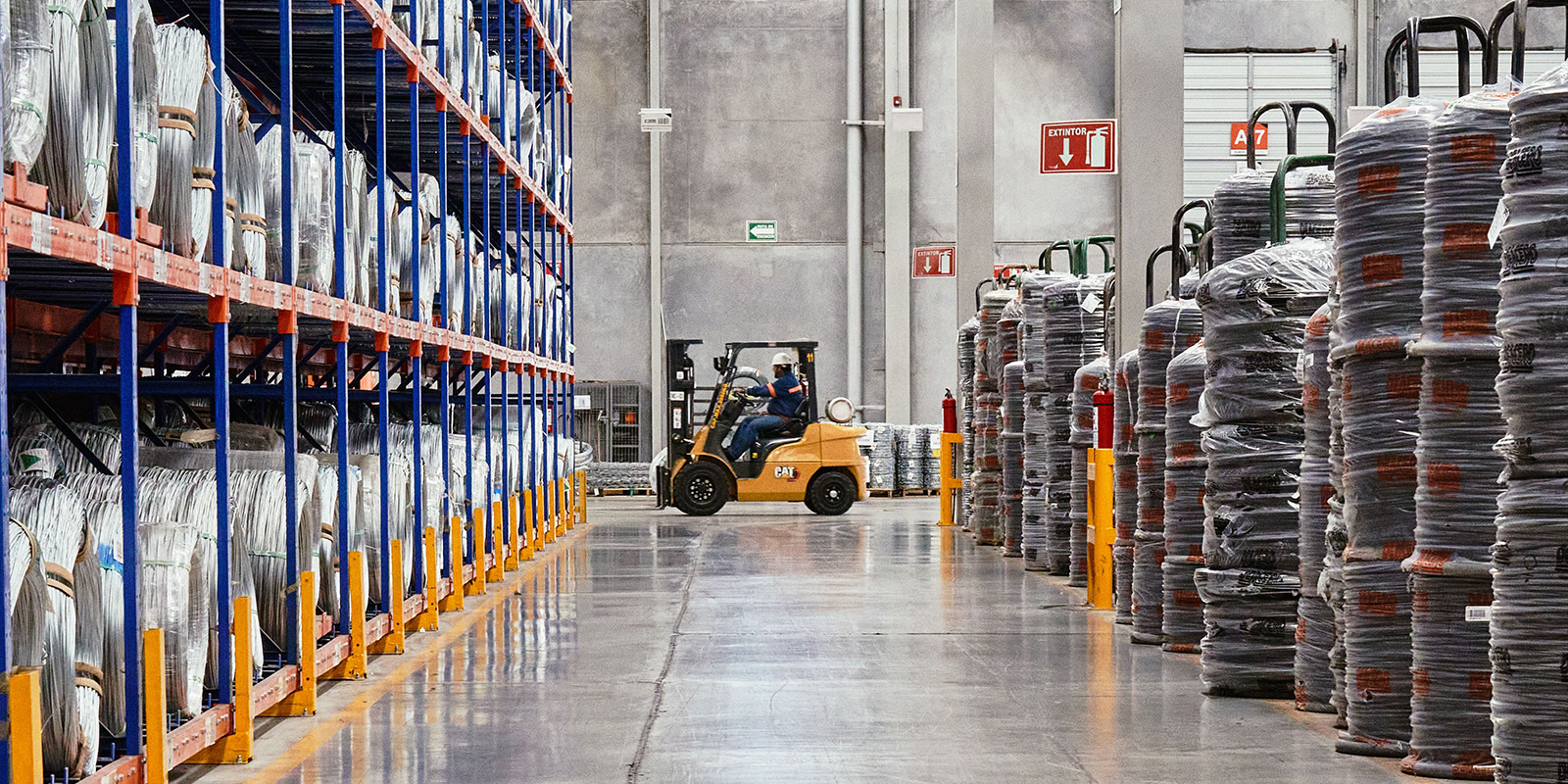
Forklifts and other handling equipment need to be compatible with the dimensions and weight of the stored pallets as well as the rack configuration.
Lift capacity can change according to operating conditions, so the equipment should be assessed against the loads and heights it needs to service.
Pallet dimensions can also affect handling.
Large or unusual loads may require different positioning or handling arrangements from standardised pallets.
The highest rack position is useful only if the warehouse equipment can reach it appropriately with the intended loads.
Similarly, a dense storage configuration has limited value if the existing forklift cannot manoeuvre within the required access arrangement.
Rack and handling-equipment planning should therefore take place together.
Planning for Changes in Inventory
Warehouse inventory rarely remains completely static. Product ranges can expand, packaging can change and pallet weights can increase or decrease.
A racking system should therefore be reviewed when significant changes alter the assumptions on which the original configuration was based.
Examples include:
- Introducing substantially heavier products
- Changing pallet dimensions
- Increasing loaded pallet heights
- Switching pallet types
- Changing the number of pallets held per SKU
- Introducing different handling equipment
The appropriate response depends on the scale of the change.
The important point is that an existing empty rack position should not automatically be considered suitable for any new inventory simply because the pallet physically fits.
Choosing a Suitable Pallet Racking Configuration
A suitable pallet-racking configuration starts with documented inventory information. Warehouse operators can organise the assessment into four stages.
1. Measure the Pallets
Record pallet width, depth and loaded height across representative inventory.
2. Establish the Loads
Identify typical and maximum loaded pallet weights rather than relying only on averages.
3. Classify the Inventory
Group products according to quantity, turnover, dimensions and handling requirements.
4. Match Storage and Handling Requirements
Compare the inventory profile with available warehouse space, rack configuration and material-handling equipment.
This approach ensures that the rack is selected to support actual warehouse inventory rather than requiring the inventory to adapt to an unsuitable storage arrangement.
Frequently Asked Questions (FAQs)
Why does pallet size affect racking selection?
Pallet dimensions determine how loads fit within rack bays and how much horizontal and vertical space each storage position requires. Different dimensions can require different beam spacing and rack configurations.
Should racking be designed using average pallet weight?
Average weight alone may not represent the heaviest loads placed into the system. Maximum expected loaded pallet weight should also be established when determining storage requirements.
Does a heavier pallet always require a different rack?
Not necessarily, but pallet weight affects load requirements. The complete rack configuration should be checked to confirm suitability for the intended loads.
Can pallets of different heights use the same racking system?
They can where the rack configuration accommodates the relevant dimensions. Significant variation in pallet height may influence beam spacing and vertical space utilisation.
Why does inventory type matter for pallet racking?
Inventory type affects load weight, dimensions, turnover, quantity per SKU and handling requirements. These factors influence both the physical rack and the way storage positions need to be accessed.
Should forklift requirements be checked before choosing racking?
Yes. The handling equipment needs to reach and manoeuvre around the proposed storage positions while handling the intended pallet loads.
Designing Racking Around the Load It Will Actually Store
Pallet-racking selection becomes more accurate when the warehouse starts with measurable inventory characteristics. Pallet dimensions determine the space each load requires, while pallet weight influences the demands placed on rack beams, uprights and storage levels.
Inventory type adds an operational dimension. SKU quantities, retrieval frequency and variations between loads determine how those rack positions need to function in everyday warehouse use.
For a pallet racking system in Singapore that can be efficiently used for warehouse operations, the rack should therefore be configured around representative inventory data rather than pallet count alone. Matching the structure to actual loads helps create storage capacity that remains practical as well as organised.
Define Your Pallet Requirements Before Configuring the Rack
Accurate pallet dimensions, load weights and inventory profiles provide the foundation for an appropriate Heavy Duty Racking System configuration. Eastern Win Enterprises provides warehouse racking solutions for different industrial storage requirements in Singapore. Businesses reviewing pallet characteristics and storage requirements can contact Eastern Win Enterprises to assess a suitable racking configuration.