


 Contact Us: (65) 6419 2850



A Complete Guide to Wire Mesh Decking for Warehouse Racking
Wire mesh decking is a rack accessory installed across racking beams to create an open-grid supporting surface for suitable stored goods or palletised loads. It can be used within warehouse racking configurations where the storage application requires additional support between the beams.
Unlike the pallet racking structure itself, wire decking does not determine the overall warehouse storage configuration. Its role is more specific: it forms a supporting deck within an appropriately designed rack bay. This distinction is important because the decking, beams, uprights and stored loads need to function as parts of the same storage system.
The suitability of wire mesh decking depends on several factors, including rack dimensions, deck construction, load requirements, pallet characteristics and the type of inventory being stored. A mesh deck that physically fits between rack beams is not automatically appropriate for every load.
For warehouses in Singapore, wire decking can be relevant to pallet storage, carton storage and selected industrial storage applications. This guide explains how mesh deck panels work, how they differ from solid shelving surfaces, what should be considered when combining them with pallet racks, and how to select a configuration appropriate to the intended warehouse use.
What Is Wire Mesh Decking?
Wire mesh decking is a metal grid panel designed to span between or sit across rack beams in compatible warehouse racking systems. The grid creates an open storage surface rather than the continuous surface provided by solid boards or steel panels.
The deck is typically formed from intersecting metal wires arranged into a mesh pattern. Depending on the design, additional support channels or reinforcing elements may be incorporated beneath the mesh.
Different deck configurations are available because warehouse racks, beam profiles and storage requirements vary. Dimensions, support construction and load characteristics should therefore correspond with the intended rack system.
Wire decking is often associated with pallet racks, but its exact function depends on the storage application. In one configuration, it may provide supplementary support beneath suitable pallets. In another, an appropriately specified deck may create a surface for certain non-palletised goods.
It should not be assumed that all wire decking serves the same purpose or carries the same loads.
How Wire Mesh Decking Works
Wire mesh decking works by transferring the applied load through the deck and its supporting elements to the rack beams below. The beams then form part of the wider load path through the racking structure.
This means deck performance cannot be considered independently of the rack.
The way a load sits on the decking is important. A pallet, carton or other item can apply forces differently depending on its dimensions, contact points and weight distribution.
The deck's construction influences how these forces are transferred. Mesh dimensions, support channels, deck width and the relationship with the beams can all affect the intended application.
A properly selected deck therefore needs to match both the racking system and the stored inventory.
Warehouse operators should avoid viewing wire decking simply as a sheet placed over beams. It is a specified rack component whose use should correspond with its design and loading requirements.
Understanding Wire Mesh Deck Construction
Wire mesh deck construction combines a grid surface with supporting elements designed for use on compatible warehouse racks. The exact arrangement varies between products.
The upper surface consists of intersecting wires that create regularly spaced openings. These openings distinguish wire decking from solid steel, timber or board-based shelving surfaces.
Beneath the mesh, support channels may be used to provide additional rigidity and transfer loads towards the rack beams. The number, shape and position of these channels can vary.
The outer edges of the deck are also configured according to the type of rack beams the panel is intended to fit.
These construction differences mean two decks with similar external dimensions can still have different applications.
When reviewing a wire deck, the relevant characteristics include:
- Overall deck width and depth
- Mesh configuration
- Supporting channel arrangement
- Compatibility with rack beam profiles
- Intended loading conditions
- How the deck is positioned on the rack
These factors should be considered together rather than choosing a panel according to dimensions alone.
Wire Decking and Rack Beam Compatibility
Rack beam compatibility determines whether a wire deck can be installed and supported as intended. Warehouse racking systems can use different beam profiles, dimensions and configurations.
A mesh panel needs to correspond with the rack bay it is intended to serve. Width and depth should be assessed against the actual beam spacing and rack dimensions.
The interface between the deck and beams is particularly important because this is where the deck transfers loads into the supporting rack structure.
A panel that appears to fit loosely within a bay should not automatically be considered compatible. The deck needs to sit according to its intended configuration.
Existing warehouses considering the addition of wire decking should therefore identify the racking system before selecting panels. Measurements should be taken from the actual rack rather than estimated from the goods being stored.
This is especially relevant when a warehouse contains racks installed at different times or with different beam types.
Common Warehouse Applications
Wire mesh decking can support several warehouse storage applications when it is correctly specified for the rack and inventory. Its open-grid design makes it adaptable to a range of storage configurations.
Common applications can include:
- Supporting appropriate palletised loads
- Providing a deck surface for selected cartons or containers
- Supporting certain irregularly shaped stored items
- Creating defined storage levels within compatible industrial racks
- Supplementing suitable warehouse shelving configurations
The specific application should determine the deck specification.
For example, a deck used beneath palletised inventory may experience different loading from one carrying individual cartons directly on its surface.
The size of stored items also matters. Very small products may not be suitable for an open mesh surface without an appropriate container or other supporting arrangement.
Wire decking should therefore be selected according to the inventory rather than added simply because a rack has open beams.
Using Wire Mesh Decking With Pallet Racking
Wire mesh decking can be integrated with a pallet racking system in Singapore when the deck configuration is compatible with the rack and intended pallet loads. It acts as an accessory within the pallet-storage system rather than replacing the primary rack structure.
Pallet racks are normally configured around upright frames and beams. The decking spans the relevant beam level to provide an additional supporting surface.
The exact relationship between pallet and deck depends on the racking design and intended use. Pallet dimensions, orientation and condition should be considered because these factors affect how the load interacts with the supporting system.
The rack itself still needs to be appropriate for the pallet loads being stored. Installing wire decking does not increase the capacity of rack beams or uprights beyond their designed limits.
Similarly, the presence of decking should not be interpreted as permission to use pallets or load arrangements that are unsuitable for the system.
The rack, decking and pallet should be assessed as connected components.
Wire Mesh Decking in Heavy Duty Racking Systems
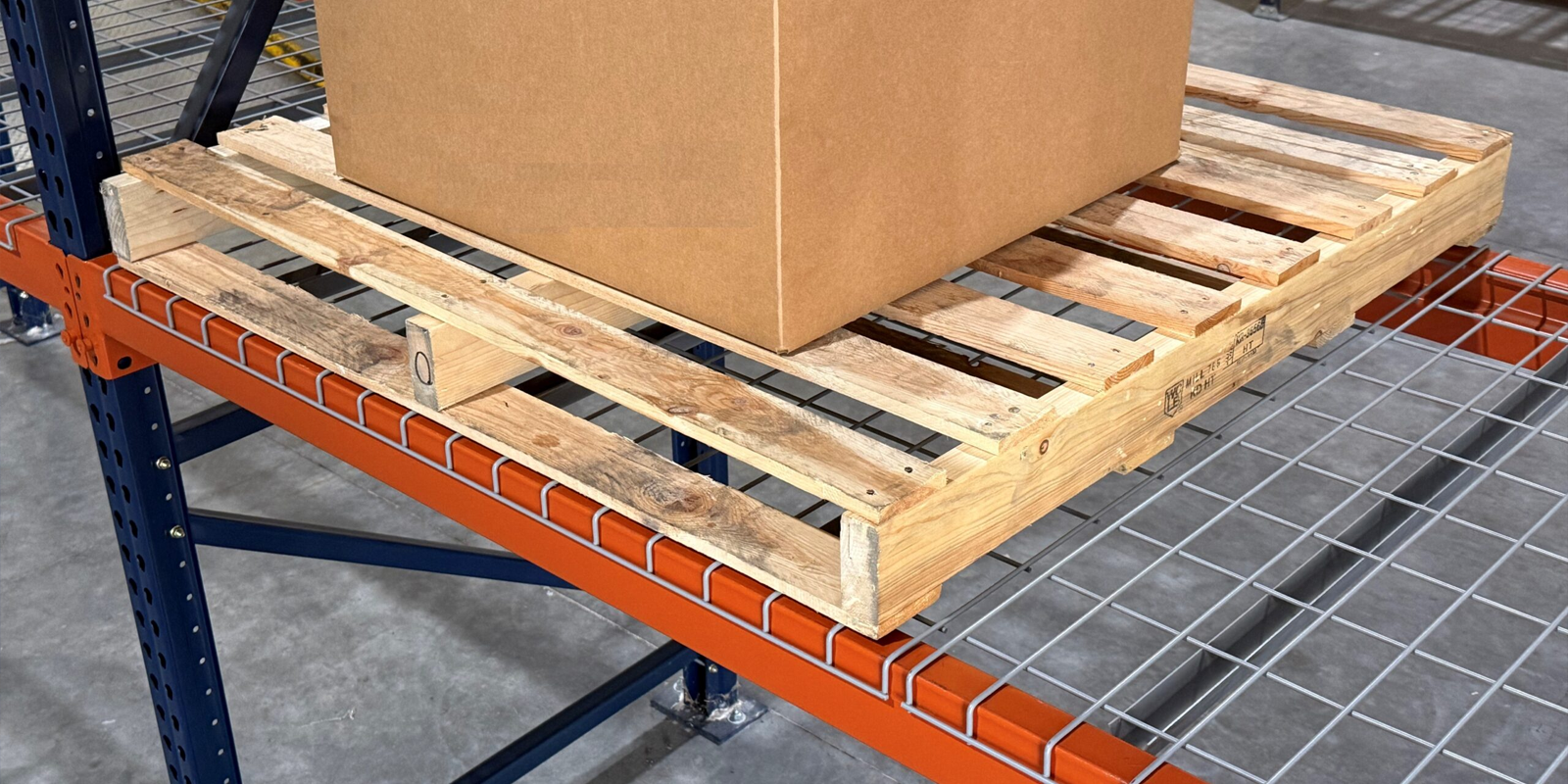
A Heavy Duty Racking System is designed for industrial storage loads appropriate to its configuration, and wire mesh decking may be incorporated where the storage application requires it. The decking specification must still correspond with the intended loads.
Heavy-duty storage can involve palletised products, industrial materials or other goods with significant weight. This makes load information particularly important when selecting rack accessories.
A heavy-duty rack does not make every wire deck suitable for heavy loads. The decking has its own construction and application requirements.
Warehouse planners should therefore distinguish between rack capacity and deck capacity.
The racking structure may be designed for one set of loads while the decking installed on a particular level has separate limitations. Both need to be suitable for the inventory occupying that level.
This distinction helps prevent the assumption that all components within a heavy-duty rack automatically share the same capacity.
Storage and Inventory Applications
The characteristics of stored inventory determine whether wire mesh decking provides an appropriate support surface. Weight is important, but it is not the only factor.
The dimensions and shape of the stored goods affect how the load contacts the deck.
A broad carton may distribute its weight across a larger section of mesh than a narrow object with only a few contact points. Pallets introduce another loading pattern based on their design and orientation.
Inventory should therefore be reviewed according to:
- Individual unit or pallet weight
- Dimensions of the stored item
- Contact area with the decking
- Whether goods are palletised or stored directly
- Frequency of loading and retrieval
- Potential variation in future inventory
This information helps determine whether mesh decking is suitable and what configuration is required.
Storage systems should be designed for the actual load profile rather than relying on broad categories such as "boxes", "pallets" or "industrial goods".
Understanding Load Distribution
Load distribution describes how the weight of stored goods is spread across the supporting deck. It is a key consideration because two loads of the same total weight can interact differently with wire mesh decking.
A uniformly distributed load spreads weight across a wider area. A concentrated load places more force on a smaller part of the deck.
This distinction matters when comparing storage applications.
For example, a wide container resting across several supporting areas can create a different load pattern from a narrow heavy component positioned in the centre of a panel.
The position of the load can also affect distribution. Goods should be stored according to the intended rack and deck configuration rather than placed arbitrarily wherever space appears available.
Load ratings should therefore be interpreted according to the conditions under which they apply.
Warehouse operators should confirm how the specified capacity relates to the actual inventory and loading arrangement.
Why Deck Capacity and Rack Capacity Are Different
Deck capacity and rack capacity describe different parts of the storage system. One should not be used as a substitute for the other.
Rack capacity relates to the structural racking configuration, including beams, uprights and the way loads are arranged across bays and levels.
Deck capacity relates specifically to the wire mesh deck and the conditions under which it is designed to carry a load.
The practical storage limit is therefore not determined by whichever component has the largest stated capacity.
Every relevant part of the system needs to be appropriate for the intended load.
If a rack beam is suitable for a particular loading arrangement but the installed decking is not, the deck remains a limiting consideration. The reverse can also apply.
This is why warehouse storage planning should evaluate the complete load path rather than focusing on a single component.
Wire Mesh Decking Versus Open-Beam Pallet Storage
Open-beam pallet storage uses rack beams without a continuous deck surface across the entire level. Pallets are positioned according to the design of the pallet racking system.
Wire mesh decking introduces an additional surface between or across those beams.
Whether decking is required depends on the intended storage arrangement and system specification.
The comparison is not simply between a complete and incomplete rack. Both configurations can have appropriate applications when designed correctly.
Wire decking can provide additional support characteristics or allow selected non-palletised inventory to use an appropriately designed rack level. Open-beam storage can remain suitable for pallet configurations designed to be supported directly by the rack beams.
The decision should therefore be based on how the storage level will be used.
Wire Mesh Decking Versus Solid Shelving
Wire mesh decking and solid shelving provide different types of storage surfaces. The most visible difference is that wire decking has an open-grid structure, while solid shelving creates a continuous platform.
That structural difference affects how each surface interacts with inventory and the warehouse environment.
| Consideration | Wire Mesh Decking | Solid Shelving |
|---|---|---|
| Surface | Open grid | Continuous surface |
| Small loose items | May require containers or additional support | Can provide a continuous base |
| Visibility through levels | Generally more open | More restricted |
| Dust accumulation on surface | Less continuous surface area | Continuous surface can collect material |
| Load behaviour | Depends on mesh and support configuration | Depends on shelving material and support |
| Typical selection basis | Rack compatibility and inventory needs | Surface requirements and inventory needs |
Neither option is automatically better.
Solid shelving may be useful where small items require a continuous surface. Wire decking may be appropriate where an open surface is compatible with the stored goods and rack configuration.
The correct choice depends on the inventory, load and intended use of the storage level.
Open Mesh and Warehouse Visibility
An open mesh surface can provide greater visibility between storage levels than an opaque solid deck. This can help warehouse personnel visually identify conditions around stored inventory.
Visibility can be useful during routine warehouse observations because the deck does not completely block the view through the rack level.
However, visibility should not be treated as a replacement for organised inventory management or rack inspection.
Stored goods can still obstruct parts of the system, and the condition of components needs to be assessed according to appropriate warehouse procedures.
The practical value of the open grid is therefore best understood as a characteristic of the decking rather than a complete inspection solution.
Wire Decking as a Rack Accessory
Wire decking is one of several accessories that may be incorporated into an industrial storage system. Rack accessories should be selected according to a defined function.
Other accessories can serve purposes related to protection, load support or warehouse organisation, depending on the racking configuration.
Adding accessories without a clear storage requirement can unnecessarily complicate a system. Conversely, omitting a required component can leave the rack unsuitable for the intended inventory.
A useful planning question is therefore: "What storage problem is this accessory intended to solve?"
For wire mesh decking, the answer may relate to supporting a particular load configuration or creating an appropriate deck surface.
Once that requirement is defined, the deck can be specified accordingly.
Matching Deck Dimensions to the Rack
Wire mesh decking dimensions should correspond with the rack bay and beam configuration. Accurate measurements are necessary when specifying decking for either a new or existing racking system.
The width of the deck relates to the horizontal span across the storage level, while depth relates to the front-to-back dimension of the rack.
The number of deck panels used across a bay can vary depending on the design.
Warehouse operators should avoid assuming that rack bays described by similar nominal dimensions are identical. Actual component dimensions and beam profiles can differ.
For existing racks, measuring the relevant components provides a more reliable basis for selection.
For new racking, the decking should be incorporated into the system specification so that rack and accessory dimensions are coordinated from the beginning.
Pallet Condition and Decking
Pallet condition remains important even when wire mesh decking is present. Decking should not be treated as a way to ignore damaged or unsuitable pallets.
Pallets form part of the load interface within a pallet-storage system. Damage can change how a pallet transfers weight to its supporting surfaces.
Broken boards, deformation or other defects may affect the way the load sits within the rack.
Warehouses should therefore continue to manage pallet conditions according to their storage and handling procedures.
Wire decking may provide an additional supporting surface in an appropriate configuration, but it does not transform an unsuitable pallet into an acceptable load unit.
The pallet, deck and rack should all be compatible with the intended storage arrangement.
Forklift Operations Around Wire Decking
Forklift operations affect wire decking because pallets and goods are regularly placed onto and removed from rack levels using material-handling equipment. Correct placement helps maintain the intended load arrangement.
Operators need to position loads according to the rack configuration rather than using the mesh panel as a visual target for arbitrary placement.
Contact between forklift equipment and decking should also be avoided where it is not part of normal loading.
Repeated impacts or incorrect pallet placement can affect storage components over time.
Clear operating procedures should identify how pallets are positioned and retrieved from decked rack levels.
The presence of wire decking does not change the fundamental requirement for controlled forklift operation around warehouse racking.
Installation Considerations
Wire mesh decking installation should correspond with the deck design and the rack beams on which it will be supported. Correct positioning is necessary for the panel to function as intended.
Before installation, the rack dimensions and beam configuration should be confirmed. The decking specification should then be checked against those conditions.
Panels should sit in their intended orientation. A deck should not be modified informally to make an incompatible panel fit a rack.
Installation should also confirm that the required number of panels and support elements are present for each storage level.
For existing warehouse racks, the condition of the supporting beams should be considered before adding accessories. Installing new decking does not address unrelated damage or configuration issues in the underlying rack.
A coordinated approach is preferable where racks and decking are being installed together because compatibility can be addressed during the original storage-system design.
Retrofitting Wire Mesh Decking to Existing Racks
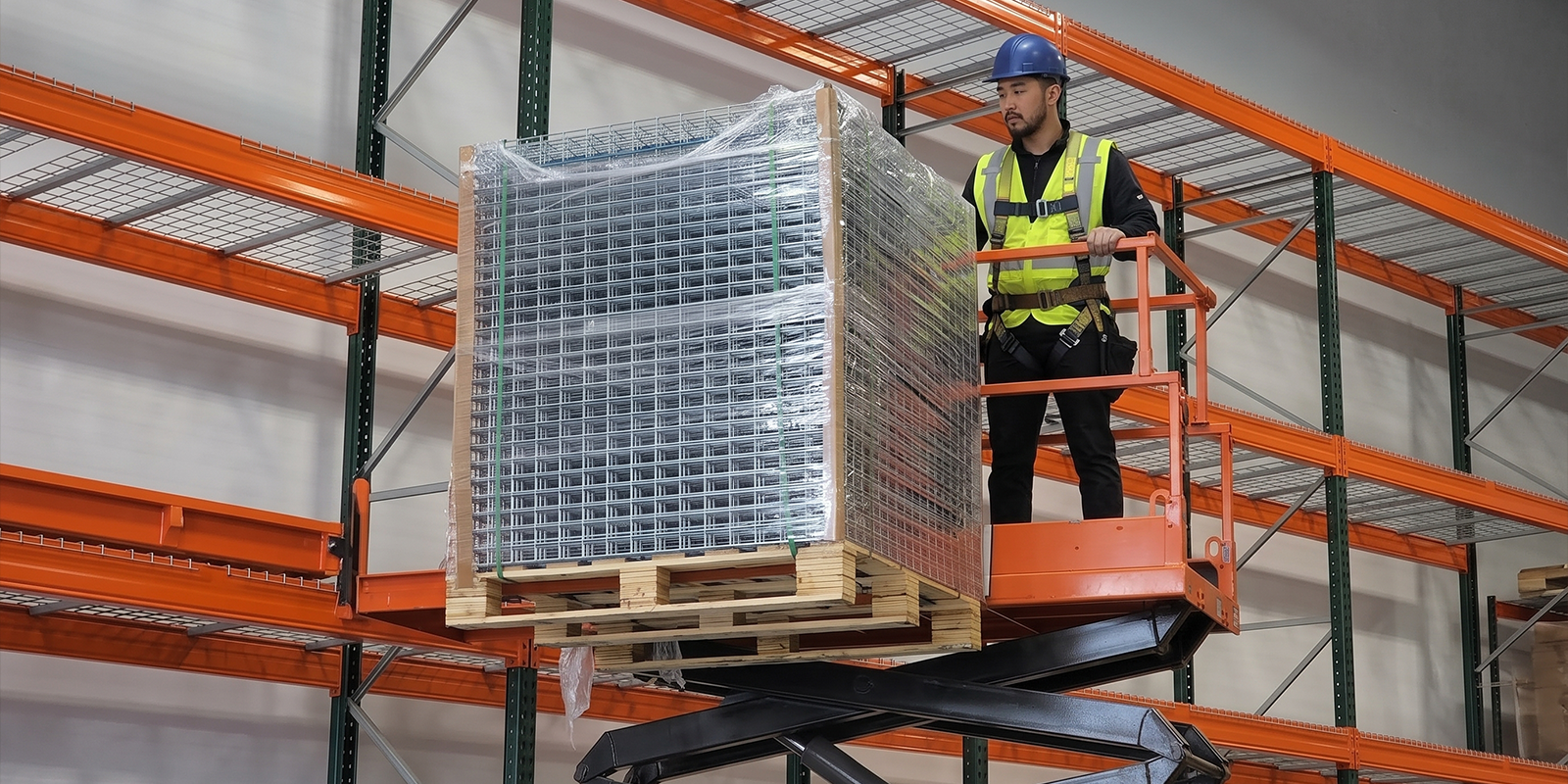
Retrofitting involves adding wire decking to racking that is already installed. This can be appropriate where warehouse storage requirements change, but the existing system needs to be assessed first.
The rack's dimensions, beam type and intended loading configuration should be identified before deck panels are selected.
The reason for the retrofit should also be clear.
A warehouse may want to accommodate different inventory, create additional support for a defined application or change how a particular rack level is used.
That change in use can be as important as the physical installation.
If goods previously stored on pallets will now be placed directly on decking, for example, the loading pattern has changed. The deck needs to be suitable for the new inventory and arrangement.
Retrofitting should therefore be treated as a storage-system modification rather than simply adding a metal panel.
Maintenance Considerations
Wire mesh decking should be included in routine warehouse observations because it is exposed to repeated loading, unloading and material-handling activity.
Maintenance does not usually mean treating the deck as a complex mechanical component. The priority is identifying conditions that could affect its intended use.
Relevant observations can include:
- Visible deformation
- Damaged mesh or supporting channels
- Incorrect deck positioning
- Signs of repeated impact
- Changes in the way inventory is loaded
- Missing or altered components where applicable
A damaged panel should not simply be covered by inventory and ignored.
The appropriate action depends on the nature of the damage and the system requirements.
Warehouse staff should also recognise when storage practices have changed. A deck originally selected for one inventory profile should not automatically be assumed suitable for substantially heavier or differently shaped goods introduced later.
Keeping the Storage Configuration Consistent
Consistency means using each decked rack level according to the configuration for which it was selected. Unplanned changes can create a mismatch between the storage system and the inventory.
Warehouses often evolve gradually. New products arrive, packaging changes and pallet weights increase.
These changes may appear minor individually, but over time the original storage assumptions can become outdated.
Periodic review should therefore consider whether the loads currently placed on the decking still resemble the intended application.
If the storage profile has changed significantly, the deck and racking configuration should be reassessed rather than relying on historical suitability.
This approach supports long-term warehouse organisation without requiring every minor inventory change to result in a complete redesign.
How to Choose Wire Mesh Decking
Choosing wire mesh decking requires matching the panel to the rack, load and intended storage application. External dimensions alone are not enough.
A structured selection process can reduce the risk of specifying a deck that fits physically but does not correspond with warehouse requirements.
Step 1: Identify the Racking System
Establish the rack type, beam profile and bay dimensions. For an existing system, use actual measurements and system information where available.
Step 2: Define What Will Be Stored
Determine whether the deck will support pallets, cartons, containers or another type of inventory. Record typical and maximum expected weights.
Step 3: Review Load Distribution
Consider how each item contacts the decking. Broad uniformly distributed loads and narrow concentrated loads should not automatically be treated as equivalent.
Step 4: Confirm Deck Dimensions
Match the deck width and depth with the rack configuration. Consider how many panels are required across each level.
Step 5: Review the Deck Construction
Assess mesh configuration, supporting channels and the way the panel interfaces with the rack beams.
Step 6: Confirm Application Requirements
Check that the intended use corresponds with the technical information for the selected deck and racking system.
This process keeps the selection focused on function rather than choosing wire decking solely by appearance or nominal size.
When Wire Mesh Decking May Be Appropriate
Wire mesh decking may be appropriate when a compatible warehouse rack requires an open-grid support surface for a defined inventory application. The decision should be based on the way the rack level will actually be used.
It can be particularly relevant where warehouse operators want to integrate a deck surface with pallet racks while retaining an open-grid configuration.
It may also support selected carton or container storage when the deck and rack are designed for that purpose.
However, wire decking is not automatically necessary for every pallet rack.
Open-beam pallet storage may remain appropriate in systems designed for that arrangement. Small loose goods may be better served by a continuous shelving surface or appropriate containers.
The useful question is therefore not whether wire decking is generally beneficial, but whether it solves a specific storage requirement within the proposed rack configuration.
Planning Wire Decking as Part of the Warehouse System
Wire decking performs most effectively when it is planned as part of the wider warehouse storage system. This means considering it alongside the rack configuration, inventory and handling methods.
A warehouse layout may contain several storage types. Some areas can use pallet racks with wire decking, while others use open-beam storage, shelving or specialised systems.
There is no requirement for every rack level to use the same surface if the inventory needs are different and the systems are appropriately designed.
Storage zones can therefore be planned according to their functions.
This approach avoids turning wire decking into a default specification. Instead, it becomes a targeted component used where its characteristics correspond with the stored goods.
Common Selection Mistakes
Wire mesh decking selection mistakes often occur when the panel is treated as a generic accessory rather than a load-supporting component within a rack system.
One common mistake is choosing decking according to width and depth alone. Correct external dimensions do not establish load suitability or beam compatibility.
Another is assuming the deck has the same capacity as the pallet rack. Rack and decking capacities need to be considered separately.
A third mistake is ignoring how the inventory contacts the deck. Two items with the same total weight can create different loading conditions.
Other issues include using damaged pallets, changing inventory without reviewing the storage configuration and modifying panels to fit incompatible racks.
These problems can be reduced by defining the storage application before selecting the decking.
Questions to Review Before Ordering Wire Decking
A short technical review can help establish whether a proposed mesh deck matches the warehouse application.
The following questions provide a useful starting point:
- What racking system and beam profile will support the deck?
- What are the actual rack bay dimensions?
- What goods will be placed on the decking?
- Will loads be palletised or stored directly on the mesh?
- What is the maximum expected load?
- How is that load distributed across the deck?
- Will the inventory profile change significantly over time?
- Is the decking being installed with new racks or retrofitted?
These questions address different aspects of the same storage requirement.
The answers can then be used to compare available deck configurations with the warehouse's actual operating conditions.
Frequently Asked Questions (FAQs)
What is wire mesh decking used for?
Wire mesh decking is installed on compatible warehouse racking to create an open-grid support surface. Depending on its specification, it can support suitable palletised loads, cartons, containers or other industrial storage applications.
Is wire mesh decking the same as warehouse shelving?
No. Wire decking is typically a rack accessory installed across compatible beams, while warehouse shelving refers more broadly to storage levels designed for manually handled or other suitable goods. Their construction and applications can differ.
Can wire mesh decking be used with pallet racks?
Yes, compatible wire decking can be incorporated into pallet racking systems. The deck dimensions, construction, loading requirements and beam configuration should correspond with the rack and stored inventory.
Does wire decking increase pallet rack capacity?
Wire decking should not be assumed to increase the capacity of rack beams or uprights. The racking structure and deck each have their own relevant load considerations, and the complete system needs to be suitable for the stored goods.
Can cartons be stored directly on wire mesh decking?
Certain cartons or containers may be suitable for direct storage on appropriately specified wire decking. Their dimensions, weight and contact with the mesh should be considered before the storage arrangement is adopted.
What is the difference between wire decking and solid shelving?
Wire decking provides an open-grid surface, while solid shelving provides a continuous platform. The appropriate option depends on the inventory, load requirements, rack configuration and whether a continuous surface is necessary.
How do I know what size wire decking is required?
The required dimensions depend on the actual rack bay, beam spacing and deck configuration. Existing racks should be measured accurately rather than selecting panels based only on nominal rack descriptions.
Is all wire mesh decking suitable for heavy duty racking?
No. A heavy-duty rack does not automatically make every wire deck suitable for its loads. The decking needs to be specified for the intended application independently of the rack's own capacity.
Can wire decking be added to an existing pallet rack?
It may be possible to retrofit compatible wire decking to an existing rack. The rack dimensions, beam profile, condition, intended load and change in storage use should be reviewed before panels are selected.
Does wire decking require maintenance?
Wire decking should be included in routine warehouse inspections or observations. Visible deformation, damage, displacement or changes in storage practices should be identified and addressed according to the requirements of the system.
Making Wire Decking Part of a Purpose-Built Storage System
Wire mesh decking provides a practical open-grid storage surface when its construction, dimensions and load characteristics correspond with the warehouse application. Its value comes from supporting a defined storage requirement rather than simply filling the space between rack beams.
For pallet racking systems for Singapore applications, the decking should be considered together with the rack beams, pallet characteristics, inventory and material-handling practices. In Heavy Duty Racking System applications, the capacity of the rack and the suitability of the mesh deck remain separate but connected considerations.
Careful specification helps ensure that wire decking supports the intended warehouse operation without being mistaken for a universal shelf or a way to increase rack capacity automatically.
Configure the Right Decking for Your Racking System
The appropriate wire decking depends on the rack dimensions, beam configuration, inventory and load arrangement within the warehouse. Eastern Win Enterprises provides warehouse and industrial storage solutions for different racking applications in Singapore. Businesses reviewing mesh deck panels for new or existing racks can contact Eastern Win Enterprises to assess the requirements of their storage configuration.