


 Contact Us: (65) 6419 2850



Wire Mesh Decking vs Solid Shelving: Key Differences for Warehouse Storage
Wire mesh decking and solid shelving create two different types of storage surfaces within compatible warehouse racking. Wire mesh decking uses an open-grid metal structure, while solid shelving provides a continuous surface using materials appropriate to the storage system.
The difference affects more than appearance. Surface construction can influence which inventory can be stored, how loads contact the shelf, visibility between rack levels, cleaning requirements and compatibility with the surrounding rack configuration.
For warehouse operations that depend on using a pallet racking system in Singapore, the decision should begin with the inventory. Pallets, cartons, containers and small individual items do not interact with a storage surface in the same way.
Wire mesh decking can be useful where an open rack deck suits the inventory and racking system. Solid shelving can be more appropriate where goods require continuous support. Neither option should be selected simply because one appears more versatile.
This comparison focuses specifically on the functional differences between the two storage surfaces so warehouse operators can identify which approach better corresponds with their inventory and rack configuration.
What Is Wire Mesh Decking?
Wire mesh decking is an open-grid metal panel installed across compatible rack beams to create a supporting storage surface. Depending on its construction, the panel can incorporate support channels or other elements beneath the mesh.
The openings across the deck distinguish it from a solid shelf.
Wire decking is commonly associated with pallet racks and industrial storage systems. It can provide an additional supporting surface for appropriate palletised or non-palletised inventory when the panel is correctly specified.
Its suitability depends on several factors, including deck dimensions, rack-beam configuration, load requirements and the characteristics of the stored goods.
Wire mesh decking should therefore be treated as a specified rack accessory rather than a universal shelf that can be placed onto any warehouse rack.
What Is Solid Shelving?
Solid shelving provides a continuous storage surface without the regular openings found in wire mesh decking. The shelf material and supporting configuration can vary according to the warehouse system.
Its continuous surface makes solid shelving relevant where stored items require support across most or all of their base.
This can include certain cartons, containers and smaller goods that would not interact appropriately with an open mesh surface.
Solid shelving still needs to be compatible with the supporting rack.
The presence of a continuous surface does not mean that any sheet material can simply be placed over rack beams. The shelf and supporting structure need to be suitable for the intended load and configuration.
As with wire decking, inventory characteristics should determine whether solid shelving is appropriate.
Construction Differences
The principal construction difference is the storage surface itself. Wire mesh decking distributes its structure through a grid of metal wires and supporting elements, while solid shelving creates an uninterrupted platform.
This changes how stored goods make contact with the surface.
A broad pallet or container can span several parts of a wire deck. A small individual item may have insufficient contact with the mesh and may require a container or different shelf surface.
Solid shelving provides continuous contact beneath the stored item, subject to the construction and capacity of the shelf.
The structural characteristics of each system also affect how loads are transferred towards the rack beams.
For this reason, two storage surfaces of the same width and depth should not be assumed to have identical loading characteristics.
Comparison Overview
| Feature / Consideration | Wire Mesh Decking | Solid Shelving |
|---|---|---|
| Surface Structure | Open metal grid | Uninterrupted continuous platform |
| Small / Loose Items | Requires bins or containers | Can be placed directly on the surface |
| Visibility & Light Pass-Through | High visibility and airflow | Restricted light and view between levels |
| Dust & Debris Accumulation | Minimal horizontal surface for dust build-up | Flat surface collects dust and material |
| Typical Applications | Pallets, large cartons, industrial containers | Small boxes, individual parts, order picking |
Suitable Inventory for Wire Mesh Decking
Wire mesh decking is most relevant when the inventory is compatible with an open-grid surface and the deck is designed for the applicable loads.
Depending on the storage configuration, this can include suitable palletised goods, larger cartons, containers or industrial items with dimensions that provide appropriate support across the deck.
The base of the stored item is important.
Goods should not be selected for wire decking solely because their overall dimensions appear large enough. Their contact points, weight and load distribution also need consideration.
Small loose components are generally less suited to direct placement on open mesh because they can lack adequate surface support. They may still be stored within suitable bins or containers where the complete arrangement corresponds with the deck specification.
Suitable Inventory for Solid Shelving
Solid shelving can be useful where inventory benefits from a continuous supporting surface. This can include smaller cartons, boxes, packaged components or other goods that are not well suited to open-grid support.
The continuous platform can simplify placement because the base of an item does not need to align with mesh openings.
However, this does not make solid shelving appropriate for unlimited inventory types.
Large or heavy loads still need a shelf and rack configuration designed for their weight and distribution.
The shelving material itself should also correspond with the warehouse environment and intended use.
Inventory suitability therefore remains a combination of dimensions, weight, handling method and supporting-system requirements.
Comparing Pallet Storage Applications
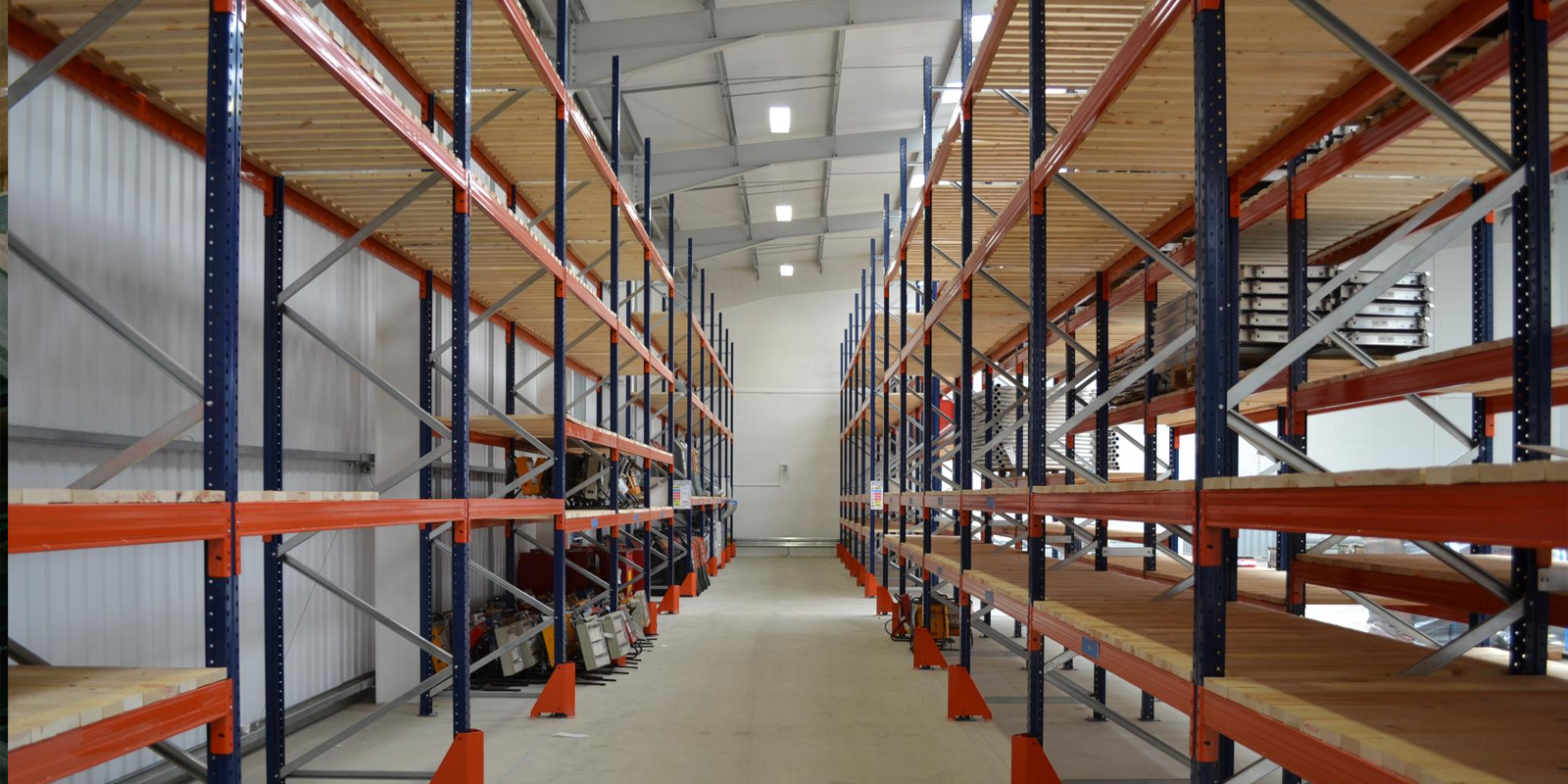
Pallet storage requires particular attention because the pallet itself forms part of the load interface with the rack.
Wire mesh decking can be incorporated into compatible pallet racking where an open deck surface is appropriate to the system. The deck can provide additional support characteristics according to its specification.
Solid shelving may also appear capable of supporting pallets because it provides a continuous surface, but its suitability depends on whether the shelving system is designed for those pallet loads.
A continuous surface should not be mistaken for greater capacity.
For pallet storage, the relevant questions are:
- How is the pallet intended to be supported?
- What is the loaded pallet weight?
- How is the load distributed?
- What rack and shelf configuration is being used?
- Is the selected surface designed for that application?
The answers are more useful than choosing between mesh and solid shelving by appearance.
Storage Visibility
Wire mesh decking generally allows more visibility through the rack level because the open grid does not completely block the view between shelves.
This can make parts of the rack and inventory more visible during warehouse operations.
Solid shelving creates an opaque or substantially continuous barrier between levels. Goods above the shelf may therefore be less visible from below.
Visibility can influence routine observations, but it should not be treated as a substitute for inventory control or rack inspection.
A warehouse still requires organised storage practices regardless of which surface is installed.
The practical distinction is simply that open mesh allows more visual continuity through the rack than a solid platform.
Light and Airflow Through Storage Levels
The open construction of wire decking allows light and air to pass through the storage surface more readily than a continuous shelf.
This characteristic can influence the physical environment around stored goods.
Solid shelving interrupts that open path because each level creates a continuous surface.
Whether this difference matters depends on the warehouse and inventory.
Some storage applications may benefit from the openness of mesh decking, while others place greater value on having a continuous shelf.
These characteristics should therefore be considered as part of the overall storage environment rather than treated as universal advantages or disadvantages.
Load Distribution Differences
Load distribution describes how inventory weight is transferred across the supporting surface. Both wire decking and solid shelving need to be assessed according to how the load is applied.
A wire mesh deck can behave differently when supporting a broad load compared with a concentrated item resting on a small section of the mesh.
Solid shelving also has defined loading conditions based on its material, support arrangement and rack configuration.
Warehouse operators should therefore avoid comparing surfaces only through a single capacity number.
The same total load can create different demands depending on its dimensions and placement.
A suitable comparison considers both total weight and the way that weight reaches the supporting surface.
Rack Compatibility
Rack compatibility determines whether the storage surface can be installed and supported as intended.
Wire mesh decking is manufactured in configurations designed to interface with particular rack dimensions and beam profiles. Panel width, depth and support construction need to correspond with the racking.
Solid shelving similarly requires appropriate support.
Simply cutting a solid board to the approximate dimensions of a rack bay does not establish that the resulting arrangement is suitable for industrial storage.
For existing warehouse racks, the actual beam dimensions and configuration should be identified before either surface is added.
For new storage systems, shelf selection can be incorporated into the original rack planning so that the components are coordinated from the start.
Warehouse Applications
Wire mesh decking and solid shelving can serve different zones within the same warehouse because inventory requirements often vary.
A pallet-storage area may use compatible wire decking where appropriate. Another section containing smaller manually handled cartons may use solid shelves.
The warehouse does not need to standardise every rack level around one surface if the inventory justifies different arrangements.
The key is to define each storage zone by function.
This allows warehouse planners to select the surface according to what will actually occupy it rather than using one shelf type for convenience.
A mixed approach can therefore support organised industrial shelving without creating unnecessary overlap between storage methods.
Cleaning and Maintenance Considerations
Wire mesh and solid shelving create different maintenance conditions because their surfaces interact differently with dust and debris.
A wire deck has less continuous horizontal surface area on which loose material can settle. However, the mesh and supporting channels still require observation and appropriate maintenance.
Solid shelves provide a continuous surface that can be straightforward to wipe or clean, but the same continuous surface can also collect dust or debris.
The appropriate approach depends on the warehouse environment and stored goods.
Maintenance should also include the physical condition of the storage surface.
Bent mesh, damaged supports, distorted shelves or displaced components should be identified rather than treated as normal wear.
Inspection Considerations
Storage surfaces should be included in warehouse rack observations because they form part of the system supporting inventory.
For wire decking, relevant conditions can include visible deformation, damaged mesh, displaced panels or changes to supporting components.
For solid shelving, observations can consider distortion, damage, deterioration or changes in how the shelf sits on its supports.
Inspection should also consider how the storage level is being used.
A shelf originally selected for light cartons may no longer be appropriate if warehouse staff later begin placing substantially heavier inventory on it.
Maintaining the intended storage configuration is therefore as important as observing the physical condition of the shelf itself.
When Wire Mesh Decking May Be More Appropriate

Wire mesh decking may be more appropriate when an open-grid surface is compatible with the inventory and the warehouse rack is designed to receive suitable deck panels.
It can be relevant where:
- Compatible pallets or larger goods are being stored
- Visibility through rack levels is useful
- An open storage surface is preferred
- The rack configuration supports appropriate mesh panels
- Inventory dimensions provide suitable contact with the decking
These conditions do not mean mesh decking is automatically required.
The deck should still solve a defined storage requirement.
If the inventory requires a continuous base, another shelving surface may be more practical.
When Solid Shelving May Be More Appropriate
Solid shelving may be more appropriate when inventory requires continuous support across the storage level.
This can apply to small cartons, containers or individual items that are unsuitable for direct placement on open mesh.
A solid surface can also be relevant where the storage process benefits from an uninterrupted shelf.
Selection should still account for shelf construction and load requirements.
The fact that goods fit physically on a solid shelf does not establish that the shelf is suitable for their weight.
The storage surface and supporting rack should therefore be evaluated together.
Choosing Between Wire Mesh and Solid Shelving
The decision should start with inventory characteristics and then move to rack compatibility.
A practical assessment can use four questions:
Step 1: What Will Be Stored?
Identify whether the level will hold pallets, cartons, containers or individual items.
Step 2: How Does the Load Contact the Surface?
Consider the size of the base, load distribution and whether an open grid provides adequate support.
Step 3: What Rack Is Being Used?
Confirm beam dimensions, rack configuration and compatibility with the proposed deck or shelf.
Step 4: How Will the Storage Level Be Operated?
Consider loading method, visibility, cleaning and changes that may occur in the inventory profile.
These questions help distinguish between a surface that merely fits the rack and one that is appropriate for the intended warehouse use.
Frequently Asked Questions (FAQs)
Is wire mesh decking stronger than solid shelving?
Not necessarily. Capacity depends on the specific deck or shelf construction, supporting rack and loading conditions. Surface type alone does not determine strength.
Can pallets be placed on wire mesh decking?
Suitable pallets may be used with compatible wire decking where the rack and deck configuration is designed for the intended load. Pallet characteristics and loading requirements should be confirmed.
Is solid shelving better for small items?
A continuous shelf can be more appropriate for small items that would not sit securely on an open mesh surface. Containers can also be used for certain small goods depending on the storage system.
Can wire mesh decking and solid shelves be used in the same warehouse?
Yes. Different storage zones can use different surfaces when inventory and rack requirements justify them.
Does wire decking fit every pallet rack?
No. Deck dimensions, support configuration and rack beam compatibility need to be checked before installation.
Which option requires less maintenance?
Maintenance requirements depend on the warehouse environment and system condition. Both wire decking and solid shelving should be kept appropriately maintained and observed for damage or changes in use.
Selecting the Storage Surface Around the Inventory
Wire mesh decking and solid shelving are not interchangeable solutions simply differentiated by whether the surface contains openings. Their construction influences inventory support, visibility, load behaviour, maintenance and compatibility with warehouse racks.
Wire decking is particularly relevant where an open-grid rack surface matches the inventory and racking configuration. Solid shelving provides continuous support where smaller or differently shaped goods require it.
For warehouse operations that rely on using a pallet racking system in Singapore, the storage surface should therefore be chosen after the load and rack configuration are understood. This keeps the decision focused on practical warehouse requirements rather than assuming one surface is universally preferable.
Match the Rack Surface to the Goods Being Stored
The appropriate rack surface depends on inventory dimensions, load distribution, rack compatibility and how each storage level will be used. Eastern Win Enterprises provides warehouse storage solutions and related components for different industrial applications in Singapore. Businesses comparing wire mesh decking with solid shelving can contact Eastern Win Enterprises to review the requirements of their storage configuration.