


 Contact Us: (65) 6419 2850


How to Choose Wire Mesh Decking for Pallet Racking Systems
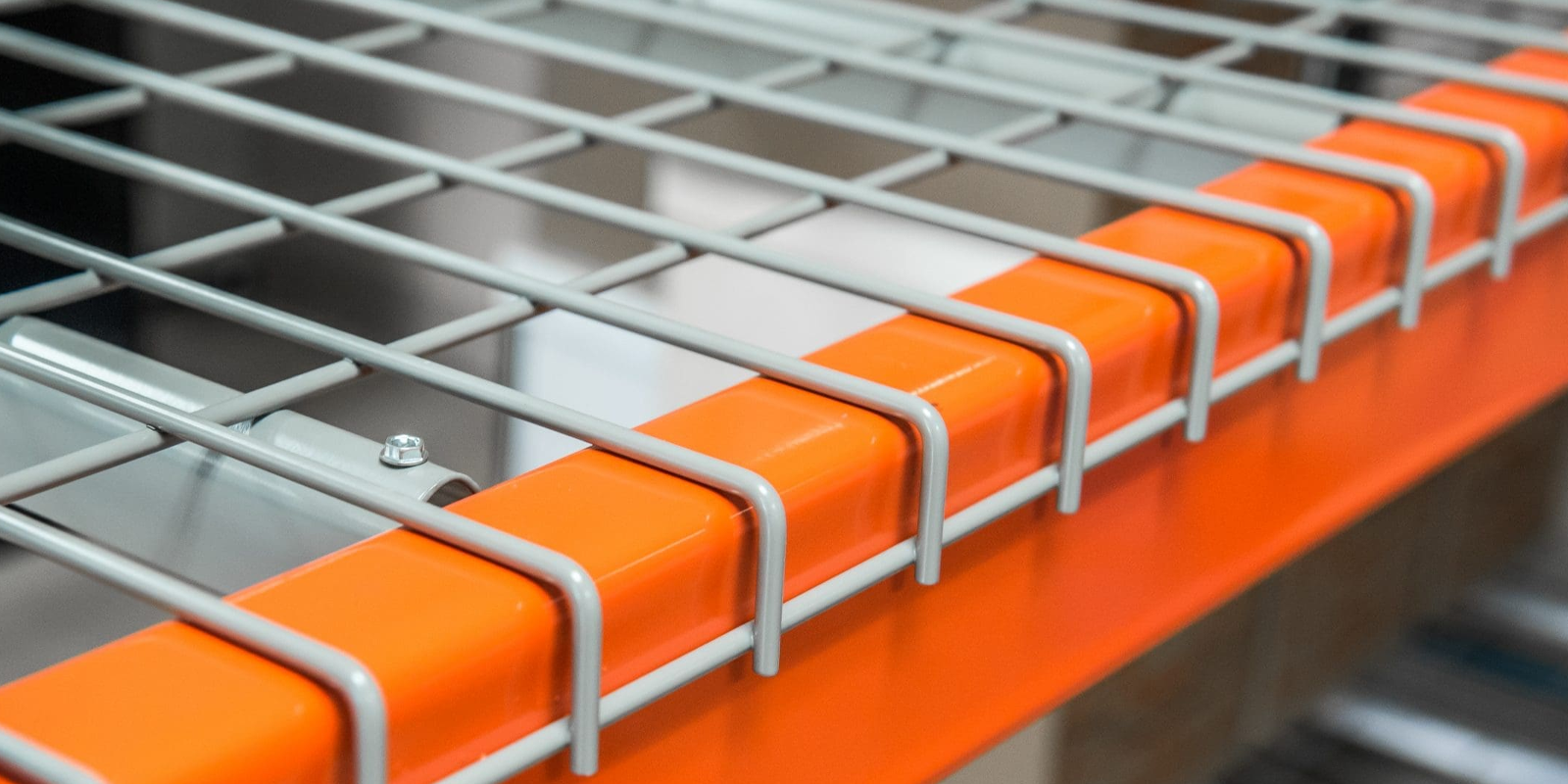
Choosing wire mesh decking for pallet racking requires more than matching a panel to the approximate width and depth of a rack bay. The deck needs to correspond with the existing rack configuration, beam dimensions, pallet characteristics, inventory type and intended loading conditions.
Wire mesh decking creates an open-grid storage surface across compatible rack beams. Depending on the configuration, it can support suitable palletised goods or other inventory while maintaining an open structure between rack levels.
However, wire decking is not a universal component. Panels that appear similar can differ in dimensions, support configuration and intended loading conditions.
For businesses using a pallet racking system in Singapore that warehouses typically depend on, selection should therefore begin with the rack and inventory already in use. Accurate measurements and load information provide a better basis for choosing decking than selecting panels according to appearance alone.
This article focuses specifically on the practical criteria used to select wire mesh decking for an existing or planned pallet-racking configuration.
Start With the Existing Rack Configuration
The existing rack configuration establishes the physical framework into which wire mesh decking needs to fit. Rack width, depth, beam type and storage-level arrangement should therefore be identified before deck panels are selected.
A warehouse should not begin by choosing a standard-looking mesh panel and then attempt to adapt the rack around it.
Instead, determine how each storage level is constructed.
Relevant information includes:
- Clear dimensions between rack components
- Beam dimensions and profile
- Rack depth
- Number of pallet positions per bay
- Existing accessories
- Intended use of each storage level
This information defines the basic requirements for the deck.
For new pallet-racking systems, wire decking can be considered during the original design process so the rack and deck configuration are coordinated from the beginning.
Understand the Purpose of the Wire Deck
Wire mesh decking should be selected for a defined storage function. Understanding what the deck needs to do helps narrow the appropriate configuration.
A warehouse may want mesh decking to create an open storage surface across compatible beams, support particular inventory arrangements or provide a suitable surface for specific pallet-storage applications.
The intended function should be established before dimensions and load requirements are compared.
For example, a deck intended for appropriate palletised inventory may have different requirements from one used for large cartons or containers.
The question is therefore not simply, "Which wire deck fits this rack?"
A more useful question is, "Which deck configuration fits this rack and supports the inventory that will actually be stored on it?"
Identify the Inventory and Storage Requirements
Inventory characteristics determine how loads interact with wire decking. Pallets, cartons, containers and industrial components can place weight on the mesh in different ways.
The warehouse should identify the normal inventory for each proposed decked level.
Relevant information includes the dimensions of the stored goods, total weight, base configuration and how the load will be placed onto the rack.
This is particularly important when several inventory types share the same storage area.
A deck selected around one uniform load should not automatically be assumed suitable for substantially different goods introduced later.
Defining the inventory profile before selection helps ensure the wire decking serves a practical storage purpose rather than becoming a generic addition to every rack level.
Selection Criteria Summary
| Selection Factor | Key Considerations | Why It Matters |
|---|---|---|
| Rack Dimensions & Beams | Clear bay width, depth, beam profile (step vs. box) | Ensures deck rests securely on the intended support structure. |
| Inventory Characteristics | Pallets, cartons, loose parts, base contact points | Determines mesh opening size and support channel count needed. |
| Load Requirements & UDL | Maximum expected weight, concentrated vs. uniform distribution | Prevents panel sagging, structural overload, or beam deflection. |
| Pallet Type & Orientation | Bottom board configuration, entry direction, pallet quality | Dictates how weight transfers through the deck channels to beams. |
| Operational Factors | Forklift loading practices, clearance, lighting, airflow | Protects decking from impact damage and maintains warehouse visibility. |
Measure the Wire Mesh Deck Dimensions
Wire mesh deck dimensions should correspond with the rack bay and beam arrangement for which the panel is intended.
Width and depth are both important.
The panel needs to sit correctly within its supporting configuration without creating an unsuitable fit. A panel that is too large may not position correctly, while an undersized panel may not engage with the intended supports as designed.
Measurements should be taken from the actual racking system rather than estimated from nominal warehouse descriptions.
If a facility contains different rack types or installations from different periods, dimensions should not automatically be assumed identical throughout the warehouse.
Confirming the rack measurements before ordering decking reduces the risk of trying to use one panel configuration across incompatible rack sections.
Consider the Rack Beam Configuration
Rack beams provide the principal horizontal structure supporting pallet loads and decking within many pallet-racking systems. Their configuration influences how wire mesh panels need to interface with the rack.
Beam profiles can vary.
A wire deck designed around one supporting arrangement may not interact correctly with a substantially different beam configuration.
This is why overall rack width alone is not enough for deck selection.
The warehouse should identify how the deck is intended to sit on or interact with the beams and whether its support components correspond with those beams.
For existing installations, physical inspection and accurate measurement can help establish the required configuration.
For new systems, the decking specification should form part of the rack design rather than being treated as an unrelated accessory added later.
Understand Deck Support Configuration
Wire mesh decking commonly incorporates structural features beneath or around the mesh that help transfer loads towards the supporting rack beams. The exact construction varies by deck type.
These supports are important because the wire grid should not be evaluated independently from the complete panel.
The number, position and design of supporting components can affect how the deck interacts with the rack and distributes the intended load.
Warehouse operators should therefore compare complete deck configurations rather than only mesh appearance.
Two panels with similar wire spacing can have different support arrangements and therefore should not automatically be considered equivalent.
The selected deck should be assessed as a complete storage component designed to work with the applicable rack configuration.
Assess Load Requirements
Load requirements are central to wire mesh decking selection. The deck needs to be suitable for the weight and loading arrangement expected at the storage level.
A useful assessment considers both total weight and how that weight reaches the decking.
For example, a broad load spread across several contact points creates a different loading condition from a dense item concentrated over a smaller area.
The warehouse should identify:
- Typical stored load
- Maximum expected load
- Number of items or pallets per level
- Contact points with the deck
- How weight is distributed across the storage surface
This information should be compared with the technical requirements of the proposed decking configuration.
Wire decking should not be treated as a method of increasing rack capacity beyond the limits of the underlying racking system.
Deck Capacity and Rack Capacity Are Different
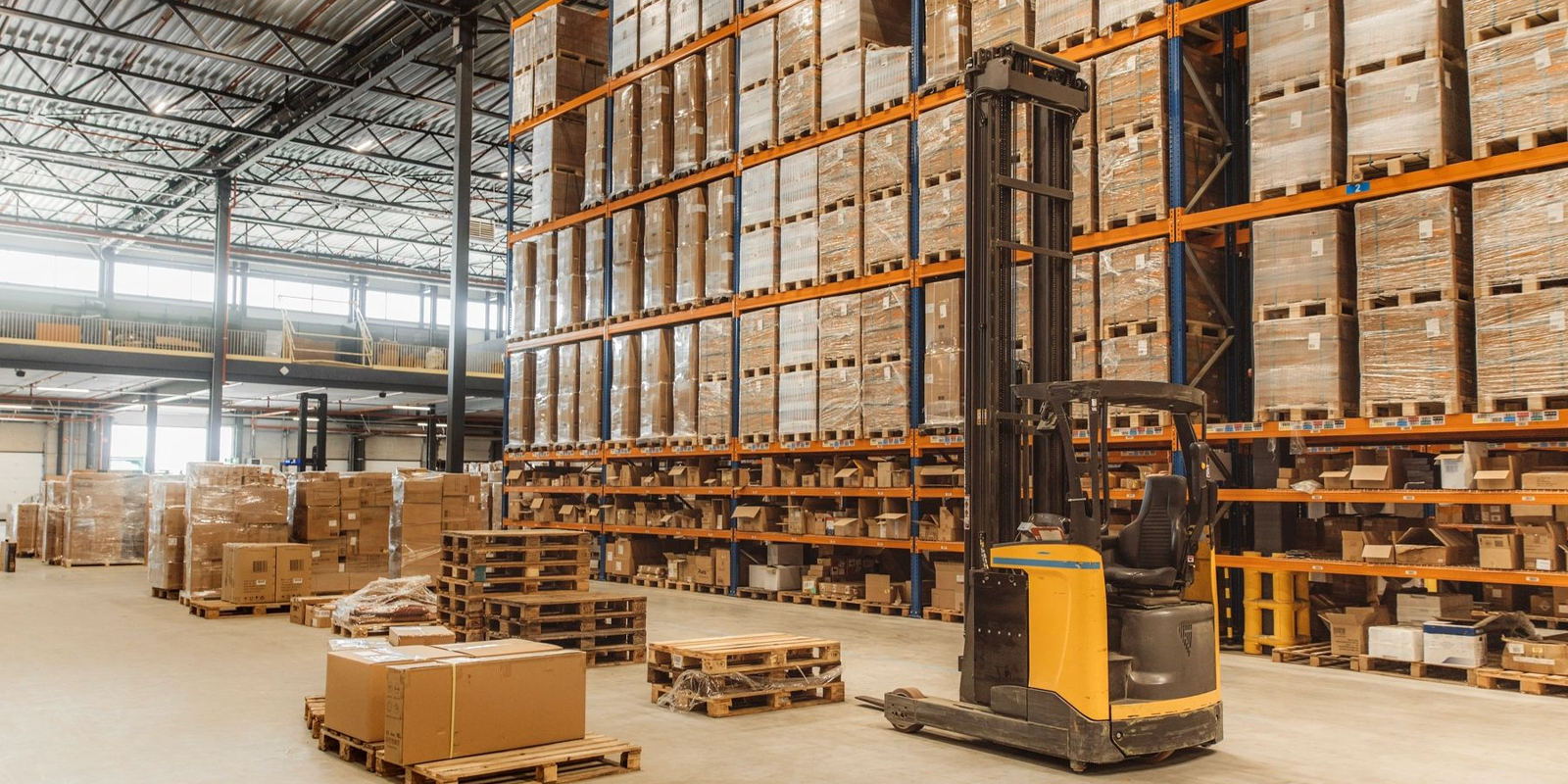
The capacity of wire mesh decking and the capacity of the pallet rack are related but separate considerations. A suitable deck does not automatically change the structural capacity of the beams, uprights or overall rack.
Every component needs to remain appropriate for the intended load.
For example, installing decking capable of supporting a particular loading condition does not mean the rack itself can automatically accept that load.
The opposite is also true. A rack designed for substantial pallet loads does not establish that any wire mesh panel placed across its beams has equivalent capability.
The storage level should therefore be evaluated as a system:
inventory → wire deck → rack beams → rack structure
Each part needs to be compatible with the intended configuration.
Review Pallet Characteristics
Pallet characteristics influence how palletised loads interact with wire decking. Dimensions, construction, condition and orientation can all affect the way a pallet sits across a storage level.
A pallet's total size alone is not enough.
The underside of the pallet determines where contact occurs with the rack and decking. Different pallet constructions can therefore interact differently with the same wire deck.
Warehouse operators should identify the actual pallet types used in daily operations.
Pallet condition should also be monitored. Damaged or distorted pallets can create unsuitable load conditions regardless of whether the wire decking itself is correctly specified.
Where multiple pallet types are used, the proposed deck configuration should be assessed against the range expected in the warehouse rather than only one sample pallet.
Consider Pallet Orientation
Pallet orientation describes how the pallet is positioned when placed into the rack. Orientation can affect which parts of the pallet contact the supporting structure.
The intended loading direction should therefore be considered when selecting wire mesh decking.
A warehouse should not assume that a pallet can simply be rotated without changing the storage condition.
The correct orientation depends on the pallet, rack and handling arrangement.
This is particularly relevant where forklift operators need to position loads consistently across multiple rack levels.
Defining the intended pallet orientation during storage planning helps maintain a consistent relationship between the pallet, wire deck and rack beams.
Consider Mesh Opening Size
Mesh opening size influences the amount of open space across the deck and the way smaller goods interact with its surface.
Large pallets or containers can span multiple mesh openings without difficulty when the deck is suitable for the application. Small items may require a different arrangement.
Warehouses storing loose components should consider whether the items could pass through or sit unevenly on the mesh.
In such cases, appropriate containers, bins or another storage surface may be more suitable.
Mesh opening size should therefore be considered together with inventory dimensions.
Selecting the smallest available openings is not automatically necessary. The objective is to choose a configuration appropriate for the actual stored goods and deck requirements.
Match Decking to the Storage Configuration
The same warehouse can contain several storage configurations, and not every rack level necessarily requires identical decking.
Pallet storage areas may have different requirements from levels used for cartons or containers.
A warehouse can therefore assess decking according to storage zones.
For example, one zone might hold relatively uniform palletised goods, while another accommodates non-palletised inventory requiring a different deck arrangement.
This approach allows wire decking to be specified according to function rather than applying one configuration across the entire warehouse.
It can also make future inventory management clearer because each storage zone has defined operating conditions.
Account for Forklift Loading
Forklift operations influence how loads are placed onto wire-decked rack levels. The decking needs to work within the established pallet placement process rather than interfere with normal material handling.
Forklift operators should be able to position loads consistently within the intended storage location.
The rack layout, pallet dimensions and deck configuration should therefore be coordinated.
Poorly positioned pallets can create different load conditions from those assumed during storage planning.
Forklift movement should also avoid unnecessary contact with decking or rack components.
The deck should be viewed as part of the storage system, not as a surface intended to absorb repeated impact from handling equipment.
Operational practices remain important even when suitable decking has been installed.
Installation Considerations
Correct installation helps ensure the selected wire mesh decking sits within the rack configuration as intended.
Before installation, rack dimensions and panel specifications should be confirmed.
Deck panels should be positioned according to the applicable configuration rather than forced into spaces where dimensions do not correspond.
Existing racks should also be reviewed for visible damage or modifications before new decking is added.
Adding accessories to a rack that has already been altered or damaged can make it difficult to confirm whether the complete storage arrangement remains appropriate.
Where fixing or securing methods form part of the deck system, they should follow the relevant technical requirements.
Installation should preserve the intended relationship between deck, beams and rack structure.
Selecting Wire Decking for Existing Racks
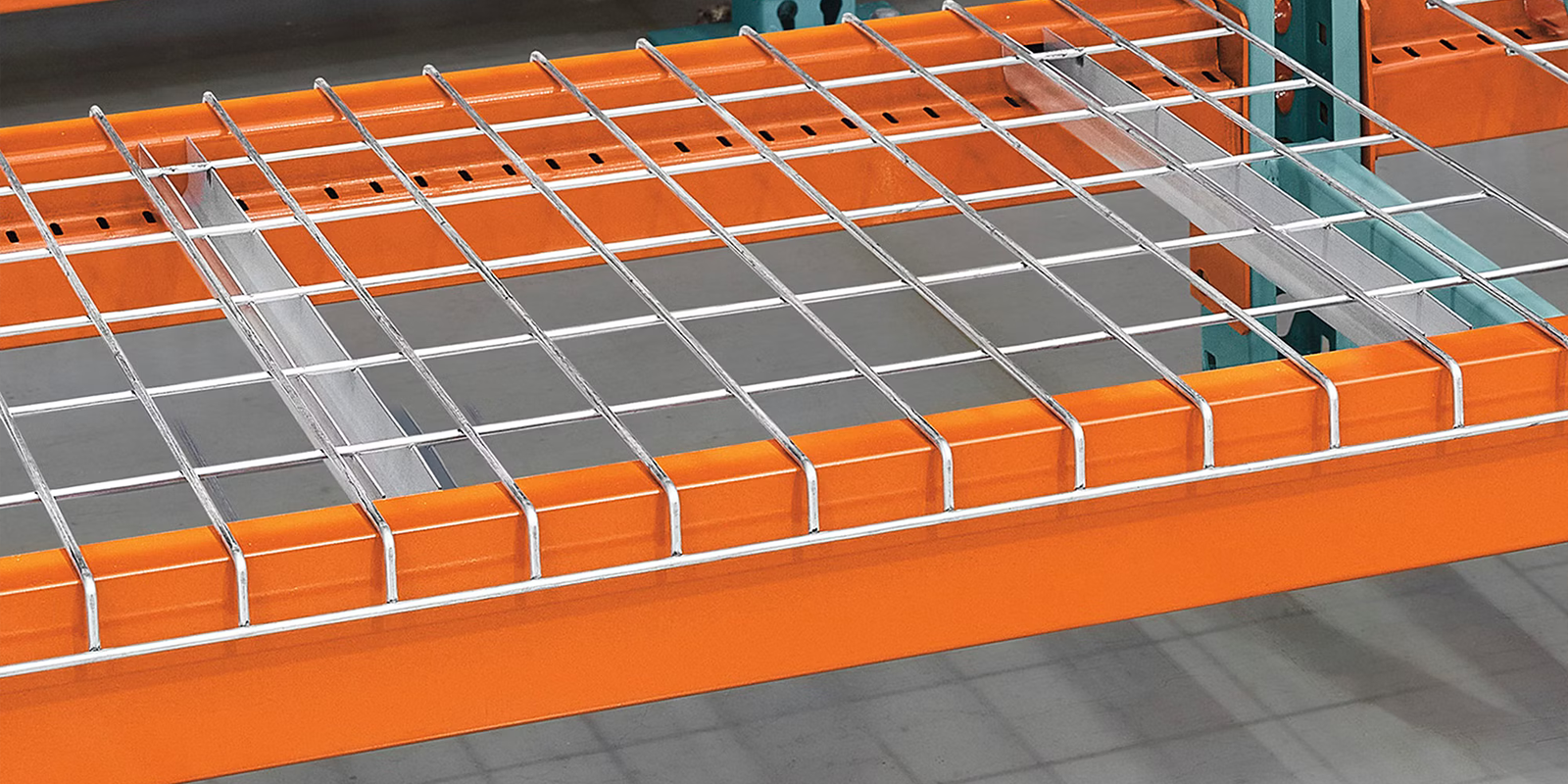
Retrofitting wire mesh decking onto existing pallet racks requires accurate identification of the current system.
Warehouse operators should confirm rack dimensions rather than relying on old records alone, particularly if the installation has been modified over time.
The assessment should establish:
- Beam dimensions
- Rack depth
- Clear bay width
- Current pallet sizes
- Stored load characteristics
- Existing accessories
- Physical condition of the rack
This information can then be used to identify a compatible deck configuration.
Retrofitting should not be approached as simply finding a panel that can rest between the beams.
Physical fit and appropriate system compatibility are separate requirements.
Selecting Wire Decking for New Racking
New racking projects allow the decking requirements to be coordinated with the rack configuration from the beginning.
This makes it possible to consider pallet dimensions, loads, beam configuration and decking together rather than adapting one component after installation.
The inventory profile should still come first.
Warehouse planners should establish what will be stored, how it will be handled and which rack levels require decking.
Not every storage position automatically needs a mesh panel.
Specifying decking only where it serves a defined purpose can produce a clearer storage configuration and reduce unnecessary components.
The rack and deck can then be treated as parts of one planned warehouse storage system.
Maintenance and Ongoing Review
Wire mesh decking should be observed as part of normal warehouse rack maintenance. Changes in physical condition or storage use can affect whether a deck remains suitable for its intended purpose.
Visible issues can include bent mesh, distorted supports or panels that no longer sit correctly within the rack.
Inventory changes also matter.
A deck originally selected for one load profile should be reviewed if substantially heavier or differently shaped goods are introduced.
Warehouse operators should therefore monitor both the component and the way it is being used.
A deck can remain physically intact while the storage conditions around it have changed significantly.
Common Wire Mesh Decking Selection Mistakes
Selection problems often occur when decking is treated as a generic rack accessory.
Common mistakes include:
- Choosing panels by approximate dimensions
- Ignoring beam configuration
- Considering deck capacity without rack capacity
- Failing to assess pallet construction
- Using one deck configuration for very different inventory
- Assuming physical fit confirms compatibility
- Overlooking load distribution
- Failing to review existing rack condition before retrofitting
These issues can be reduced by starting with accurate rack and inventory information.
Wire decking should solve a defined storage requirement rather than simply fill the open space between rack beams.
Frequently Asked Questions (FAQs)
How do I know what size wire mesh decking I need?
The required dimensions depend on the actual rack bay, depth, beam configuration and intended deck arrangement. Measurements should be taken from the applicable racking system before selecting panels.
Does wire mesh decking fit every pallet rack?
No. Rack dimensions and beam profiles can differ, so deck compatibility should be confirmed for the specific pallet-racking configuration.
How is wire mesh decking capacity determined?
Capacity depends on the complete deck construction and specified loading conditions. Total load and load distribution should both be considered.
Does adding wire decking increase pallet-rack capacity?
Not automatically. Decking and rack capacity are separate considerations. The beams, uprights and overall rack configuration must remain suitable for the intended loads.
Can wire decking be added to existing racking?
It can be added where a compatible configuration is available and the existing rack is appropriate for the intended use. Dimensions, rack condition and load requirements should be reviewed first.
Can the same decking be used for pallets and cartons?
Possibly, depending on the deck specification and characteristics of the inventory. The dimensions, base contact and weight of both storage types should be assessed before using the same configuration.
Specifying Decking as Part of the Complete Rack System
Choosing wire mesh decking requires coordination between the inventory, deck and pallet rack. Panel dimensions are important, but they are only one part of the selection process.
Rack-beam configuration, pallet construction, load distribution and storage use determine how the deck needs to function. Existing systems also require careful measurement because apparently similar rack bays may not necessarily use identical components.
For warehouses using a pallet racking system in Singapore that their operations depend on, wire decking should therefore be specified as part of the complete storage configuration. This helps ensure the deck fits not only the physical rack but also the inventory and handling conditions it is intended to support.
Configure Wire Decking Around Your Existing Racking
The appropriate wire mesh decking configuration depends on rack dimensions, beam profiles, pallet characteristics and load requirements. Eastern Win Enterprises provides warehouse storage solutions and related components for industrial applications in Singapore. Businesses assessing decking for new or existing pallet racks can contact Eastern Win Enterprises to review their storage configuration.