


 Contact Us: (65) 6419 2850


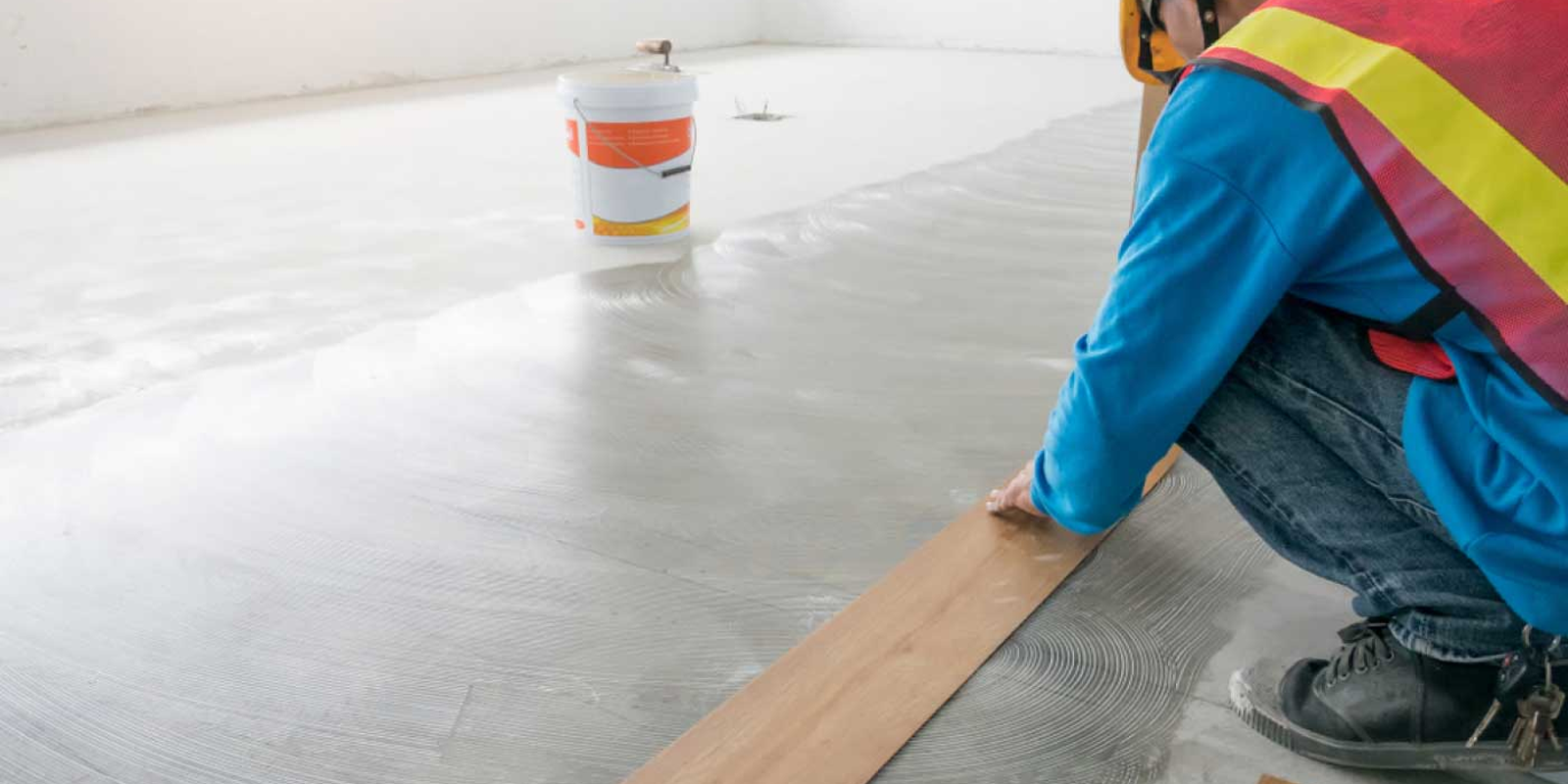
A Complete Guide to Flooring Adhesives for Vinyl, Timber and Other Flooring Materials
Flooring adhesive is a bonding material used to secure compatible floor coverings to a prepared subfloor or substrate. The appropriate adhesive depends on the flooring material, subfloor condition, installation environment and performance requirements of the completed floor.
Vinyl, timber and other flooring materials do not have identical bonding requirements. A vinyl flooring adhesive may need characteristics suited to a resilient floor covering, while a timber flooring adhesive needs to account for the physical behaviour of wood and the particular installation system. Other flooring products can introduce additional requirements related to backing materials, dimensions or site conditions.
The subfloor is equally important. Concrete, screed, timber-based panels and other surfaces can differ in porosity, moisture condition, stability and surface characteristics. A suitable adhesive must therefore be compatible with both the floor covering and the substrate beneath it.
For building projects in Singapore, environmental and site conditions can also influence flooring installation. Humidity, substrate moisture, indoor conditions and construction sequencing should be considered alongside the adhesive specification.
This guide explains how flooring adhesives work, the differences between vinyl and timber applications, the role of subfloor preparation, substrate compatibility and the factors that should be assessed before selecting and applying a floor adhesive.
What Is Flooring Adhesive?
Flooring adhesive is a construction bonding material formulated to attach specified flooring products to compatible substrates. It creates an adhesive layer between the floor covering and the prepared subfloor.
The adhesive forms only one part of the flooring system. The complete installation can include the structural floor, screed or levelling layer, moisture-management components where required, adhesive and final floor covering.
Different flooring adhesives are formulated for different materials and installation conditions. Some are intended for resilient flooring such as vinyl, while others are designed for timber or other specified flooring systems.
The term "flooring adhesive" should therefore not be interpreted as one universal product category in which every adhesive can be used interchangeably.
Selection should begin with the floor covering and substrate, followed by the environmental and application requirements.
How Flooring Adhesive Works
Flooring adhesive works by developing adhesion between the back of the flooring material and the prepared surface below it. The effectiveness of this bond depends on compatibility and correct application.
When adhesive is spread over the substrate, it needs to make appropriate contact with the surface. The flooring is then installed according to the requirements of the particular adhesive and floor-covering system.
Some products have defined waiting, open or working periods that affect when the flooring should be placed. Others have particular application requirements related to spread rate, trowel selection or environmental conditions.
The bond develops as the adhesive sets or cures.
This means flooring installation is not simply a matter of applying glue and immediately covering it. Timing, coverage, substrate preparation and flooring placement can all influence the finished result.
Flooring Adhesive Versus General Construction Adhesive
Flooring adhesive is specifically selected for floor-covering installations, while general construction adhesive can serve a broader range of building-material bonding applications. The two categories should not automatically be treated as substitutes.
Flooring systems create distinct requirements.
A floor covering can extend across a large continuous area and may be exposed to foot traffic, furniture movement and environmental changes. Some materials also undergo dimensional changes that the installation system needs to accommodate appropriately.
The adhesive may therefore need application and performance characteristics developed for a particular type of flooring.
General construction adhesives may be suitable for other bonding tasks such as trims, panels or specified building components, but their general bonding capability does not establish suitability for full-area flooring installation.
The technical requirements of the floor covering should determine the appropriate adhesive category.
Main Types of Flooring Adhesives
Flooring adhesives can be grouped according to the materials and installation systems for which they are formulated. The most relevant distinction is usually based on the floor covering rather than simply the chemical appearance of the adhesive.
Common categories can include:
- Vinyl flooring adhesive
- Timber or wood flooring adhesive
- Adhesives for other resilient floor coverings
- Specialised flooring bonding products for particular substrates or applications
Individual formulations within these categories can still differ.
Two products described as vinyl adhesives may have different requirements regarding backing type, substrate or installation conditions. Timber adhesives can similarly vary according to the flooring system and wood product.
Product selection should therefore move beyond the category name and consider the technical information for the specific installation.
Vinyl Flooring Adhesive
Vinyl flooring adhesive is formulated for compatible vinyl floor coverings and substrates. Its role is to create a consistent bond between the flooring material and the prepared subfloor.
Vinyl flooring includes different product formats, and these can have different installation requirements. Sheet products, tiles and planks should not automatically be assumed to use the same adhesive or method.
The backing of the flooring is particularly important because this is the surface that interacts directly with the adhesive.
A vinyl floor adhesive should therefore be selected according to the specific flooring manufacturer's requirements as well as the conditions of the substrate.
The size of the installation also matters. Full-area flooring requires consistent application across a much larger surface than a small isolated bonding task.
Careful spreading and installation sequencing help maintain the required adhesive coverage throughout the floor area.
Vinyl Flooring Formats and Bonding Requirements
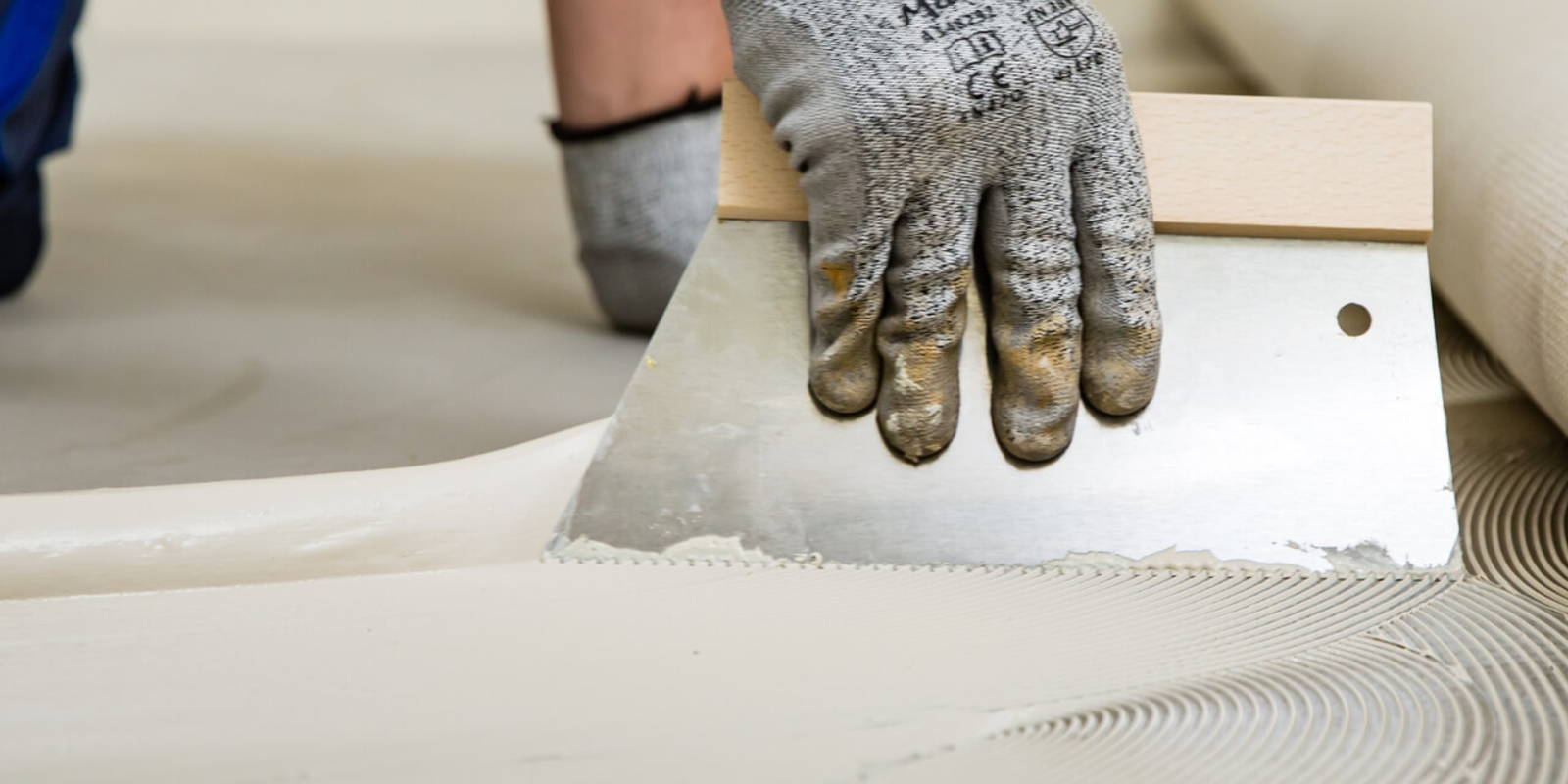
Vinyl flooring formats can influence adhesive selection because their dimensions, backing construction and installation methods vary. The term "vinyl flooring" alone may not provide enough information for product selection.
Sheet vinyl covers comparatively large areas with fewer joints between individual pieces. Vinyl tiles and planks divide the floor into multiple units.
The flooring manufacturer's installation method should establish whether adhesive bonding is required and what type of product is appropriate.
Where a bonded installation is specified, project teams should confirm:
- The exact flooring product
- The material and backing type
- The subfloor
- The required adhesive
- The application method
- Site conditions during installation
This information reduces the risk of selecting a generic vinyl adhesive without confirming compatibility with the actual flooring system.
Timber Flooring Adhesive
Timber flooring adhesive is used in specified bonded wood-flooring installations where compatible timber flooring is secured to an appropriate prepared substrate. The adhesive needs to account for the requirements of both the wood product and the subfloor.
Timber differs from many synthetic floor coverings because wood responds naturally to environmental moisture and humidity.
Changes in moisture conditions can affect its dimensions. The flooring system therefore needs to account for the behaviour of the timber product rather than treating it as an inert surface.
Not every timber floor is installed using full adhesive bonding. Installation methods can vary according to flooring type and system design.
Where adhesive bonding is specified, the selected wood flooring adhesive should correspond with the timber product, substrate and expected indoor environment.
Product suitability should be established before installation rather than assuming any high-strength construction adhesive is appropriate for timber flooring.
Why Timber Movement Matters
Timber movement refers to dimensional changes that can occur as wood responds to moisture and environmental conditions. This characteristic is an important consideration in flooring installation.
The amount and direction of movement depend on the flooring material and surrounding conditions.
An adhesive used for timber flooring forms part of a system that needs to remain appropriate as the floor experiences its normal service environment.
This does not mean the adhesive alone is responsible for controlling all timber movement. Flooring condition, installation method, expansion provisions and indoor environment also contribute to the overall system.
The relevant timber flooring requirements should therefore be considered together.
Selecting adhesive solely according to bond strength can overlook the fact that the bonded materials continue to respond to their surroundings after installation.
Comparing Vinyl and Timber Flooring Adhesives
Vinyl and timber flooring adhesives serve the same broad purpose of bonding flooring to a substrate, but the materials they work with create different considerations.
The differences can be summarised as follows:
| Consideration | Vinyl Flooring Adhesive | Timber Flooring Adhesive |
|---|---|---|
| Main floor covering | Compatible vinyl products | Compatible timber or wood flooring |
| Key material consideration | Flooring format and backing | Wood type and dimensional behaviour |
| Subfloor importance | High | High |
| Environmental conditions | Can affect adhesive and flooring | Can affect adhesive and timber movement |
| Installation method | Product-specific | Flooring-system-specific |
| Selection basis | Vinyl, backing, substrate and application | Timber product, substrate and installation system |
This comparison does not imply that all products within either category perform identically.
The technical specification remains the basis for determining whether an adhesive is appropriate for the proposed installation.
What Is a Subfloor?
A subfloor is the supporting surface or construction layer beneath the finished flooring system. It provides the base onto which the floor covering, adhesive or intermediate layers are installed.
Depending on the building and flooring build-up, the adhesive may be applied to concrete, screed, timber-based panels or another approved substrate.
The quality of the finished flooring depends partly on the condition of this base.
An uneven, contaminated or unstable substrate can create installation problems regardless of the quality of the flooring adhesive.
The subfloor should therefore be treated as a functional component of the flooring system rather than simply the surface that happens to exist below the finish.
Concrete Subfloors
Concrete is a common substrate in building flooring systems, but its condition should be assessed before adhesive application. A concrete surface can vary in flatness, porosity, moisture condition and surface quality.
New concrete also changes as it cures and dries. The fact that the surface appears hard does not by itself establish that it is ready for every flooring installation.
Existing concrete can present different issues, including old coatings, contamination or residues from previous floor coverings.
The proposed adhesive and flooring need a suitable surface.
Where moisture testing, surface preparation or other assessments are required by the flooring system, these should be completed before installation.
Floor adhesive should not be used as a way to compensate for an unsuitable concrete substrate.
Screeds and Levelling Layers
Screeds and levelling materials can create a suitable surface above the structural floor when they are designed and prepared for the flooring system. Their purpose can include improving level, flatness or surface condition.
These materials become part of the substrate onto which the adhesive is applied.
Compatibility between the levelling layer and adhesive is therefore relevant.
A weak or poorly bonded intermediate layer can affect the finished floor even if the adhesive bonds effectively to its upper surface.
The complete build-up should be assessed from the structural base through to the final floor covering.
Where a levelling product is used, it should be appropriate for the flooring application and allowed to reach the required condition before adhesive installation proceeds.
Timber-Based Subfloors
Timber-based panels and other wood-derived substrates create different conditions from concrete or cementitious screeds. Their stability, surface finish and movement characteristics should be considered before flooring is bonded.
The substrate needs to be suitable for the intended floor covering and adhesive.
Panel joints, fixings and overall rigidity can also influence the finished surface.
Applying adhesive over a flexible or unstable base does not remove movement from the underlying construction.
Where timber-based subfloors are used, the complete floor system should be checked for compatibility rather than assuming that an adhesive suitable for timber flooring is automatically suitable for every timber substrate.
The flooring material and subfloor are separate components with separate requirements.
Why Substrate Compatibility Matters
Substrate compatibility determines whether the adhesive can interact appropriately with the surface on which it is applied. An adhesive suitable for a particular flooring material can still be inappropriate if it does not correspond with the subfloor.
Porosity is one consideration.
A porous cementitious surface can interact differently with adhesive from a dense or previously coated substrate.
Existing finishes can also change the actual bonding surface. Adhesion to a coating depends on that coating's own condition and compatibility, not simply on the concrete or timber beneath it.
Before selecting flooring adhesive, the project team should therefore identify both sides of the bond:
floor covering → adhesive → actual prepared substrate.
This simple sequence helps prevent material selection from focusing only on the visible flooring product.
Surface Preparation for Flooring Adhesives
Surface preparation creates the conditions required for consistent adhesive contact across the flooring area. It is one of the most important stages before floor bonding begins.
The substrate should meet the requirements of the selected flooring and adhesive system.
Relevant conditions can include:
- Dust and loose material
- Oil, grease or contamination
- Residues from previous adhesives
- Incompatible coatings
- Excessive surface irregularities
- Cracks or defects requiring separate assessment
- Moisture conditions outside the flooring requirements
Preparation methods depend on the substrate.
The objective is not to make every floor look identical but to provide an appropriate, stable and compatible surface for the intended installation.
Applying more adhesive does not correct inadequate preparation.
Flatness and Flooring Installation
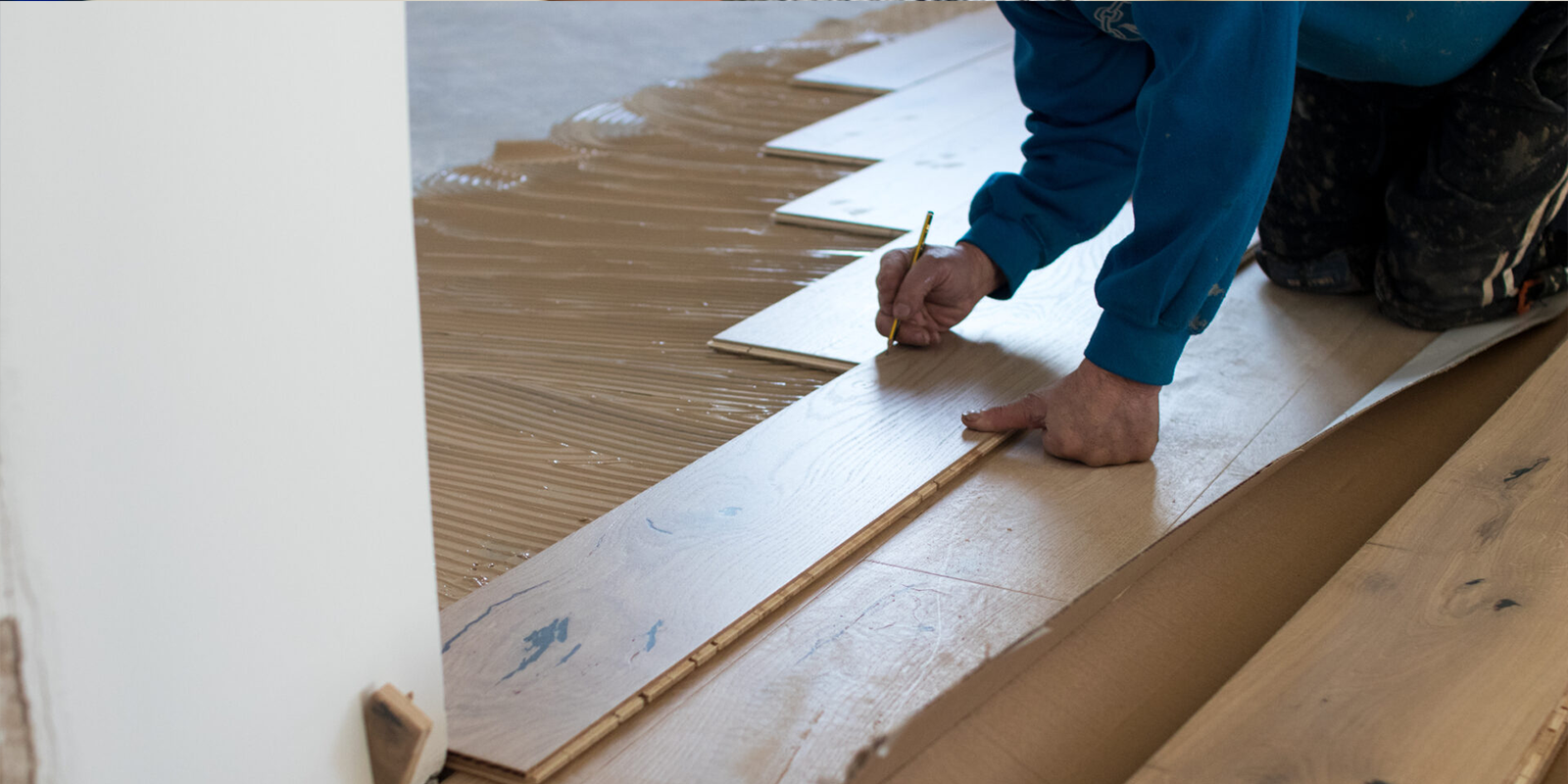
Subfloor flatness affects how the finished flooring sits across the surface. Adhesive should not automatically be expected to function as a levelling material.
Localised irregularities can affect contact between the floor covering and adhesive.
For certain floor finishes, imperfections in the substrate may also become visible through the completed surface.
Where the substrate does not meet the required condition, appropriate preparation or levelling should take place before flooring adhesive is applied.
The requirements depend on the floor-covering system.
This distinction is important because adhesive and levelling compounds perform different functions. A bonding product should be used to create the intended bond, not as an improvised method of correcting significant subfloor variation.
Subfloor Moisture and Flooring Installation
Subfloor moisture is an important consideration because certain flooring materials and adhesives have defined conditions under which they should be installed. Excessive moisture can affect parts of the flooring system.
The appropriate assessment depends on the substrate, building conditions and product requirements.
Visual inspection alone may not establish the moisture condition of a concrete or screeded floor.
Where the flooring system requires moisture testing, the relevant procedure should be completed before adhesive installation.
If moisture conditions are outside the permitted range, the cause and appropriate construction response should be determined rather than simply proceeding with the flooring.
An adhesive should not automatically be assumed to function as a moisture barrier unless the specific product and system are designed for that purpose.
Humidity and Singapore Flooring Projects
Singapore's humid climate makes environmental conditions relevant to flooring installation, particularly for materials that respond to moisture in the surrounding air.
Timber is a clear example because its dimensions can change with moisture conditions.
Other flooring and adhesive products can also have defined installation conditions.
Indoor humidity should therefore be considered together with substrate moisture rather than treating them as the same issue.
Substrate moisture relates to water within or moving through the supporting construction. Ambient humidity relates to moisture in the surrounding air.
Both can matter, but they influence flooring systems in different ways.
Project teams should follow the environmental requirements for the selected flooring and adhesive throughout installation.
Temperature and Indoor Conditions
Temperature can influence adhesive application, working characteristics and curing. The relevant range depends on the specific product.
Flooring materials themselves can also require suitable site conditions before and during installation.
A floor covering delivered from one environment and immediately installed in substantially different conditions may not behave in the same way as material that has been managed according to its installation requirements.
Site conditions should therefore be established before work begins.
Where air-conditioning or other environmental controls are part of the building's normal use, project requirements may specify conditions for flooring installation.
The objective is to install the floor under appropriate conditions rather than expecting the adhesive to compensate for an unsuitable environment.
Understanding Adhesive Open and Working Times
Open and working times describe periods within the adhesive application process that influence when flooring should be placed and adjusted. Exact terminology and requirements vary between products.
After an adhesive is spread, some formulations require a particular period before the floor covering is installed.
Waiting too little or too long can change how the adhesive interacts with the flooring.
Large flooring areas make this particularly important because the installer needs to coordinate adhesive spreading with the rate at which flooring can be positioned.
Covering an excessively large area with adhesive at once may result in sections exceeding the intended installation period before the flooring reaches them.
Application should therefore be planned in manageable areas according to product requirements and site conditions.
Trowel Selection and Adhesive Coverage
Trowels are commonly used to spread flooring adhesive at a controlled rate and pattern. The appropriate tool depends on the adhesive and flooring system.
Notch dimensions influence how much adhesive remains on the substrate after spreading.
Using an arbitrary trowel can therefore change the amount of material applied.
Correct coverage is intended to create appropriate contact between the flooring and adhesive without unnecessary excess.
More adhesive does not automatically produce a stronger floor.
Excessive application can interfere with installation depending on the product, while insufficient coverage can leave inadequate contact.
The product and flooring requirements should determine the application tool and spread rate.
Adhesive Transfer to the Flooring
Adhesive transfer describes the contact achieved between the applied adhesive and the back of the floor covering. Appropriate transfer is necessary for the flooring to engage with the bonding layer as intended.
The required degree and method of checking transfer depend on the installation system.
Subfloor condition, trowel selection, timing and placement technique can all influence contact.
If adhesive has been spread but does not properly interact with the flooring backing, the fact that the substrate is covered does not by itself establish an effective bond.
Installers should therefore follow the specified application process rather than assessing the floor only from the visible finished surface.
Flooring Material Considerations
Flooring material characteristics influence adhesive selection because different products interact with bonding materials in different ways.
The relevant characteristics can include:
- Flooring composition
- Product format and dimensions
- Backing material
- Dimensional behaviour
- Installation method
- Expected service conditions
These factors should be identified from the actual flooring product.
Broad descriptions such as "vinyl", "timber" or "wood-look flooring" may not provide enough information for technical selection.
Two products with a similar appearance can have different backings or installation methods.
The adhesive should therefore be matched to the construction of the flooring rather than its visual finish.
Interior Use and Service Conditions
Most flooring adhesives are used within interior building environments, but internal spaces can still create different service conditions.
Residential rooms, commercial spaces and other areas can experience different levels of traffic, furniture loading and environmental control.
Some areas can also be subject to occasional moisture or frequent cleaning.
The flooring and adhesive system should be selected for the intended use of the space.
An interior classification alone does not establish suitability for every room.
Project teams should identify the expected service environment and compare it with the requirements of the flooring manufacturer and adhesive product.
Flooring Adhesive in Renovation Projects
Renovation flooring projects can present additional substrate challenges because the existing floor may contain previous adhesives, coatings, levelling materials or residues.
Removing the old floor covering does not automatically produce a suitable surface for new adhesive.
The remaining substrate should be assessed according to the requirements of the replacement flooring.
Existing materials may need to be removed, prepared or otherwise addressed before installation.
The compatibility of old and new layers should not be assumed.
Renovation projects can also reveal uneven areas or previous repairs that were hidden beneath the original floor.
Allowing time for substrate assessment helps prevent the new adhesive system from being installed over unresolved conditions.
New-Build Flooring Applications
New-build projects allow flooring requirements to be coordinated earlier in the construction sequence, but they still require attention to substrate readiness.
Concrete slabs and screeds need to reach the conditions required for the selected flooring system.
Other construction activities can also affect the floor through contamination, traffic or accidental damage.
Flooring installation should therefore occur at an appropriate stage of the project rather than simply when the area appears visually complete.
The adhesive, floor covering and site environment should all be ready at the same time.
Good sequencing reduces the need to correct preventable substrate problems immediately before installation.
Selecting Flooring Adhesive by Bond Strength Alone
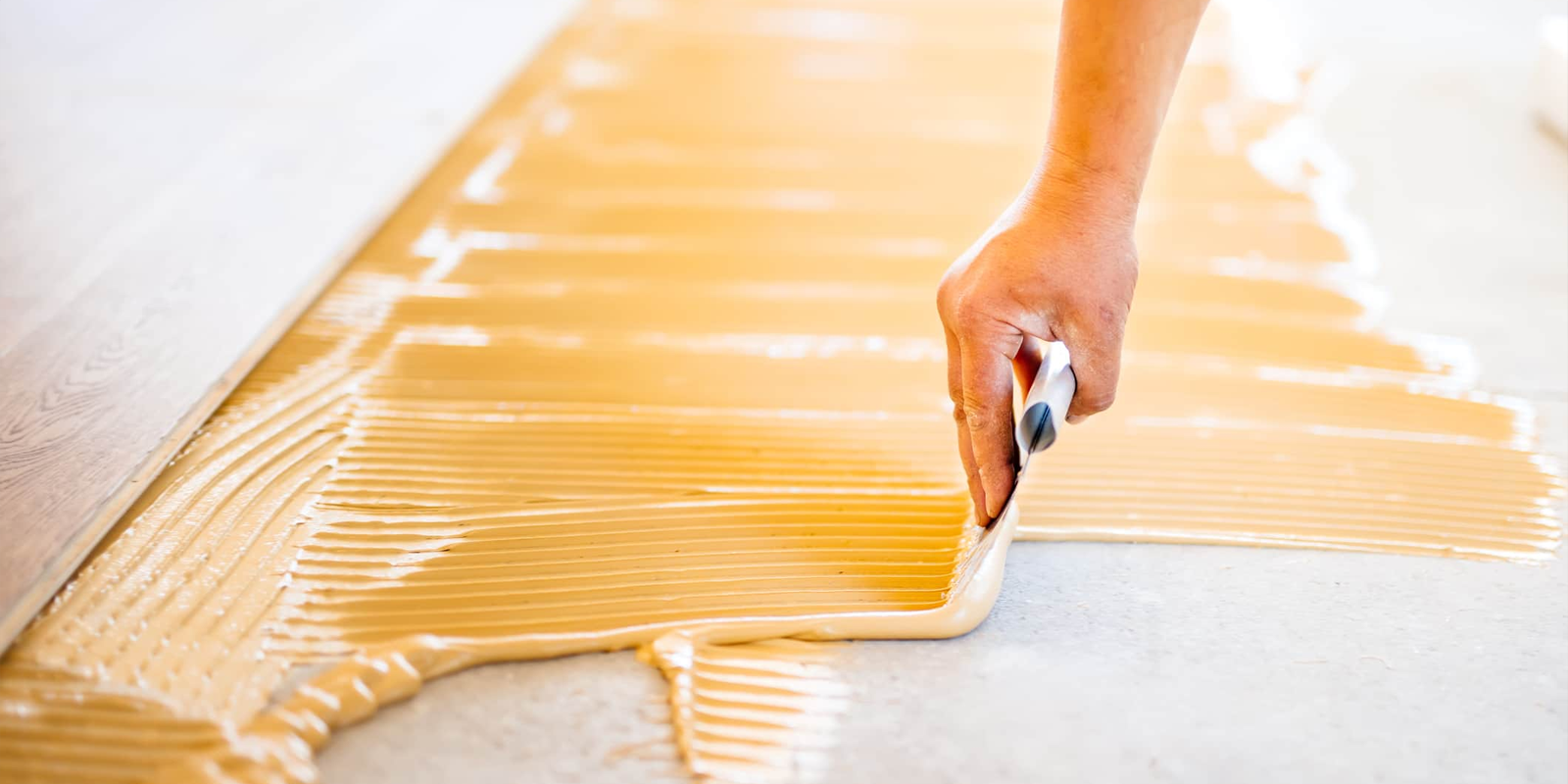
Bond strength is only one aspect of flooring adhesive selection. The strongest numerical value is not automatically the most appropriate product.
A flooring system needs compatibility between the adhesive, floor covering and substrate.
Application characteristics, environmental conditions and the physical behaviour of the flooring can be equally important.
For timber flooring, for example, the material's response to moisture and movement needs consideration. For vinyl, backing compatibility and installation methods may be central.
A product can therefore have substantial bonding capability but still be inappropriate for a particular flooring system.
Selection should focus on suitability rather than maximum strength.
How to Choose Flooring Adhesive
Choosing flooring adhesive requires a systematic review of the floor covering, subfloor and installation environment. Starting with the exact flooring product provides the clearest basis for selection.
1. Identify the Flooring Material
Determine whether the project uses vinyl, timber or another floor covering. Confirm the exact product and construction rather than relying on appearance alone.
2. Confirm the Installation Method
Establish whether the flooring is intended to be fully bonded and identify any manufacturer-specific adhesive requirements.
3. Identify the Subfloor
Determine whether the adhesive will be applied to concrete, screed, timber-based material or another approved substrate.
4. Assess Surface Condition
Review flatness, cleanliness, stability, existing coatings and any old adhesive residues.
5. Review Moisture Conditions
Confirm whether substrate moisture testing or other moisture-management measures are required.
6. Consider the Environment
Assess temperature, humidity and the conditions under which the finished floor will operate.
7. Compare Compatible Adhesives
Review flooring adhesive products according to their documented floor-covering, substrate and application compatibility.
This process helps prevent selection from being reduced to choosing a general-purpose floor glue.
Application Considerations
Flooring adhesive application should follow a planned sequence so the substrate, material and adhesive are all ready when installation begins.
The exact procedure depends on the selected system, but the workflow generally includes substrate preparation, adhesive application, flooring placement and appropriate curing or protection.
Important application considerations include:
- Using the specified adhesive quantity
- Selecting an appropriate application tool
- Observing working or open times
- Installing flooring within manageable areas
- Achieving suitable adhesive transfer
- Following requirements for rolling or other finishing procedures where applicable
- Protecting the floor during initial curing
Consistency across the installation is important, particularly over large floor areas.
Localised changes in application technique can create different conditions within the same finished floor.
Protecting the Floor After Installation
Newly bonded flooring can require protection while the adhesive develops its intended properties. The relevant period depends on the product and flooring system.
Premature heavy traffic can disturb the installation before the bond is ready for normal service.
Other construction trades can also damage or contaminate newly installed flooring.
Project sequencing should therefore account for curing and protection requirements.
Where furniture, equipment or other loads will be placed on the floor, the timing should follow the applicable installation guidance.
Protective measures should also be compatible with the finished flooring rather than introducing materials that could affect its surface.
Common Flooring Adhesive Selection Mistakes
Flooring adhesive problems often begin before the adhesive is applied. Incorrect product selection or inadequate assessment of the substrate can create conditions that application technique alone cannot correct.
Common mistakes include:
- Choosing adhesive without confirming the flooring backing
- Ignoring the actual subfloor material
- Installing over contamination or old residues
- Treating adhesive as a floor-levelling product
- Failing to assess moisture where required
- Assuming all vinyl flooring uses the same adhesive
- Using general construction glue for a specialised flooring application without confirming suitability
- Focusing only on bond strength
- Ignoring environmental conditions
- Applying adhesive over too large an area at one time
These issues can be reduced by treating the floor as a complete system rather than a surface finish attached with an interchangeable glue.
Questions to Ask Before Selecting a Floor Adhesive
A short project review can identify the information required before adhesive selection begins.
Useful questions include:
- What exact flooring product is being installed?
- What material or backing will contact the adhesive?
- What installation method does the flooring require?
- What is the actual subfloor?
- Is the substrate flat, stable and properly prepared?
- Are moisture conditions relevant to the installation?
- What temperature and humidity conditions will exist during installation?
- What service environment will the finished floor experience?
- Are there existing coatings or adhesive residues?
- What application procedure does the proposed adhesive require?
These questions create a clearer technical picture of the installation.
The adhesive can then be evaluated against the project rather than selected first and adapted to the site afterwards.
Frequently Asked Questions (FAQs)
What is flooring adhesive used for?
Flooring adhesive is used to bond compatible floor coverings to prepared substrates. Applications can include vinyl, timber and other flooring materials where adhesive installation is specified.
Is flooring adhesive the same as construction adhesive?
Not necessarily. Flooring adhesives are formulated for specified floor-covering applications, while general construction adhesives serve a wider range of building bonding tasks. Product suitability should be confirmed for the actual flooring system.
What adhesive is used for vinyl flooring?
The appropriate vinyl flooring adhesive depends on the specific vinyl product, backing, subfloor and installation method. The flooring and adhesive technical requirements should be checked before selection.
Does timber flooring need a special adhesive?
Bonded timber flooring generally requires an adhesive suitable for the particular wood flooring system and substrate. Timber movement and environmental conditions should also be considered.
Can flooring adhesive be applied directly to concrete?
Some flooring adhesives are suitable for prepared concrete substrates, but the concrete condition must meet the requirements of the flooring system. Surface quality and moisture conditions may need to be assessed first.
Can adhesive fix an uneven subfloor?
Flooring adhesive should not generally be treated as a substitute for appropriate levelling or substrate preparation. Significant irregularities should be addressed using methods suitable for the flooring system.
Why is subfloor moisture important?
Excessive substrate moisture can affect certain adhesives and floor coverings. Where testing is required, moisture conditions should be assessed before flooring installation proceeds.
Can one flooring adhesive be used for both vinyl and timber?
A product should only be used for both applications if its technical information specifically establishes compatibility with the relevant vinyl or timber flooring and substrate. The two flooring categories have different material characteristics.
Does more flooring adhesive create a stronger bond?
Not necessarily. Adhesive should be applied at the specified coverage using the appropriate method. Excessive material can create installation problems rather than improve performance.
Why does flooring adhesive need time to cure?
Curing allows the adhesive to develop its intended properties after the flooring is installed. The required period varies by product, so traffic and subsequent work should follow the relevant installation guidance.
Building a Flooring System From the Subfloor Up
Successful floor bonding depends on the relationship between the floor covering, adhesive, substrate and installation environment. Vinyl, timber and other flooring materials create different requirements, which means adhesive selection should begin with the actual flooring system rather than a general preference for a particular glue.
Subfloor preparation is equally important. Concrete, screed and timber-based substrates can differ in porosity, moisture condition and stability. Flatness, cleanliness and compatibility need to be established before the adhesive is applied.
For projects in Singapore, humidity and site conditions add another layer to the assessment, particularly for moisture-sensitive flooring materials. A suitable flooring adhesive should therefore be selected as one component of a complete installation strategy that accounts for the flooring, substrate and conditions throughout its service life.
Find the Right Bonding Approach for Your Flooring System
Vinyl, timber and other flooring installations require adhesives matched to the floor covering, subfloor and application conditions. Eastern Win Enterprises provides bonding aids and construction materials for different building applications in Singapore. Project teams assessing vinyl flooring adhesive, timber flooring adhesive or other floor bonding solutions can contact Eastern Win Enterprises to review the material requirements of their flooring application.