


 Contact Us: (65) 6419 2850


Cementitious vs Liquid-Applied Waterproofing: What’s the Difference?
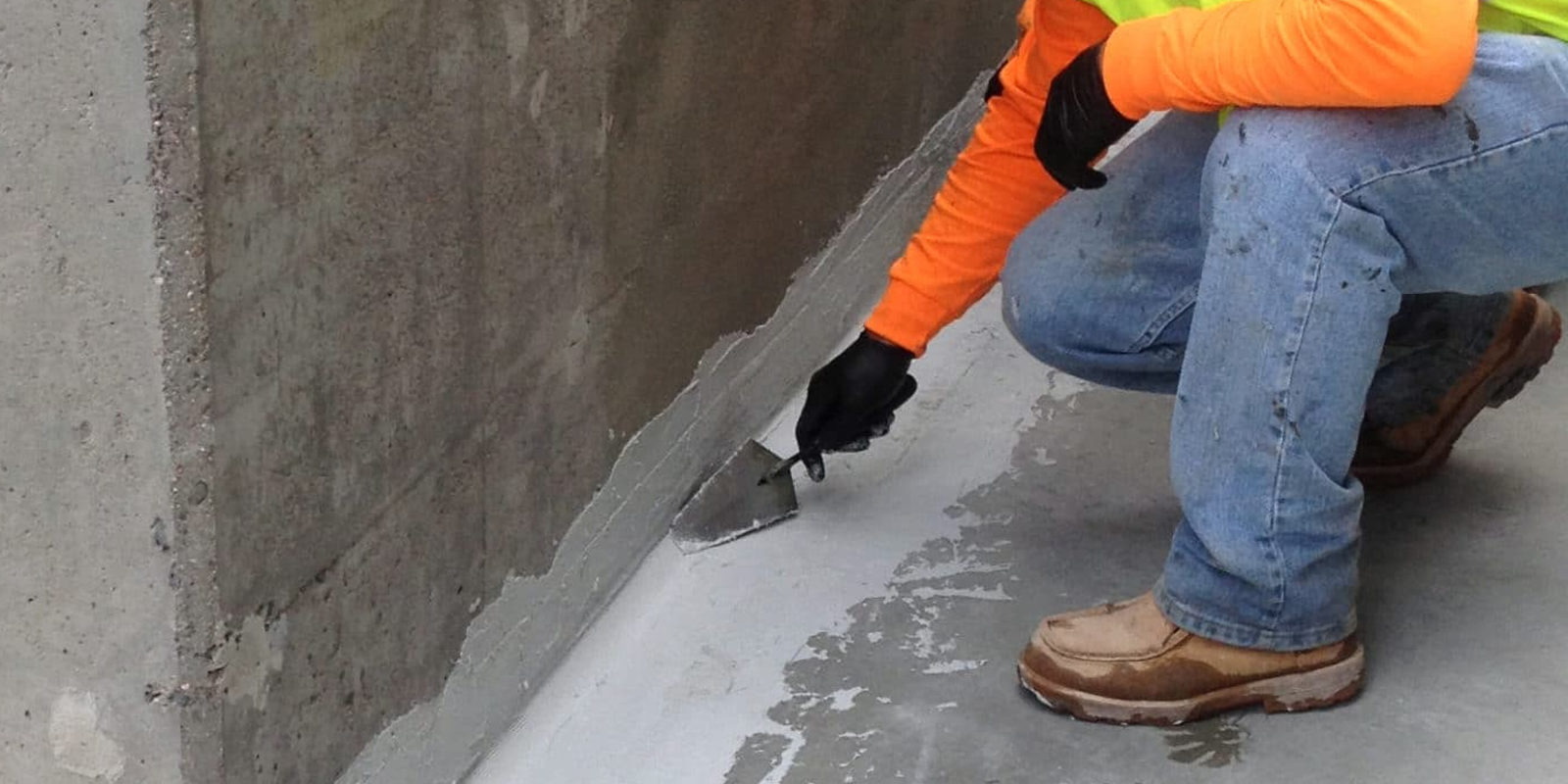
Cementitious and liquid-applied waterproofing are two methods used to create moisture-resistant protection on compatible building substrates. Cementitious waterproofing uses cement-based formulations, while liquid-applied waterproofing forms a continuous membrane as the applied material cures.
The main difference is not simply whether one product is mixed and another is liquid. Each system has different characteristics relating to substrate compatibility, application, detailing, movement and the conditions in which it is intended to perform.
For building projects in Singapore, waterproofing selection should therefore consider where the system will be installed and what the protected surface will experience. A concrete wet area, an exposed roof and a complex surface containing multiple penetrations do not necessarily require the same waterproofing approach.
Neither cementitious nor liquid-applied waterproofing is universally better. The appropriate choice depends on the building application.
This article compares the two systems specifically by their material characteristics and selection criteria, helping project teams understand when each approach may be considered.
What Is Cementitious Waterproofing?
Cementitious waterproofing is a cement-based protective system formulated for application over compatible mineral substrates. Depending on the product, it can be supplied as a single-component or multi-component material that is prepared and applied according to its technical requirements.
Its cement-based nature makes it relevant to concrete, screed and other compatible cementitious surfaces in specified applications.
Once applied and cured, the material forms a protective waterproofing layer over the substrate.
Cementitious waterproofing is commonly associated with building areas where the substrate itself is mineral-based. However, this compatibility should not be interpreted to mean every cementitious product is suitable for every concrete surface or exposure condition.
The specific application, substrate condition and product requirements still need to be assessed.
What Is Liquid-Applied Waterproofing?
Liquid-applied waterproofing is installed as a fluid material that forms a continuous waterproof membrane after application and curing. The material follows the shape of the prepared substrate rather than being installed as pre-manufactured sheets.
This characteristic allows the membrane to extend across broad surfaces as well as suitably detailed corners, upstands and other changes in geometry.
Different liquid waterproofing formulations can have different characteristics.
The term therefore describes an application method rather than one identical product chemistry.
The system's final performance depends on factors such as substrate compatibility, coverage, membrane formation, application conditions and curing.
Liquid-applied waterproofing should consequently be selected according to the intended building application rather than simply because it can be applied using a liquid process.
Key Differences Between the Systems
The clearest distinction is the material and membrane-forming approach.
Cementitious waterproofing uses a cement-based formulation that becomes a protective layer on a compatible substrate. Liquid-applied waterproofing creates a continuous membrane from a fluid material applied directly to the prepared surface.
Their general differences can be summarised as follows:
| Consideration | Cementitious Waterproofing | Liquid-Applied Waterproofing |
|---|---|---|
| Basic system | Cement-based protective layer | Liquid material forming a continuous membrane |
| Typical substrate relationship | Often suited to compatible mineral surfaces | Depends on formulation and substrate compatibility |
| Surface geometry | Suitable for specified prepared surfaces | Can follow complex surface geometry |
| Movement capability | Product-dependent | Product-dependent, with some systems designed for greater flexibility |
| Application control | Mixing and application requirements are important | Coverage and membrane formation are important |
| Curing | Required according to product specifications | Required before intended performance or covering |
| Building use | Depends on exposure and specification | Depends on exposure and specification |
These are broad distinctions. Technical product information should determine suitability for a specific project.
Substrate Compatibility
Substrate compatibility establishes whether the waterproofing system can form the intended relationship with the surface beneath it.
Cementitious waterproofing is commonly associated with concrete, cementitious screeds and similar mineral substrates because of its material composition.
Liquid-applied systems can be formulated for different substrate types, but compatibility should still be confirmed rather than assumed.
Existing surfaces introduce additional questions.
A substrate covered by paint, old waterproofing or another coating is no longer simply exposed concrete. The new waterproofing will interact with the existing surface unless that material is removed during preparation.
The actual surface receiving the waterproofing should therefore be identified before choosing between cementitious and liquid-applied systems.
Concrete and Cementitious Surfaces
Concrete and cement-based screeds provide common substrates for both types of waterproofing when the selected products are suitable for the application.
However, concrete conditions can vary significantly.
New concrete may have different moisture and curing conditions from an older substrate. Existing concrete can contain cracks, repairs, contamination or previous coatings.
Cementitious waterproofing can integrate naturally into certain mineral-based construction systems, while liquid-applied membranes may provide other application characteristics depending on the project.
The choice should therefore not be based simply on the fact that the substrate is concrete.
Exposure, movement, surface condition and subsequent finishes also need to be considered.
Application Methods
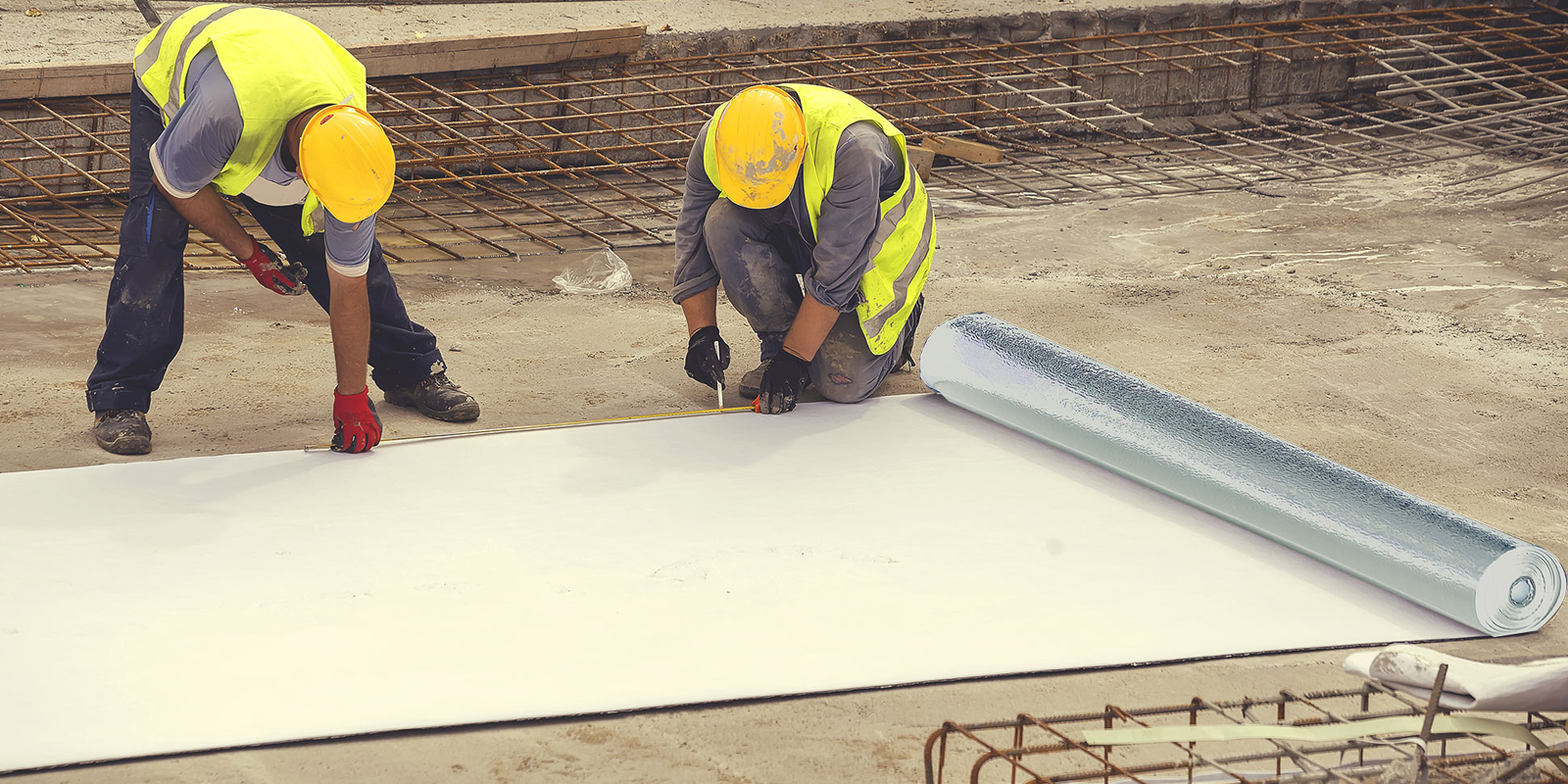
Cementitious and liquid-applied waterproofing require different forms of application control, although both depend on correct substrate preparation.
Cementitious products may require controlled mixing before application. The specified component proportions, mixing procedure and working characteristics should be followed.
Liquid-applied systems arrive or are prepared in a form that can be spread across the substrate to create the membrane.
The installer needs to achieve the required coverage and membrane formation.
In both cases, applying additional material without following the specified method does not automatically improve waterproofing.
The objective is to form the system as designed.
Application tools, number of coats where applicable and intervals between stages should follow the requirements of the selected product.
Surface Preparation Requirements
Both systems depend on an appropriately prepared substrate. Waterproofing should not be expected to compensate for loose material, contamination or major substrate defects.
Preparation requirements can include removing:
- Dust
- Loose particles
- Oil or contamination
- Incompatible coatings
- Poorly bonded existing materials
Cracks and other defects should also be assessed according to their nature.
A cementitious coating applied over an unstable substrate remains dependent on that substrate. A liquid membrane applied over contamination can similarly be affected by the condition of the surface beneath it.
Good waterproofing therefore begins before either material is opened or mixed.
Complex Shapes and Details
Complex geometry can influence which waterproofing approach is practical. Corners, penetrations, upstands and changes in direction interrupt broad flat surfaces and require the waterproof barrier to remain continuous.
Liquid-applied systems can follow irregular shapes because the membrane is formed directly over the prepared geometry.
This can be useful where a surface contains numerous details.
Cementitious waterproofing can also be applied around building details where the system is designed for the application, but individual junctions may require specific treatment.
The number of details should therefore be considered during selection.
A waterproofing system that performs well across a large flat surface still needs an appropriate method for every interruption within that surface.
Movement Considerations
Movement is an important distinction when evaluating waterproofing systems. Building substrates can experience dimensional changes due to structural behaviour, temperature, moisture and other conditions.
Different waterproofing products have different abilities to accommodate movement.
It is therefore inaccurate to assume that all liquid membranes are flexible to the same degree or that every cementitious waterproofing material behaves identically.
Some formulations are specifically designed with particular movement characteristics.
The project should identify where movement is expected and determine whether the proposed system is appropriate.
Movement joints require particular attention because they are intentionally designed to accommodate changes between building elements.
They should not automatically be treated as ordinary cracks.
Static Cracks Versus Moving Joints
A static crack and a movement joint create different waterproofing conditions.
A relatively stable crack may require repair or treatment before the main waterproofing system is applied. A movement joint needs a detail that recognises continuing movement.
Simply covering both with the same broad waterproof coating can overlook this difference.
The selected waterproofing system should therefore be considered alongside joint treatment rather than assumed to replace it.
This principle applies to both cementitious and liquid-applied systems.
The membrane needs to work with the building detail rather than being expected to prevent the substrate from moving.
Curing Considerations
Curing allows the applied waterproofing material to develop the properties intended by its formulation.
Cementitious waterproofing requires curing according to the particular product and environmental conditions. Liquid-applied membranes also require sufficient time to form and cure before they are exposed to subsequent work or service conditions.
Exact curing periods should not be generalised across product categories.
Temperature, humidity, substrate condition and product formulation can influence requirements.
Project sequencing should therefore account for curing before work begins.
Applying the waterproofing and immediately covering or exposing it without regard to its curing requirements can interfere with the intended system.
The relevant technical data should establish when subsequent construction stages can proceed.
Application Thickness and Coverage
Waterproofing performance depends on applying the system according to its specified coverage or thickness requirements.
This is particularly important for liquid-applied systems because the final membrane is formed on site.
Uneven application can create areas with different membrane characteristics.
Cementitious waterproofing similarly needs appropriate coverage to form the intended protective layer.
More material is not automatically better.
Excessive application can create different problems depending on the product, while insufficient coverage may prevent the system from forming as intended.
Application should therefore be controlled according to the technical specification rather than visual judgement alone.
Using Waterproofing Beneath Finishes
Both cementitious and liquid-applied waterproofing can be used beneath subsequent finishes where the specific system is designed for that construction build-up.
Internal wet areas are a common example.
The waterproofing layer can be installed over the prepared substrate before compatible finishing materials are added.
Compatibility between layers is important.
The product installed over the waterproof membrane needs to work with the membrane rather than affecting it adversely.
The waterproofing also needs to cure sufficiently before it is covered.
When selecting a system, project teams should therefore consider not only the substrate beneath the waterproofing but also the materials that will be installed above it.
Exposed Waterproofing Applications
Exposed waterproofing experiences environmental conditions directly rather than being protected beneath another finish.
This can introduce requirements relating to sunlight, rainfall, temperature changes and other forms of weather exposure.
Not every cementitious or liquid-applied product is intended for exposed use.
The relevant product specification should confirm suitability.
A material that performs effectively beneath tiles in an internal wet area should not automatically be assumed appropriate for an exposed roof simply because both applications require waterproofing.
Exposure conditions should therefore be identified early in the selection process.
Wet Area Applications
Toilets, bathrooms and other wet areas can use cementitious or liquid-applied waterproofing where the selected product is suitable for the substrate and construction system.
The decision should account for surface geometry and detailing.
A relatively straightforward cementitious substrate may be compatible with an appropriate cement-based system.
An area containing numerous corners and penetrations may also benefit from the application characteristics of a suitable liquid membrane.
However, the number of details alone does not determine the correct material.
Compatibility with the substrate, subsequent tile system and project requirements remains essential.
Wet area waterproofing should be selected as part of the complete floor and wall build-up.
Roof Applications
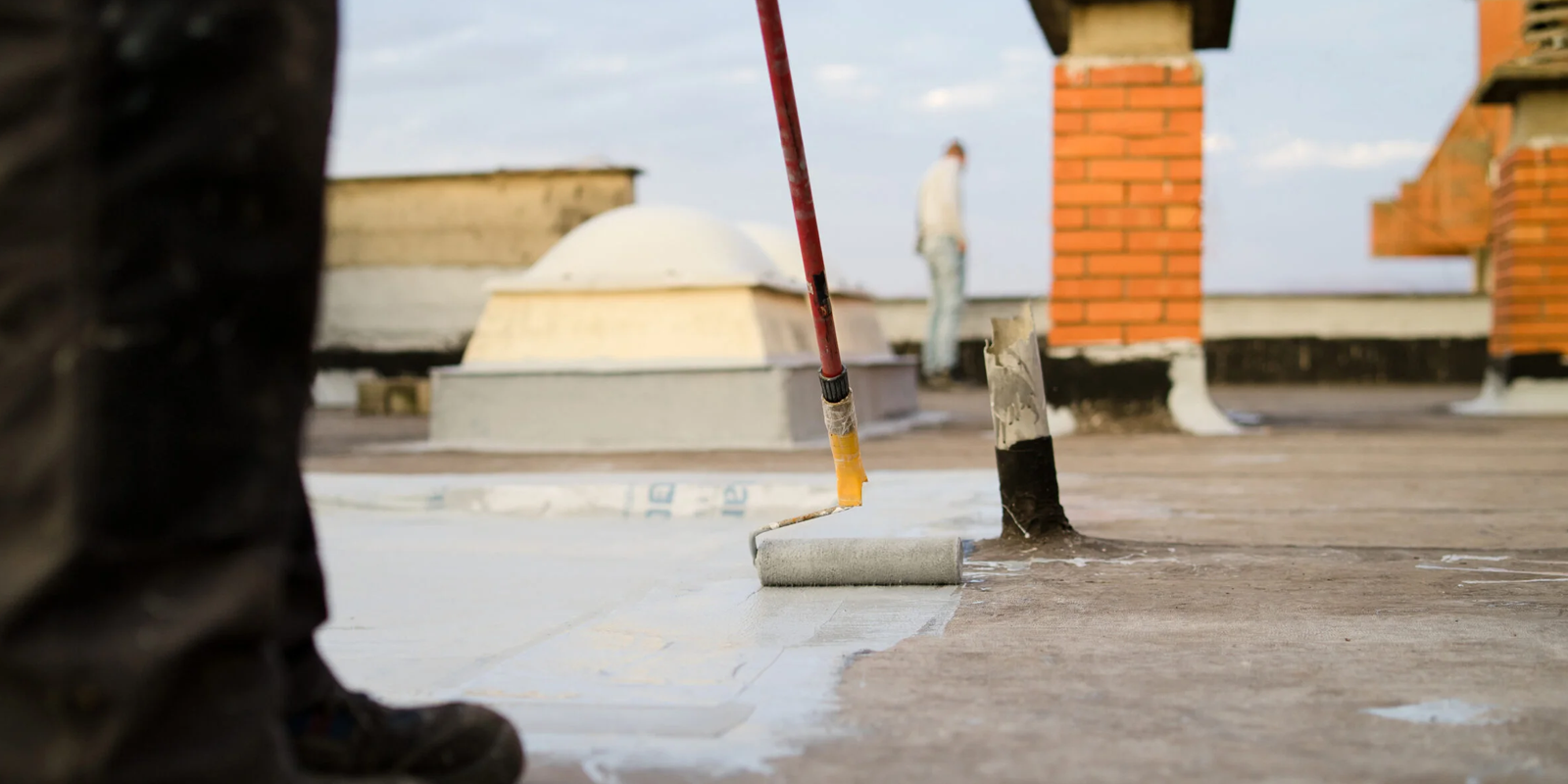
Roof waterproofing introduces different conditions because the system may experience external weather exposure, drainage requirements and greater environmental variation.
Liquid-applied waterproofing can be considered for compatible roof applications, particularly where the membrane needs to follow complex geometry.
Certain cementitious systems may also be appropriate for specified roof or protected applications.
The decisive factor is the product's intended use.
A roof system should be selected according to exposure, substrate, drainage, movement and whether the membrane will remain exposed or be protected by another layer.
The general category "waterproofing" is too broad to determine roof suitability on its own.
Accessibility and Application Area
The physical area being waterproofed can affect practical system selection.
Large open surfaces create different application conditions from compact spaces containing numerous services and corners.
A cementitious system may offer a straightforward application method across compatible mineral surfaces. A liquid-applied membrane may provide advantages where complex geometry needs to be followed continuously.
Accessibility also influences how installers can control the application.
Tight corners, vertical surfaces and penetrations may require different working methods from large horizontal areas.
These practical considerations should be evaluated without overriding technical compatibility.
Ease of application matters only after the system has been confirmed as suitable for the building conditions.
Waterproofing Repairs and Existing Systems
Repairing existing waterproofing requires identifying the existing material and understanding why intervention is needed.
Applying a new cementitious or liquid system over an unidentified membrane can create compatibility problems.
The existing layer may be poorly bonded, contaminated or deteriorated.
Water can also travel within the construction, meaning the visible damp location may not be the original entry point.
A repair assessment should therefore investigate the substrate and existing waterproofing before a new material is selected.
Where removal is required, the resulting substrate should be prepared for the replacement system.
Waterproofing repairs should address the cause and construction detail rather than simply cover the visible symptom.
How to Choose Between Cementitious and Liquid-Applied Waterproofing
Choosing between the two systems requires a comparison of project conditions rather than a general preference.
Identify the Substrate
Determine whether the receiving surface is concrete, screed, an existing coating or another material.
Define the Exposure
Establish whether the waterproofing will be internal, external, exposed or protected.
Review the Geometry
Identify broad surfaces, corners, penetrations, upstands and other details.
Consider Movement
Determine whether the substrate or building details require a system capable of accommodating particular movement conditions.
Review Subsequent Materials
Confirm what will be installed above the waterproofing and whether the complete build-up is compatible.
Check Application and Curing Requirements
Consider whether site conditions allow the selected system to be installed and cured according to its specification.
This framework helps keep the decision connected to the building rather than choosing a system according to one material characteristic.
Common Selection Mistakes
Waterproofing selection problems often occur when broad product categories are treated as guarantees of performance.
Common mistakes include:
- Assuming every cementitious product has the same properties
- Assuming every liquid membrane has the same flexibility
- Ignoring the substrate beneath an existing coating
- Selecting according to application convenience alone
- Overlooking movement joints
- Failing to consider subsequent finishes
- Using an internal waterproofing product for exposed conditions without confirming suitability
- Ignoring curing requirements
- Applying material over inadequately prepared surfaces
These issues can be reduced by evaluating the complete waterproofing system rather than comparing products by category name alone.
Frequently Asked Questions (FAQs)
Is liquid waterproofing better than cementitious waterproofing?
Not universally. The appropriate system depends on substrate compatibility, movement, exposure, geometry and the intended building application.
What is cementitious waterproofing commonly used for?
Cementitious waterproofing is used on compatible mineral substrates in specified building applications. Exact suitability depends on the product and project requirements.
Is liquid-applied waterproofing flexible?
Some liquid-applied membranes are designed with flexibility or movement capability, but properties vary between formulations. Technical product information should be checked.
Can cementitious waterproofing be used in bathrooms?
Suitable cementitious systems can be used for specified toilet and wet-area applications when compatible with the substrate and subsequent finishes.
Can liquid waterproofing be used on roofs?
Suitable liquid-applied systems can be used for specified roof applications. Exposure, substrate, drainage and membrane requirements should be considered.
Can a new waterproofing system be applied over an old one?
Only where the existing surface is suitable and compatibility has been established. Existing membranes or coatings should be assessed before new waterproofing is applied.
Choosing the System by Application, Not Category
Cementitious and liquid-applied waterproofing provide different approaches to creating moisture protection within a building. Cementitious systems are closely associated with compatible mineral substrates, while liquid-applied systems form continuous membranes that can follow different surface geometries.
Those characteristics provide useful starting points, but they do not determine suitability by themselves. Movement, exposure, detailing, subsequent finishes and application conditions can all change which system is appropriate.
The most effective comparison therefore begins with the building application. Once the substrate and performance conditions are understood, the relevant Waterproofing system can be evaluated according to its documented characteristics rather than relying on assumptions about the material category.
Compare Waterproofing Systems Against Your Building Conditions
Selecting between cementitious and liquid-applied waterproofing requires an understanding of the substrate, exposure, detailing and final construction build-up. Eastern Win Enterprises provides waterproofing materials for different building applications in Singapore. Project teams comparing waterproofing approaches can contact Eastern Win Enterprises to review material options relevant to their application.