


 Contact Us: (65) 6419 2850


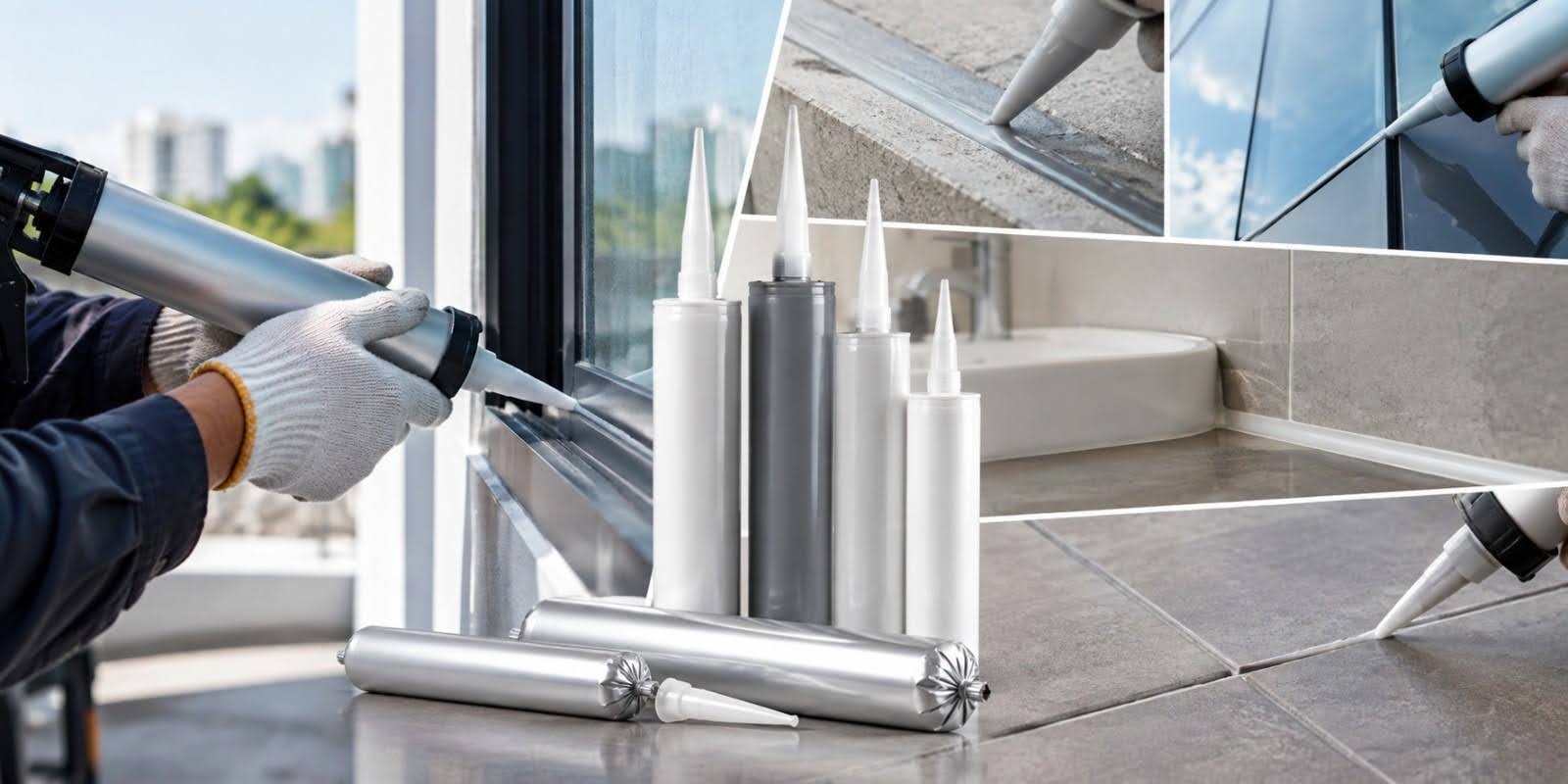
Construction sealants are materials used to fill, seal and protect joints, gaps and interfaces between building components. They help manage movement, limit water or air penetration, improve weather resistance and support the performance of façades, glazing systems, interior joints and other construction assemblies.
The correct sealant depends on the application rather than on a single product characteristic. A sealant used for an external façade joint may need strong weather resistance and movement capability, while a product used for interior joints may have different requirements. Fire-rated joints, structural glazing and general construction sealing also require different product properties.
For businesses and contractors assessing sealant options in Singapore, the main considerations include substrate compatibility, movement requirements, exposure conditions, curing behaviour, adhesion, joint design and application environment. Product selection should therefore be based on technical suitability rather than simply choosing a general-purpose sealant.
This guide explains the main types of construction sealants, including silicone, polyurethane, acrylic, fire-rated and glazing sealants, together with their common applications, movement requirements, substrate considerations and selection criteria.
What Are Construction Sealants?
Construction sealants are flexible or semi-flexible materials designed to seal joints, gaps and interfaces between construction materials. Their function is to create a continuous barrier while allowing the adjoining materials to perform as intended.
Buildings contain many joints because materials expand, contract, move and meet at different interfaces. Concrete panels, glass, aluminium, masonry, timber and other materials can respond differently to temperature, moisture and structural movement.
A rigid material placed across a moving joint may crack or separate. Construction sealants are formulated to accommodate a defined degree of movement while maintaining adhesion to the sides of the joint.
Sealants can also perform several additional functions depending on their formulation and application. These may include limiting water penetration, reducing air leakage, protecting joints from weather exposure and supporting fire-resistant joint systems.
The term “sealant” therefore covers a broad family of materials rather than one universal product.
Why Sealant Selection Matters in Construction
Sealant selection matters because different joints are exposed to different forms of movement, weathering, substrates and service conditions. A product that performs well in one application may be unsuitable in another.
External façade joints, for example, are exposed to sunlight, rain, temperature changes and building movement. A suitable product needs to maintain adhesion and elasticity under those conditions.
Interior applications may not require the same weather resistance but can still involve movement, paintability or compatibility with surrounding materials.
Fire-rated joints introduce another requirement. Products used in these systems must correspond with the tested firestop application rather than being selected only because they are described as fire resistant.
A practical selection process should therefore consider:
- Joint movement and expected service conditions;
- Substrate materials;
- Interior or exterior exposure;
- Adhesion and primer requirements;
- Curing behaviour; and
- Technical performance required by the application.
These factors help reduce the risk of choosing a product based only on price, colour or general product category.
Main Types of Construction Sealants
Construction sealants are commonly classified according to their base chemistry and intended application. Silicone, polyurethane and acrylic products are widely used, while specialised formulations are available for fire-rated, façade and glazing applications.
The main categories include the following:
| Sealant Type | Common Characteristics | Typical Applications |
|---|---|---|
| Silicone sealant | Flexible, weather-resistant, good movement capability | Glazing, façades, external joints, sanitary areas |
| Polyurethane sealant | Strong adhesion, durable, suitable for many construction joints | Concrete joints, floors, façades, general construction |
| Acrylic sealant | Commonly paintable and used for lower-movement joints | Interior gaps, wall joints, finishing work |
| Fire-rated sealant | Designed for tested firestop applications | Fire-rated joints, gaps and penetrations |
| Glazing sealant | Formulated for glass and façade applications | Structural or weatherproof glazing systems |
The correct classification alone does not guarantee suitability. Individual products within the same sealant family can have different movement capabilities, curing mechanisms, adhesion characteristics and intended applications.
Silicone Sealants
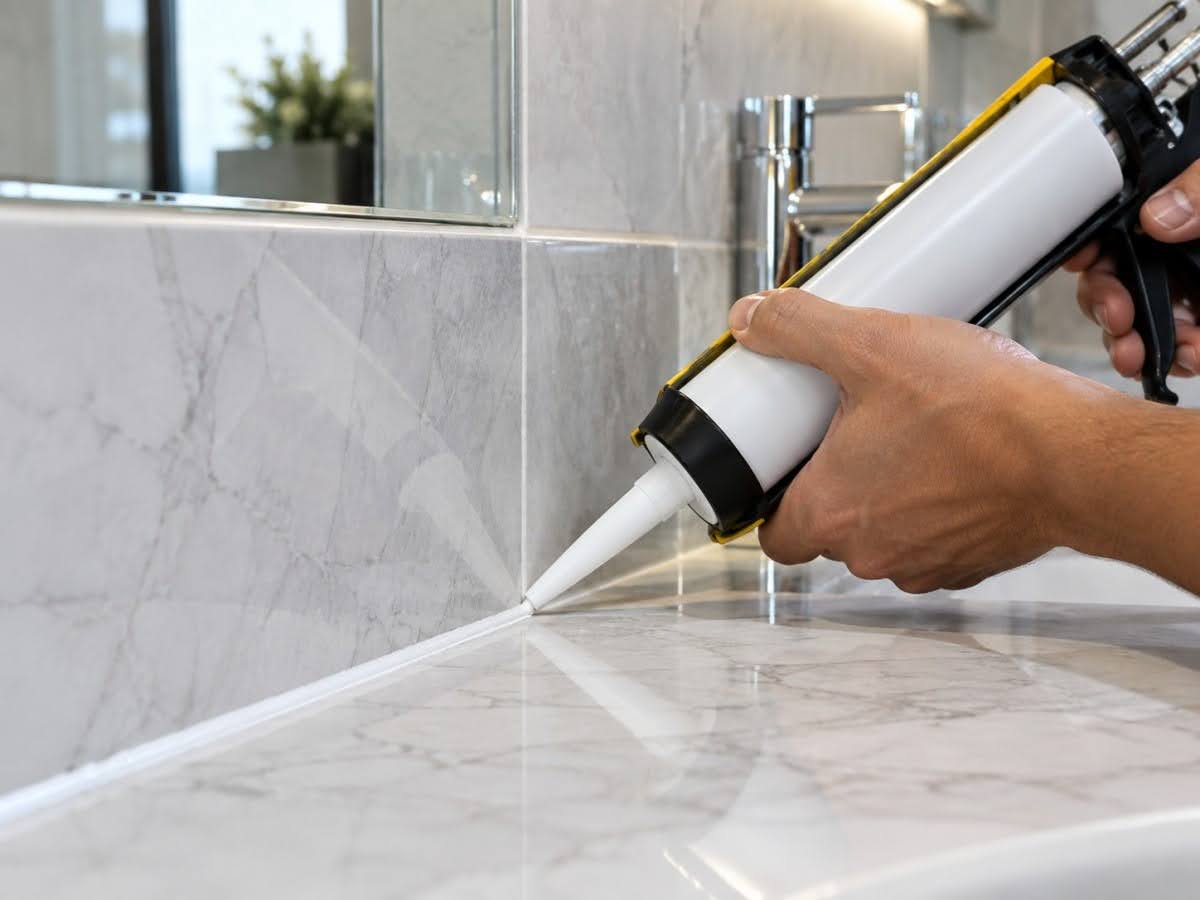
Silicone sealants are elastomeric sealing materials commonly used where flexibility, weather resistance and movement accommodation are important. They are widely used in construction because silicone chemistry can perform well across a range of external and internal environments.
Applications for silicone sealants in Singapore commonly include façade joints, glazing systems, sanitary areas, perimeter sealing and weather-exposed building joints.
One of the main characteristics of silicone is its ability to remain flexible after curing. This can help the joint accommodate movement caused by temperature changes, material expansion and contraction.
Silicone sealants are also often selected for exterior applications because many formulations provide good resistance to ultraviolet exposure and weathering.
However, not all silicone products are identical. Some are designed for glazing, some for sanitary applications, and others for general construction joints.
Selection should therefore be based on the product’s intended use, movement rating, adhesion properties and compatibility with the substrate.
Neutral-Cure and Acetoxy Silicone Sealants
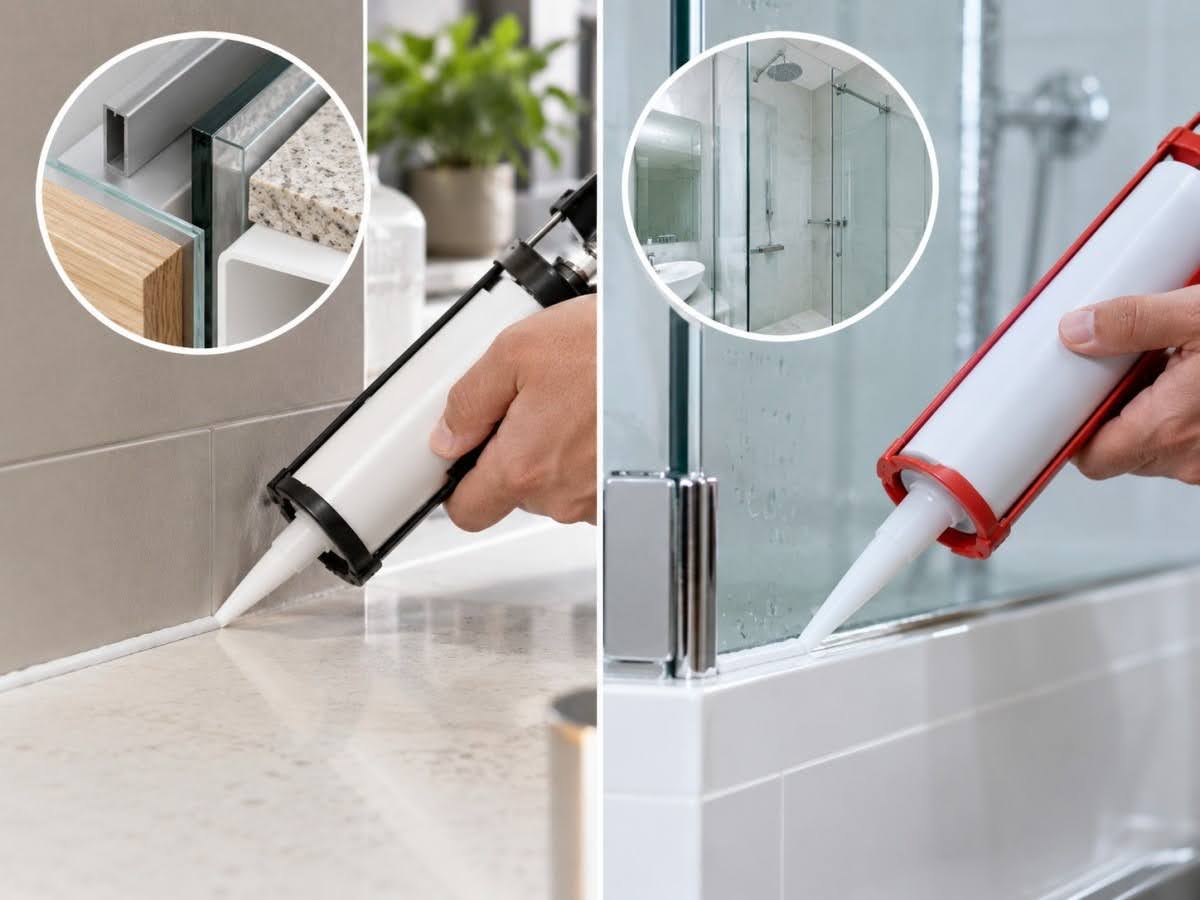
Silicone sealants can use different curing chemistries, and neutral-cure and acetoxy systems are two common categories. The curing chemistry can influence odour, substrate compatibility and recommended applications.
Acetoxy silicone typically releases acetic acid during curing. It is often used in applications involving glass and certain non-porous surfaces.
Neutral-cure silicone releases different curing by-products and is commonly selected where compatibility with metals, coated surfaces or other sensitive substrates is required.
The choice should not be made solely on the terms “neutral” or “acetoxy”. Product technical data should be checked because individual formulations can differ.
For construction applications, compatibility with substrates and adjacent materials remains one of the most important considerations.
Polyurethane Sealants
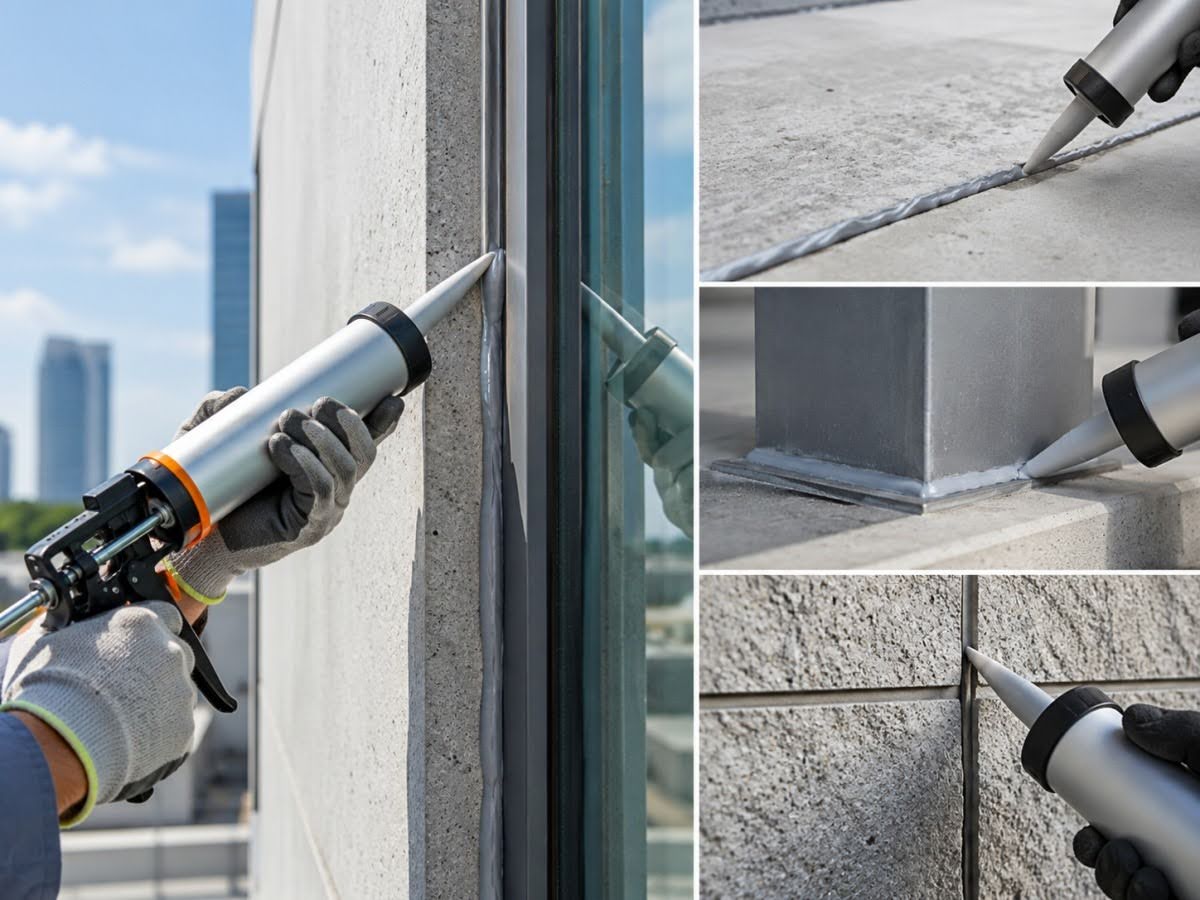
Polyurethane sealants are flexible construction materials commonly used for joints where strong adhesion and durable performance are required. They are widely applied to concrete, masonry, metal and other construction substrates.
Polyurethane sealants can be suitable for expansion joints, floor joints, precast concrete joints and other general construction applications, depending on the product specification.
Compared with many silicone products, polyurethane sealants are often selected where paintability or strong mechanical adhesion is desirable. Their exact performance, however, varies by formulation.
Polyurethane sealants also require appropriate joint preparation. Dust, laitance, moisture or contaminants can interfere with adhesion if the substrate is not prepared according to product requirements.
The product’s movement capability, curing conditions and environmental exposure should be reviewed before use.
Acrylic Sealants
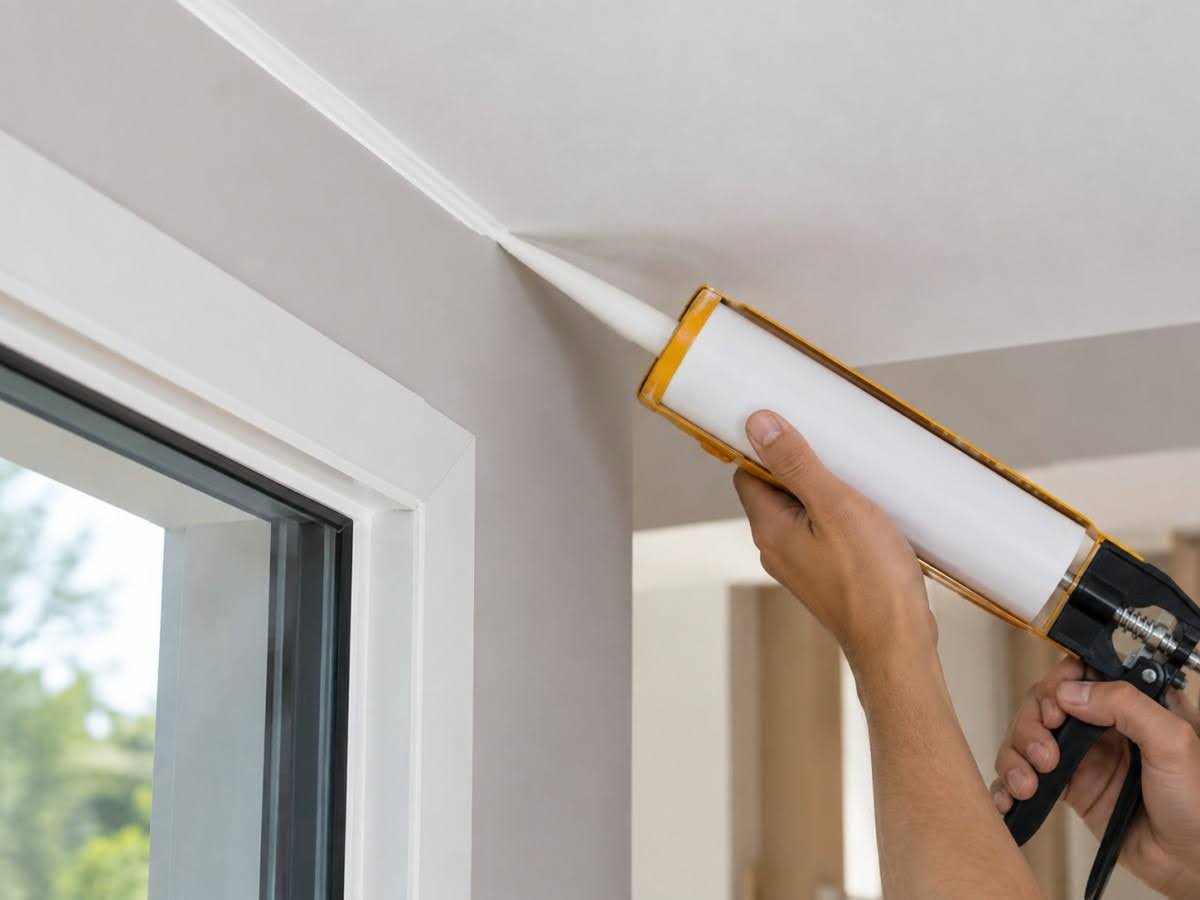
Acrylic sealants are commonly used for relatively low-movement joints and gaps, particularly in interior building applications. They are often selected where paintability and ease of finishing are important.
Typical applications can include gaps around door frames, window frames, skirting, wall joints and other interior finishing interfaces.
Acrylic products generally have lower movement capability than more flexible elastomeric sealants such as silicone or polyurethane. This means they may not be suitable for highly dynamic joints or demanding exterior applications unless specifically formulated for those conditions.
Their practical role is often in finishing and sealing static or low-movement gaps.
For interior works, acrylic sealants can provide a useful solution where the joint needs to be sealed and subsequently painted to match the surrounding surface.
Fire-Rated Sealants
Fire-rated sealants are specialised products used as part of firestop systems designed to maintain the required fire resistance of joints, gaps and penetrations. They should be selected according to tested applications and technical documentation rather than general sealing requirements alone.
Fire stop applications can include movement joints, wall-to-floor interfaces, service penetrations and other openings that form part of a fire-resisting construction assembly.
A fire-rated sealant is not simply a conventional sealant with improved heat resistance. Its performance depends on how it is installed within a specific tested joint or penetration system.
Important considerations include:
- Type of joint or penetration;
- Supporting construction;
- Joint dimensions;
- Backing materials;
- Sealant depth; and
- Required fire resistance.
The product’s technical documentation should be reviewed to determine whether it is appropriate for the specific construction detail.
How Firestop Sealants Work
Firestop sealants work as part of a tested construction system intended to restrict the passage of fire, smoke or hot gases through joints and openings. Their effectiveness depends on the complete system rather than the sealant alone.
Some fire-rated sealants are designed to remain flexible in movement joints. Others may form part of penetration-sealing systems around services.
The installation depth, backing material and substrate type can affect performance.
For this reason, substituting products or changing joint dimensions without reference to tested details can alter the intended performance of the system.
Firestop selection should therefore be treated as a technical compliance issue rather than simply as a product category choice.
Façade and Glazing Sealants
Façade and glazing sealants are formulated to seal joints involving glass, aluminium, façade panels and other exterior building elements. These applications can involve weather exposure, joint movement and long-term adhesion requirements.
Glazing sealant products can perform either weather-sealing or structural functions depending on their formulation and approved use.
Weather-sealing products are generally intended to prevent water and air penetration around façade and glazing interfaces.
Structural glazing sealants are used in specific systems where the sealant contributes to the attachment or transfer of loads between glass and supporting components. These applications require products specifically designed and approved for structural glazing.
The distinction between weather sealing and structural glazing is important. A general façade sealant should not be assumed to perform a structural glazing function.
Weather Sealing in Façade Systems
Weather sealing is the process of sealing façade joints to limit the entry of rainwater, air and other external elements. Sealants used for this purpose must remain functional despite exposure to movement and weather.
Common façade interfaces can include panel-to-panel joints, glass-to-frame joints, perimeter joints and transitions between different building materials.
Weather sealants should maintain adhesion to both sides of the joint and accommodate expected movement without cracking or pulling away.
UV resistance can also be important in exposed applications because prolonged sunlight can affect unsuitable materials.
Proper joint design and surface preparation are therefore just as important as selecting the correct sealant chemistry.
Interior vs Exterior Sealant Applications
Interior and exterior sealant applications have different environmental demands. Exterior joints are typically exposed to temperature fluctuations, moisture, ultraviolet radiation and larger movement cycles.
Exterior sealants therefore often require stronger weather resistance and long-term flexibility.
Interior joints may be protected from direct weather exposure but can still involve movement, cleaning chemicals, paintability or aesthetic considerations.
For example, a joint between an internal wall and door frame may require a paintable acrylic sealant, while an external façade joint may require a flexible silicone or polyurethane product.
The correct sealant should therefore be selected according to the service environment rather than assuming one product can be used throughout the building.
Understanding Substrate Compatibility
Substrate compatibility refers to whether a sealant can bond effectively to the materials forming the joint without causing adverse reactions. Common substrates include concrete, glass, aluminium, metal, stone, timber and coated surfaces.
Different sealants adhere differently to these materials.
Porous substrates such as concrete can behave differently from non-porous materials such as glass or metal. Some applications may require a primer to achieve suitable adhesion.
Surface coatings can also influence compatibility. A sealant may adhere differently to painted aluminium than to untreated metal.
Potential staining or chemical interaction should also be considered, particularly with natural stone, sensitive coatings and certain plastics.
Product compatibility should therefore be confirmed using technical data and, where necessary, appropriate adhesion testing.
Why Surface Preparation Is Important
Surface preparation is important because sealants rely on proper adhesion to the sides of the joint. Dirt, dust, oil, laitance, moisture or loose material can weaken the bond between the sealant and substrate.
The surface should be prepared according to the product manufacturer’s instructions.
Preparation can include cleaning, removal of contaminants, drying and primer application where required.
Poor preparation can cause adhesion failure even when the correct sealant has been selected.
Sealant performance therefore depends on both product suitability and installation quality.
Understanding Movement Joints
Movement joints are deliberately formed gaps that allow building materials or components to expand, contract or move without causing uncontrolled cracking or damage. Sealants used in these joints must accommodate the expected movement while remaining bonded.
Movement can result from temperature changes, structural deflection, shrinkage, moisture changes or differences between adjoining materials.
The amount and direction of movement should be considered when choosing a sealant.
A product with inadequate movement capability can tear, crack or separate from the joint edges.
Joint width and sealant depth also influence how the material responds to movement.
Sealant Movement Capability
Sealant movement capability describes the degree to which a cured sealant can expand and contract while maintaining functional adhesion. It is normally expressed in product technical information.
Movement requirements differ substantially across construction details.
Façade joints between large panels can experience greater movement than small interior finishing joints.
The selected product should therefore have movement properties appropriate for the joint design.
Using a highly flexible product does not remove the need for correct joint dimensions. Sealant performance depends on the relationship between product properties and joint geometry.
Joint Design and Sealant Depth
Joint design determines the geometry in which the sealant operates. Width, depth and backing materials can affect movement performance and adhesion.
Sealants are generally intended to bond to the sides of the joint rather than to every surface inside the joint.
Backer rods or bond-breaking materials can be used in appropriate joints to control depth and reduce unwanted three-sided adhesion.
A properly designed joint allows the cured sealant to stretch and compress more predictably.
Incorrect joint depth can cause excessive stress within the sealant and may reduce performance.
Product guidance should therefore be followed when determining joint dimensions.
Backer Rods and Their Role in Sealant Joints
Backer rods are compressible materials placed behind sealant in certain joints to control sealant depth and support appropriate joint geometry. They can also help prevent adhesion to the back of the joint.
Closed-cell or other backer rod types may be selected depending on the application and product requirements.
The diameter should normally be appropriate for the joint width so the backer rod remains securely positioned.
Backer rods are not structural fillers and should not be treated as substitutes for correct joint design.
Their purpose is to support sealant installation by helping establish the intended sealant profile.
Adhesion and Primer Requirements
Adhesion is the ability of the sealant to remain bonded to the surfaces forming the joint. Primer requirements depend on the sealant formulation and substrate.
Some sealants can adhere to common substrates without primer, while others may require priming to achieve reliable performance.
Porous surfaces, coated metals, plastics and other specialised materials can each behave differently.
The decision should be based on product instructions rather than a general assumption that primer is always necessary or never necessary.
Where the application is critical, adhesion testing can help confirm compatibility before large-scale installation.
Curing Behaviour of Construction Sealants
Curing is the chemical process through which an applied sealant develops its final physical properties. The curing mechanism varies between silicone, polyurethane, acrylic and other sealant types.
Many one-component sealants cure by reacting with moisture in the air.
Environmental conditions such as temperature and humidity can influence skin formation and curing time.
Thick sealant sections can require more time to cure completely than thin applications.
The joint should therefore not be judged solely by surface appearance immediately after installation.
Product technical information should be followed regarding curing conditions and service readiness.
Selecting Sealants for Wet Areas
Sealants used in wet areas need to resist repeated moisture exposure and maintain adhesion to the surrounding substrates. Sanitary silicone products are commonly used around bathrooms, wash areas and other wet environments.
Typical interfaces can include joints around sanitary fixtures, glass screens, tiles and other water-exposed surfaces.
However, sealant should not be treated as a substitute for the building’s waterproofing system.
Its role is generally to seal movement joints, junctions or finishing interfaces within the overall wet-area construction.
Product compatibility with cleaning chemicals, substrates and expected moisture exposure should also be considered.
Selecting Sealants for Concrete and Masonry
Concrete and masonry joints commonly require sealants capable of adhering to porous substrates and accommodating movement. Polyurethane and certain silicone products can be suitable depending on the joint requirements.
Concrete surfaces may contain dust, laitance or residual curing compounds that can interfere with adhesion.
Surface preparation is therefore particularly important.
The condition of the joint edges also affects performance. Loose or weak material should not be treated as a reliable bonding surface.
The sealant should be selected according to movement, environmental exposure and whether the joint is horizontal, vertical, internal or external.
Selecting Sealants for Glass and Metal
Glass and metal joints are common in glazing and façade systems. Sealants used in these interfaces require good adhesion, weather resistance and compatibility with coatings or finishes.
Silicone products are widely used because many formulations perform effectively on glass and metal surfaces.
However, coated glass, anodised aluminium, painted metal and other treated substrates can behave differently from untreated materials.
Compatibility with adjacent glazing materials should also be considered.
In structural glazing applications, only products specifically intended for that system should be used.
Choosing the Appropriate Sealant
The appropriate sealant is selected by matching product properties to the actual joint and service conditions. There is no single construction sealant suitable for every building application.
A structured selection process should consider several criteria:
- Identify the Joint Function: Determine whether the joint is for weather sealing, movement accommodation, glazing, firestopping or interior finishing.
- Identify the Substrates: Confirm whether the sealant will bond to concrete, glass, aluminium, timber, stone or other materials.
- Determine Movement Requirements: Estimate the expected joint movement and select a product with suitable capability.
- Assess Exposure Conditions: Consider UV, rain, moisture, temperature and chemical exposure.
- Review Technical Documentation: Confirm product suitability, primer requirements, joint dimensions and curing conditions.
This process is more reliable than choosing a product based only on brand or broad sealant category.
Application Considerations
Sealant application should follow product instructions, appropriate joint design and suitable environmental conditions. Even a technically appropriate product can perform poorly if applied to contaminated or incorrectly prepared surfaces.
Joint edges should be clean and suitably prepared.
Backer rods or bond breakers should be used where the joint design requires them.
Sealant should be applied continuously so the material makes proper contact with both sides of the joint.
Tooling can help achieve appropriate contact and surface profile.
The application should then be allowed to cure under suitable conditions before being subjected to service conditions.
Common Sealant Selection Mistakes
Sealant problems often arise when product selection focuses on convenience rather than technical requirements. Using one general-purpose sealant across every building joint is a common example.
Another mistake is ignoring substrate compatibility. A product that adheres well to glass may not perform identically on porous concrete or coated metal.
Joint movement is also frequently underestimated.
Other common issues include incorrect joint depth, unsuitable backing materials and inadequate surface preparation.
Avoiding these problems requires treating sealant selection and installation as part of the construction detail rather than as a finishing step completed after other work.
Frequently Asked Questions (FAQs)
What is a construction sealant?
A construction sealant is a material used to fill and seal joints or gaps between building components. It can help accommodate movement, reduce water or air penetration and protect interfaces between different construction materials.
What is the difference between silicone and polyurethane sealant?
Silicone sealants are commonly selected for weather-exposed, glazing and high-movement applications because many formulations provide strong UV resistance and flexibility. Polyurethane sealants are often used for construction joints where strong adhesion and paintability may be important.
Where are silicone sealants in Singapore commonly used?
Applications for silicone sealants in Singapore commonly include glazing, façade joints, sanitary areas, perimeter sealing and other interior or exterior building joints. Product selection should still consider substrate compatibility and movement requirements.
What is a fire-rated sealant?
A fire-rated sealant is a specialised product designed for use within tested firestop joints or penetration systems. Its performance depends on the complete construction detail, including substrate, joint dimensions, backing materials and installation method.
What is the difference between fire-rated sealant and normal sealant?
Normal construction sealants are primarily selected for movement, adhesion and environmental sealing. Fire-rated sealants are additionally tested for specific fire-resistant applications and must be installed according to the relevant system requirements.
What is glazing sealant used for?
A glazing sealant is used around glass and façade components for weather sealing or, in certain specialised systems, structural glazing. Structural glazing requires products specifically designed and approved for that purpose.
Can one sealant be used for both indoor and outdoor applications?
Some products are formulated for both interior and exterior use, but this should not be assumed. Exterior applications generally require greater resistance to UV, weather and temperature changes.
Do construction sealants require primer?
Primer requirements depend on the product and substrate. Some combinations may not require primer, while porous, coated or difficult substrates may need priming to achieve reliable adhesion.
What is a backer rod?
A backer rod is a compressible material inserted into certain joints before sealant application. It helps control sealant depth and can prevent unwanted adhesion to the back of the joint.
How do I choose the correct sealant?
The correct sealant should be selected according to joint purpose, substrate materials, movement requirements, exposure conditions and product technical data. Application and joint design requirements should also be reviewed before installation.
Building Reliable Sealant Systems Through Correct Selection
Construction sealants perform several important functions, including joint sealing, weather protection, movement accommodation, glazing and firestop applications. Silicone, polyurethane, acrylic, fire-rated and glazing sealants each address different construction requirements.
Reliable performance begins with identifying the function of the joint and understanding the substrates, movement, environmental exposure and installation conditions involved.
Silicone products can be useful for glazing and weather-exposed joints, while polyurethane products are commonly applied in general construction. Acrylic sealants are frequently suited to lower-movement interior joints, and fire-rated products require specific tested applications.
For contractors and businesses evaluating Sealant products in Singapore, technical suitability should remain the primary selection criterion. Matching the material to the joint is more important than relying on a single general-purpose product for every application.
Discuss Your Sealant Requirements
Construction sealant selection should be based on the intended application, substrate, movement requirements and environmental conditions. Eastern Win Enterprises Pte Ltd. provides sealant products for different construction, glazing, façade and firestop applications in Singapore.
For enquiries about suitable sealant options for a construction project, you can contact Eastern Win Enterprises Pte Ltd.