


 Contact Us: (65) 6419 2850


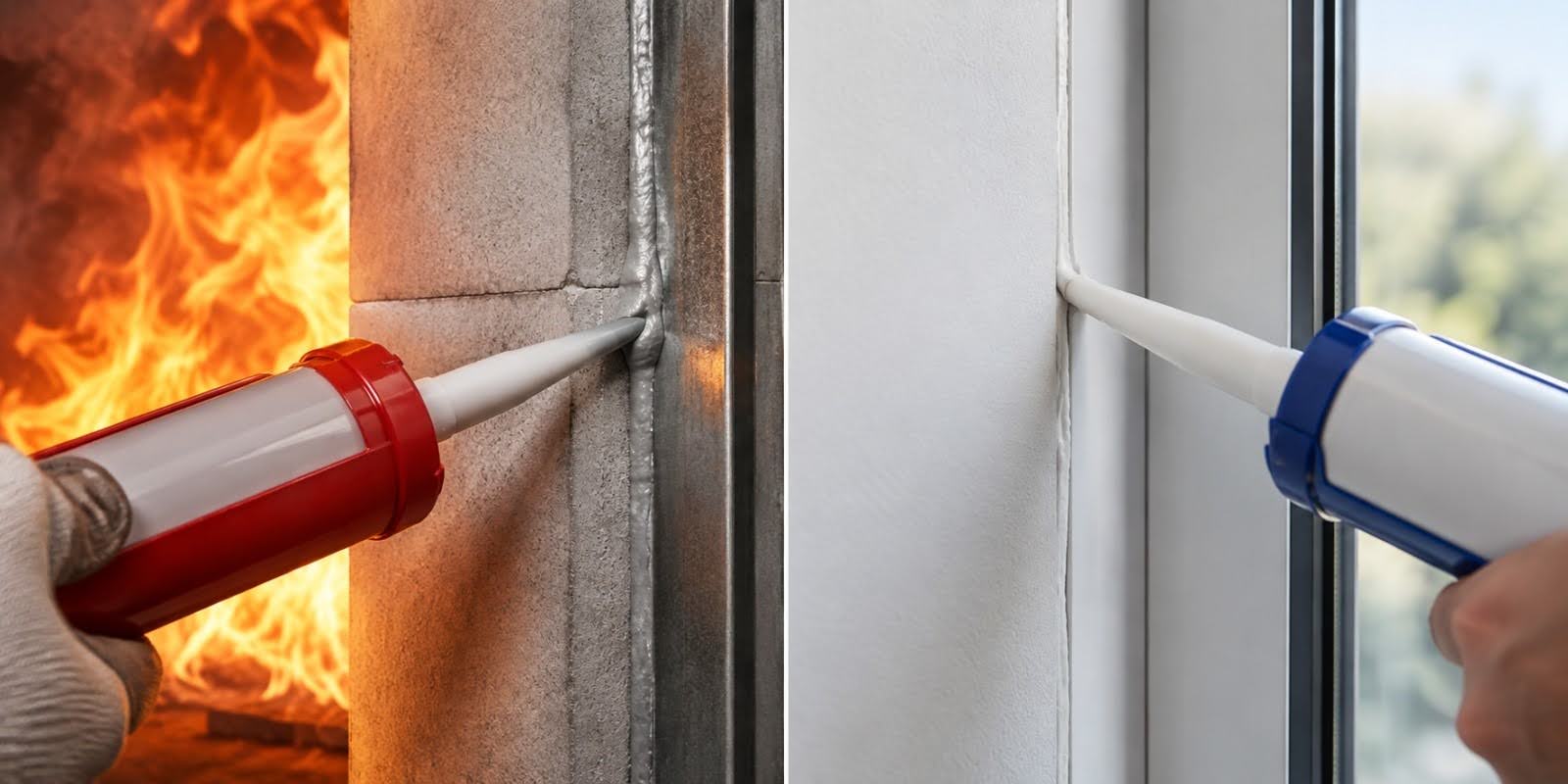
A fire rated sealant is designed for passive fire protection applications where joints, gaps or service penetrations need to form part of a tested or specified fire-resistant system. Regular construction sealant is primarily used for functions such as weather sealing, movement accommodation, moisture resistance and general joint sealing.
The key difference is therefore not simply the sealant material. It is the intended performance of the complete joint or penetration system.
A regular sealant may provide effective adhesion, flexibility and weather resistance but should not automatically be treated as a Fire Stop product. Fire-rated applications require products and systems specifically intended to help maintain the fire resistance of walls, floors or other building elements where openings and joints are present.
For construction projects, understanding this distinction helps determine when a conventional sealant is appropriate and when a fire-rated solution is required.
What Is a Fire-Rated Sealant?
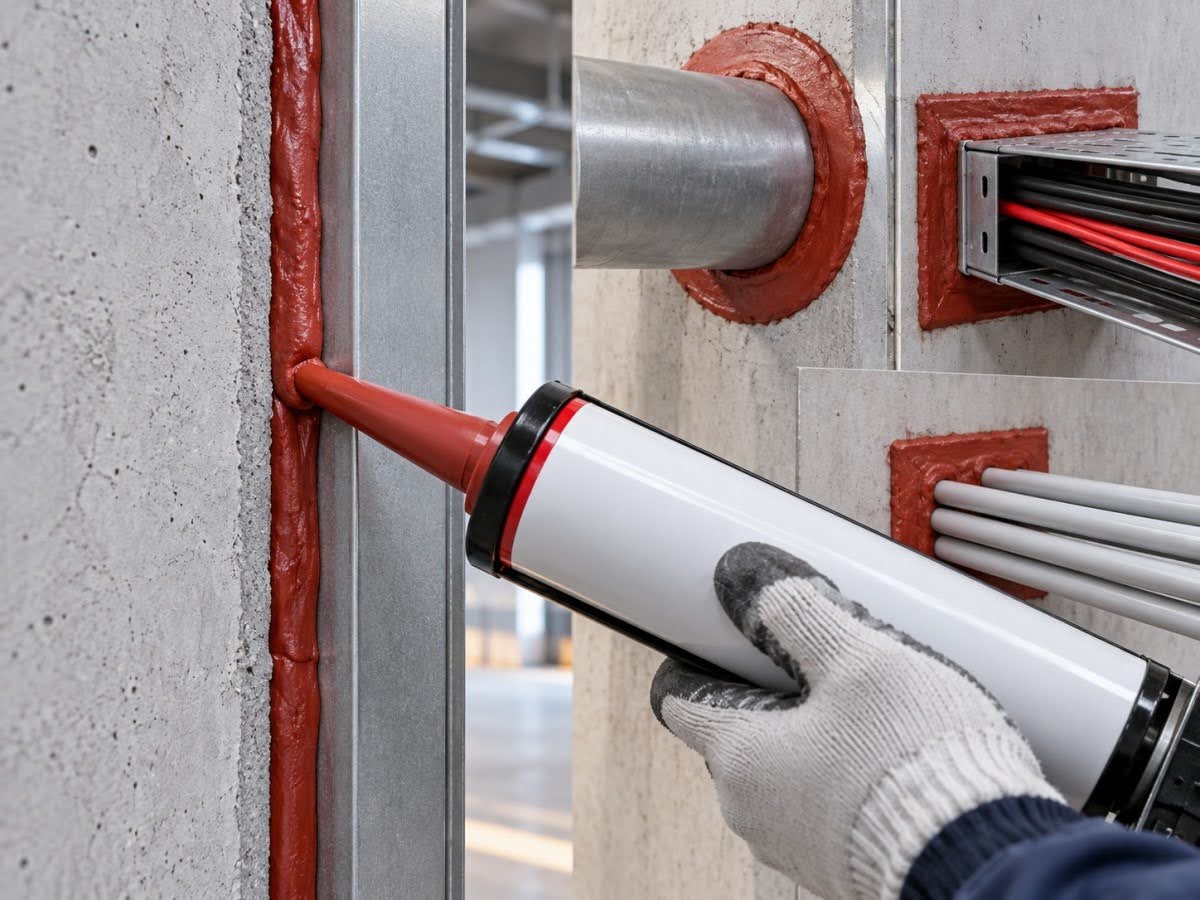
A fire-rated sealant is a specialised construction sealant formulated for use within passive fire protection systems. It is typically applied to specified joints, gaps and penetrations where fire resistance needs to be maintained.
Fire-rated sealants may be used around suitable service penetrations, construction joints and other openings, depending on the specific product and tested system.
Their function can include helping limit the passage of fire, smoke or hot gases for a specified period when installed in the correct system.
The term "fire rated" should not be interpreted as meaning the sealant cannot burn under any circumstances. Its performance depends on factors such as the substrate, joint dimensions, backing materials, penetration type, installation depth and tested configuration.
What Is Regular Construction Sealant?
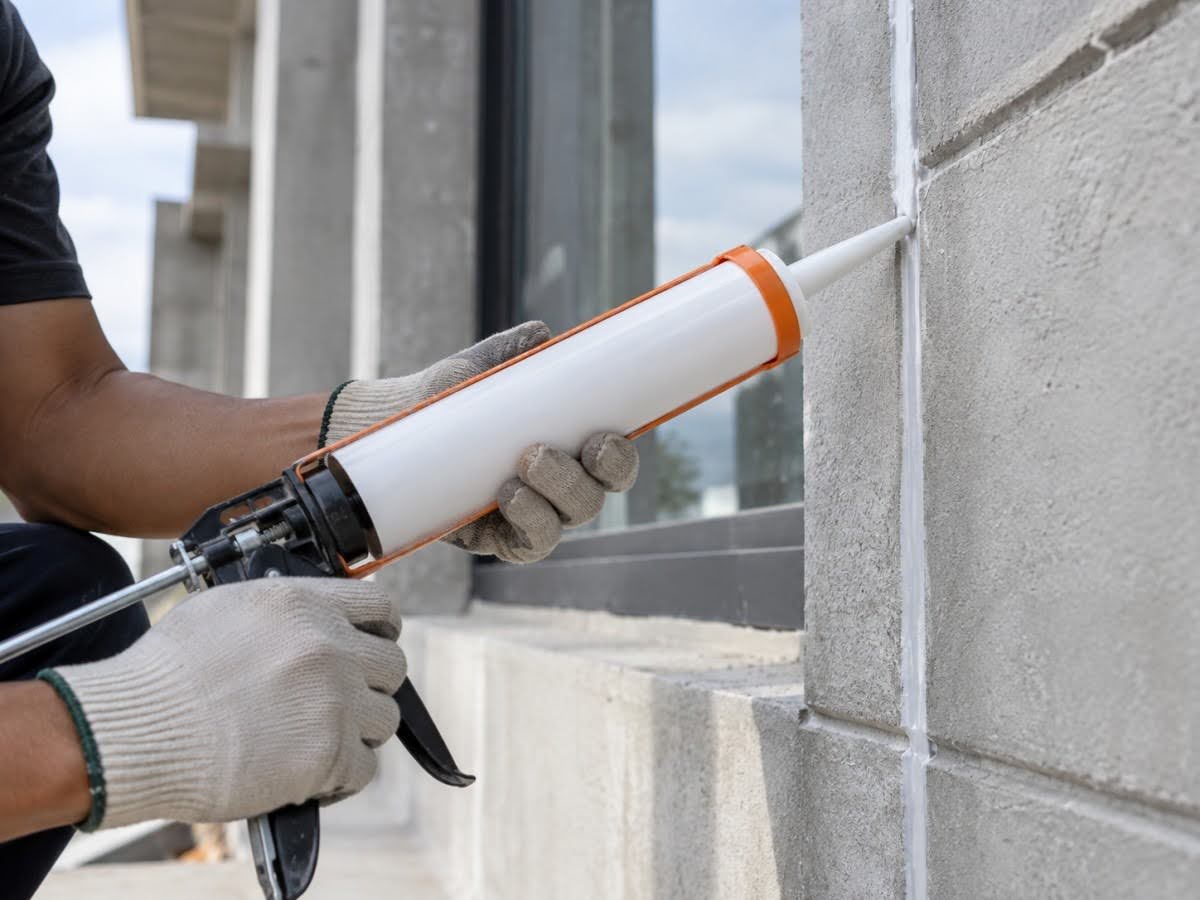
Regular construction sealant is a broad category of flexible sealing materials used to close joints and gaps in buildings. Its primary functions can include weather sealing, moisture resistance, movement accommodation and preventing unwanted air or water entry.
Common sealant applications include windows, doors, façades, sanitary areas and general construction joints.
Depending on the formulation, regular sealants can provide properties such as flexibility, UV resistance and adhesion to different substrates.
These characteristics can be important for building performance, but they do not automatically provide a fire-resistance rating.
A standard construction sealant should therefore not be used as a substitute for a fire-rated sealant where a fire-rated system is required.
Fire-Rated and Regular Sealants Serve Different Purposes
The main difference between the two sealant categories is their intended function. Fire-rated sealants are used within passive fire protection systems, while regular sealants primarily address environmental sealing and joint movement.
The distinction can be summarised as follows:
| Consideration | Fire-Rated Sealant | Regular Sealant |
|---|---|---|
| Primary function | Passive fire protection | General joint sealing |
| Typical applications | Fire-resistant joints and penetrations | Windows, façades, gaps and general joints |
| Fire performance | Used within specified fire-rated systems | Not necessarily fire rated |
| Movement capability | Depends on product and system | Often an important selection factor |
| Weather resistance | Product-specific | Common requirement for exterior products |
| Installation | Must follow relevant system requirements | Follows general product requirements |
| Product substitution | Requires careful verification | Depends on normal application compatibility |
The appropriate product should therefore be selected according to what the joint is expected to achieve.
Understanding Passive Fire Protection
Passive fire protection refers to building measures designed to help contain fire and smoke or maintain the fire resistance of building elements without requiring active operation.
Fire-rated walls and floors are examples of passive fire protection elements.
However, these elements often need openings for pipes, cables, ducts and other building services. Joints may also exist between construction elements.
These openings can affect the continuity of the fire-resistant construction if they are not treated appropriately.
Fire stop systems are used to address these conditions by protecting specified penetrations and joints so that the required fire-resistance function can be maintained.
Fire-rated sealants can form one component of these systems.
What Is Fire Stopping?
Fire stopping is the treatment of joints, openings and service penetrations within fire-resistant construction using suitable passive fire protection systems.
A firestop system may involve more than sealant alone.
Depending on the application, it can incorporate backing materials, collars, wraps, boards, mortars or other specialised components.
The required configuration depends on the penetration, surrounding construction and fire-resistance requirements.
This distinction is important because purchasing Fire Rated Sealant does not automatically create a compliant firestop installation. The sealant needs to be used as part of an appropriate system for the specific application.
Fire Resistance Is a System Property
Fire resistance should be considered in relation to the complete installed system rather than the sealant in isolation. Substrate type, joint dimensions and associated materials can all influence performance.
For example, a sealant tested within a particular wall construction and joint configuration should not automatically be assumed to provide identical performance in a substantially different arrangement.
The same principle applies to penetrations.
A configuration around a metallic pipe can differ from one involving cables, plastic pipes or mixed services.
Selection should therefore consider the tested or specified application rather than relying only on a general fire-rating statement.
Fire-Rated Joints in Buildings
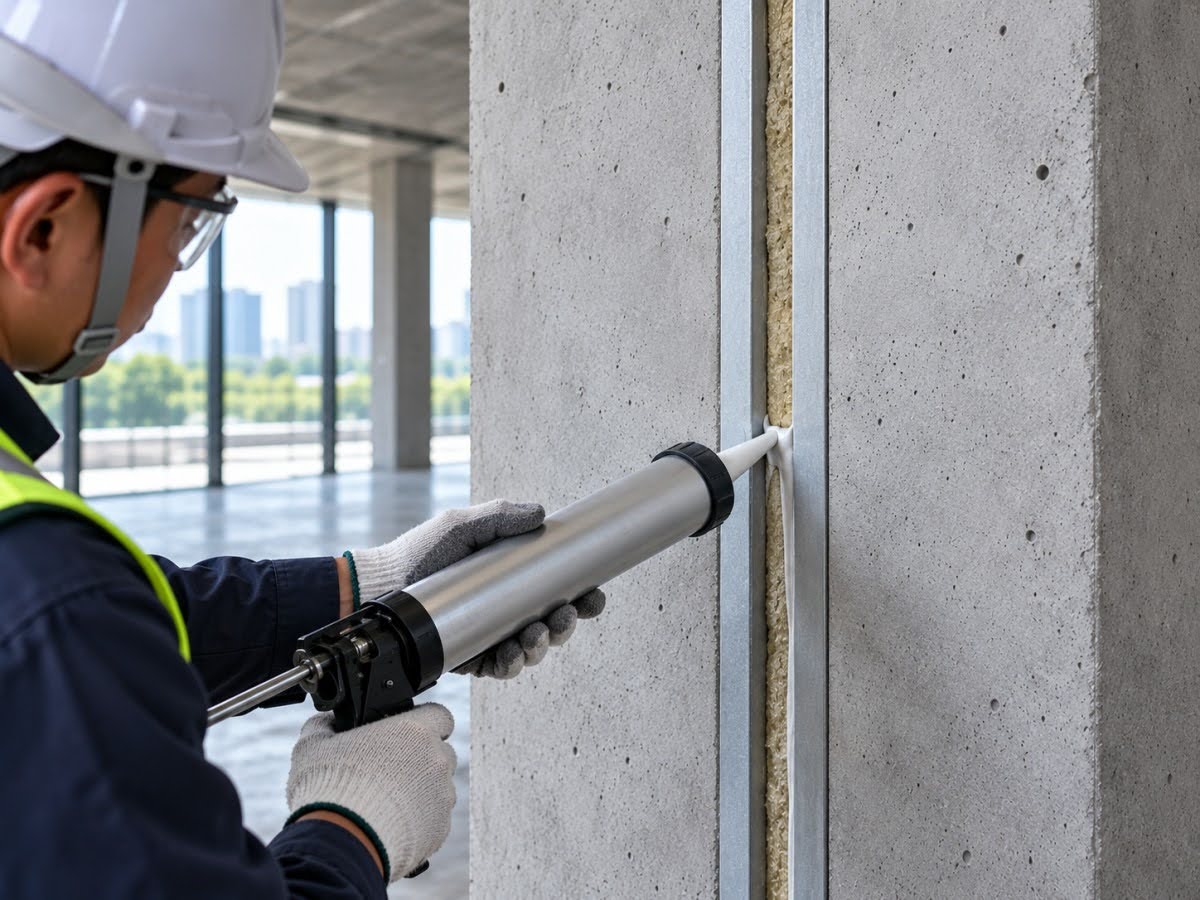
Fire-rated joints are designed to maintain the fire-resistance function where building elements meet or where movement needs to occur between them.
These joints may exist between walls, floors or other construction elements.
Unlike a static gap, some building joints can expand, contract or move during normal service.
A fire-rated joint system may therefore need to provide both fire resistance and appropriate movement capability.
The sealant and supporting materials should be selected according to the joint dimensions, substrates and movement conditions.
Using a rigid filler in a joint that needs to move can be unsuitable even if the material itself has certain fire-resistant characteristics.
Penetration Sealing Around Building Services
Penetration sealing addresses openings created when building services pass through fire-resistant walls or floors. Common services can include pipes, cables and other installations.
The treatment needs to correspond with the type and size of the penetration.
Different materials can behave differently during a fire.
Metal pipes, plastic pipes and electrical cables should therefore not automatically be treated using identical firestop configurations.
A fire stop system should be selected based on the specific penetration and surrounding construction.
A fire-rated sealant may form part of the treatment where the relevant system permits its use.
Fire-Rated Sealant Around Cables
Cable penetrations can create openings through fire-resistant construction. Firestop treatment may be required to address the remaining gaps around the cables.
The appropriate system depends on factors such as cable quantity, opening dimensions and wall or floor construction.
The sealant may be installed together with other components depending on the system design.
Future cable changes should also be considered where relevant.
Adding or removing services from an existing firestop can alter the original configuration, so modifications should be assessed rather than simply filling remaining gaps with any available sealant.
Fire-Rated Sealant Around Pipes
Pipe penetrations can require different firestop approaches depending on pipe material, diameter and surrounding construction.
Metal and combustible pipes behave differently under fire conditions.
For this reason, a sealant that is suitable around one penetration type should not automatically be used for another.
Some configurations may require additional firestop components beyond sealant.
The complete system should therefore be identified before installation begins.
This is another reason fire-rated sealant selection should be application-specific rather than based only on the product category.
Regular Sealants Focus on Different Performance Requirements
Regular construction sealants are generally selected around characteristics such as adhesion, flexibility, weather resistance and movement capability.
An exterior façade joint, for example, may need to withstand sunlight, rain and repeated dimensional movement.
A glazing joint may require compatibility with glass and aluminium.
Interior sealants can have different moisture and substrate requirements.
These are important construction functions, but they are different from maintaining the fire resistance of a building element.
A product can therefore be suitable for demanding exterior conditions without being appropriate for a fire stop application.
Movement Capability Still Matters in Fire-Rated Applications
Fire-rated joints can experience movement during normal building use, so fire performance is not necessarily the only selection requirement.
The joint may expand and contract because of temperature changes, structural movement or differences between adjoining materials.
The selected fire-rated system should accommodate the movement expected from the application where required.
Joint dimensions are particularly important because sealant movement performance depends partly on the relationship between width and depth.
The product should therefore be evaluated for both its firestop function and the physical behaviour of the joint.
Substrate Compatibility Must Be Considered
Substrate compatibility affects whether the sealant can form and maintain appropriate adhesion to the surrounding construction materials.
Potential substrates can include concrete, masonry, plasterboard, metal and other materials depending on the application.
A product intended for one substrate configuration may not necessarily be suitable for another.
Surface preparation can also affect adhesion.
Dust, loose material, oil and other contaminants should be addressed according to product requirements.
For fire-rated applications, substrate compatibility should be considered together with the requirements of the complete firestop system.
Installation Depth and Joint Configuration Matter
Sealant depth is an important part of many joint and penetration systems because the amount and position of material can influence performance.
Applying an arbitrary quantity of a fire-rated sealant should not be assumed to produce the intended fire resistance.
Some systems require a defined minimum sealant depth, joint width or backing arrangement.
The orientation of the application may also matter.
A wall penetration and floor penetration can have different requirements even when similar services pass through them.
Installation should therefore reproduce the appropriate specified configuration rather than relying on visual judgement alone.
Backing Materials Can Form Part of the System
Backing materials can be used behind sealant to control depth, support the joint profile or contribute to the overall firestop configuration.
The appropriate material depends on the specific application.
In regular movement joints, backer rods may be used to control sealant geometry.
Fire-rated systems can use different backing materials according to the tested or specified assembly.
These components should not be substituted casually.
Changing the backing material can mean the installed configuration no longer corresponds with the intended system.
Why Product Substitution Requires Care
Fire-rated sealants should not be substituted solely because two products have similar descriptions or appear to offer comparable fire performance.
The specific system configuration matters.
Different products may have been evaluated with different substrates, penetration types, joint dimensions or associated components.
A replacement product should therefore be checked against the actual application.
This differs from choosing between general-purpose sealants, where substrate and environmental compatibility remain important but passive fire protection may not be involved.
In firestop work, seemingly small substitutions can alter the overall system configuration.
Fire Stop Installation Should Follow Defined Requirements
A fire stop installation should follow the requirements applicable to the selected product and system. Correct product choice cannot compensate for incorrect installation.
The installer should understand the joint or penetration before beginning work.
A basic process can include:
- Identify Fire-Resistant Elements: Identify the fire-resistant construction;
- Determine Joint/Penetration Type: Determine the type of joint or penetration;
- Confirm Substrates: Confirm the surrounding substrates;
- Select Approved System: Select the appropriate firestop system;
- Prepare Opening: Prepare the opening and surfaces; and
- Execute Installation: Install the required components to the specified configuration.
The finished installation should correspond with the selected system rather than simply appear visually sealed.
Common Mistakes When Selecting Fire-Rated Sealants
Firestop problems can begin when general construction sealing practices are applied to specialised passive fire protection applications.
One mistake is assuming any heat-resistant or flame-resistant product is automatically suitable as a firestop.
Another is focusing on the sealant while ignoring the surrounding wall, floor or penetration.
Using a product outside its intended joint dimensions or substrate configuration can also create problems.
A further issue is substituting a regular sealant because it has strong adhesion or weather resistance.
Those properties do not establish firestop suitability.
How to Choose Between a Fire-Rated and Regular Sealant
The choice should begin by determining whether the joint or opening forms part of a fire-resistant building element.
If fire resistance is not required, the selection can focus on normal construction factors such as substrates, movement and weather exposure.
If the opening or joint must maintain fire resistance, an appropriate firestop solution should be identified.
A useful selection framework is:
| Question | Why It Matters |
|---|---|
| Is the wall or floor fire rated? | Determines whether passive fire protection may be required |
| Is this a joint or service penetration? | Influences system type |
| What materials form the opening? | Affects compatibility |
| What services pass through it? | Influences penetration treatment |
| Does the joint move? | Determines movement requirements |
| What system configuration is specified? | Defines installation requirements |
This prevents the choice from being reduced to a simple comparison of sealant properties.
Frequently Asked Questions (FAQs)
What is a fire-rated sealant used for?
A fire-rated sealant is used within suitable passive fire protection systems for specified joints, gaps and service penetrations. Its purpose is to help maintain the required fire-resistance function of the surrounding construction.
Is a fire-rated sealant the same as normal silicone sealant?
No. General silicone sealant is commonly selected for weather sealing, glazing and movement joints. A fire-rated product is specifically intended for passive fire protection applications and should be used according to its applicable system requirements.
What does a fire stop mean?
A fire stop refers to systems used to protect openings, joints and service penetrations in fire-resistant construction. Depending on the application, a firestop system may contain sealants and other specialised components.
Can a regular sealant be used around pipes in a fire-rated wall?
A regular sealant should not automatically be used where a penetration must maintain the wall's fire resistance. The appropriate firestop system depends on the pipe, opening, wall construction and required performance.
Is a fire-rated sealant suitable for moving joints?
Some fire-rated sealants and systems are designed to accommodate movement, but this depends on the specific product and configuration. Joint movement requirements should be checked during selection.
Does applying more fire-rated sealant increase fire resistance?
Not necessarily. Fire stop performance depends on the specified system configuration, including material depth, joint dimensions and associated components. Applying additional material does not automatically increase the fire-resistance performance.
Choosing Sealants According to Their Intended Function
Fire-rated and regular sealants address different building requirements. Regular sealants primarily provide functions such as weather sealing, adhesion and movement accommodation, while a fire-rated Sealant is used within passive fire protection systems.
The distinction becomes particularly important around fire-resistant joints and service penetrations. The sealant cannot be assessed independently from the wall, floor, substrate, opening and associated firestop components.
Selecting a fire stop solution should therefore begin with the building application and required system performance. For general construction joints where fire resistance is not required, a regular sealant can instead be selected according to movement, substrate and environmental exposure.
Identify the Appropriate Sealant for Your Application
Fire-rated and general construction sealants should be selected according to the joint, substrates, exposure conditions and required performance. Eastern Win Enterprises Pte Ltd. provides sealant solutions for different construction and building applications in Singapore.
For assistance identifying a suitable fire-rated sealant or other construction sealant for your application, you can contact Eastern Win Enterprises Pte Ltd.