


 Contact Us: (65) 6419 2850


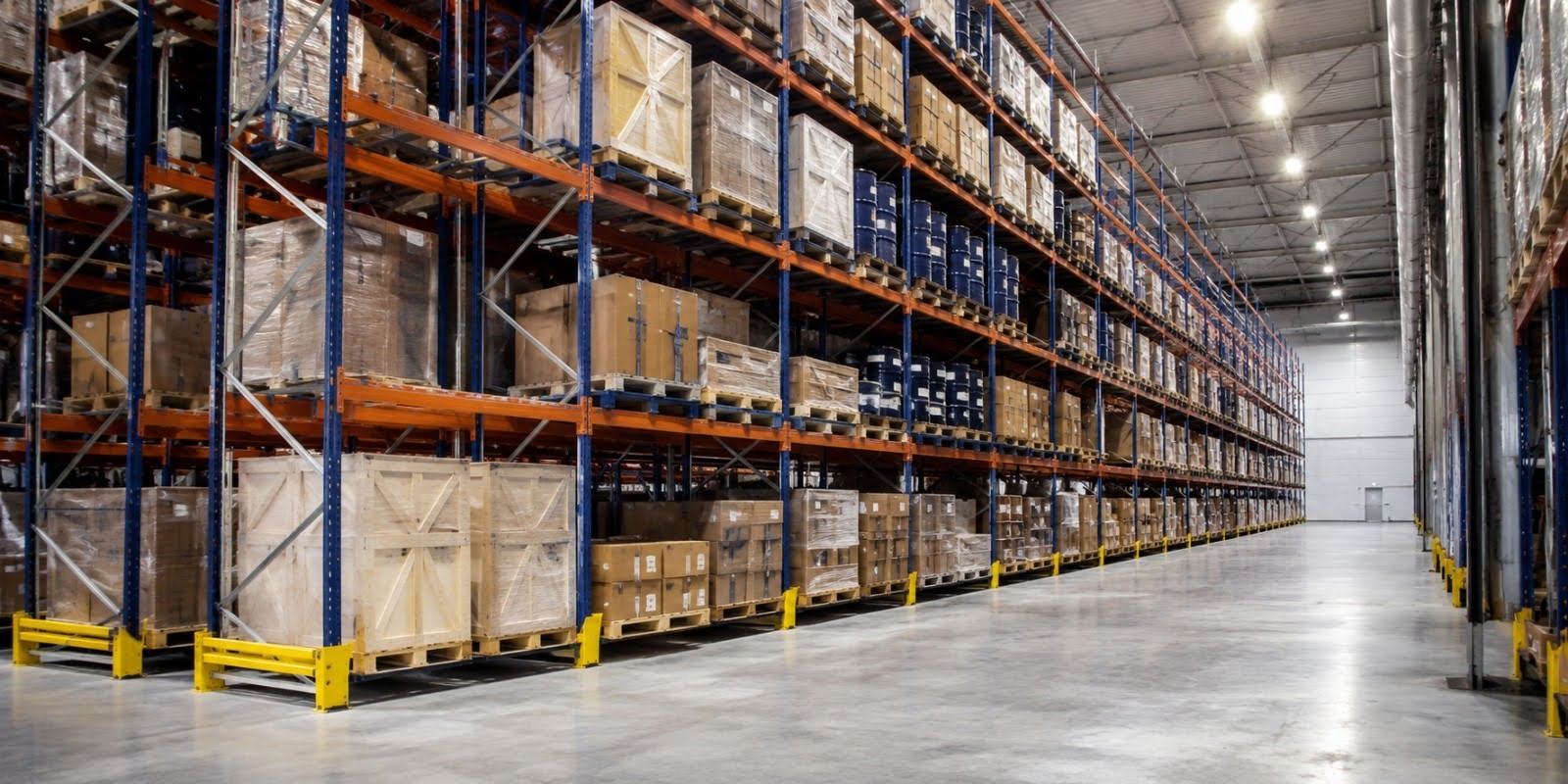
Warehouse storage solutions involve specific racking systems for inventory. A heavy duty racking system is designed to store substantial loads in warehouses, factories, distribution centres and other industrial environments where conventional light-duty shelving may not be suitable. The appropriate system depends on the weight and dimensions of stored goods, inventory handling methods, warehouse layout, accessibility requirements and available vertical space.
Industrial storage is not simply a question of choosing the strongest rack available. A suitable system must match the actual inventory and operating conditions of the facility. Palletised goods, manually handled cartons, long materials and small components can each require different storage configurations.
For businesses evaluating appropriate solutions for industrial shelving in Singapore, understanding these differences is important because heavy-duty racking and industrial shelving can perform different roles within the same facility. A warehouse may use pallet racking for bulk inventory while using shelving systems for smaller goods and picking operations.
This guide explains heavy-duty racking, industrial shelving, load requirements, common applications, types of industrial racks, inventory-based selection, warehouse planning and safety considerations.
What Is a Heavy Duty Racking System?
A heavy duty racking system is an industrial storage structure designed to support relatively substantial loads across multiple vertical storage levels. These systems commonly use steel upright frames and horizontal beams configured according to the dimensions and weights of the goods being stored.
Heavy-duty racks are frequently associated with palletised inventory because pallets can carry substantial quantities of goods and are commonly handled using forklifts or other suitable material-handling equipment.
The term “heavy duty” should not be interpreted as a universal load rating. Different rack designs, components and configurations have different capacities.
A suitable system must therefore be designed around known storage requirements. These include individual pallet weight, pallet dimensions, beam-level loading, rack height and the intended method of handling the goods.
Heavy-duty racking is particularly useful where businesses need to combine substantial load capacity with vertical storage. Instead of occupying warehouse floor space with single-level storage, inventory can be organised across multiple rack levels.
How Heavy-Duty Racking Works
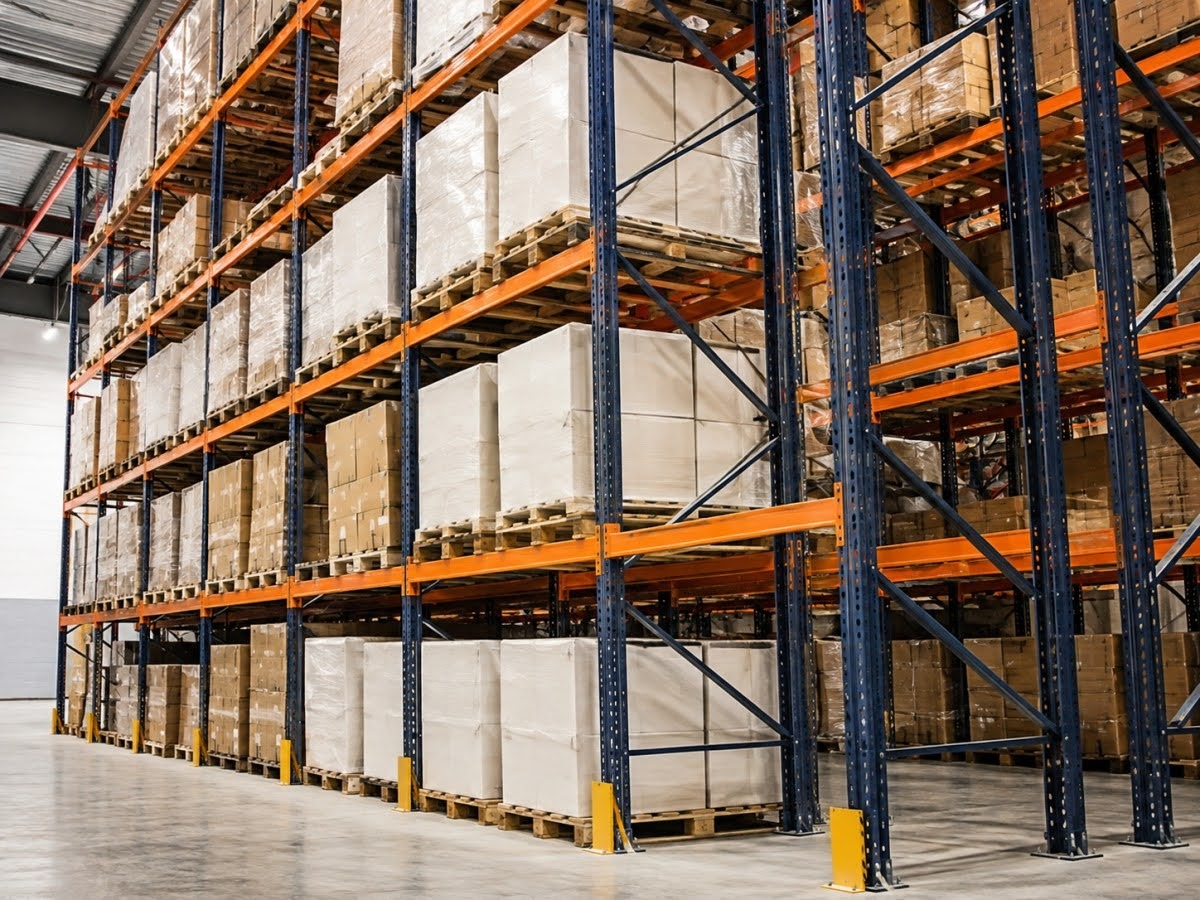
Heavy-duty racking works by transferring stored loads through horizontal beams and upright frames towards the supporting structure and floor. Each component forms part of an engineered storage configuration rather than functioning independently.
In a typical pallet racking arrangement, horizontal beams create storage levels between upright frames. Pallets are positioned at designated locations according to the rack configuration.
Forklifts or other appropriate handling equipment are generally used to place and retrieve palletised goods. This means rack dimensions and aisle layouts must be compatible with the equipment operating in the warehouse.
The configuration can vary according to the required storage density and accessibility. Some layouts prioritise direct access to individual pallets, while others reduce aisle space to increase the number of pallet positions.
Understanding how loads and operations interact is important when selecting a heavy-duty system. Storage capacity alone does not determine whether a particular configuration is appropriate.
What Is Industrial Shelving?
Industrial shelving is a structured storage system designed to organise goods, cartons, components and other inventory within commercial or industrial facilities. Depending on the system, stored items may be accessed manually rather than exclusively through pallet-handling equipment.
Requirements for industrial shelving in Singapore can vary considerably between facilities. A warehouse storing small spare parts has different needs from a distribution centre storing large cartons or palletised inventory.
Shelving systems can therefore range from light-duty adjustable racks to longspan systems capable of supporting larger or heavier manually handled goods.
The primary distinction is usually the intended load and handling method. Industrial shelving should be selected according to the size, weight and retrieval method of the goods rather than simply by the available shelf dimensions.
A facility may also use shelving and heavy-duty pallet racking together. The two systems can support different inventory zones within the same warehouse.
Heavy-Duty Racking vs Industrial Shelving
Heavy-duty racking and industrial shelving differ primarily in load requirements, inventory format and handling methods. Heavy-duty systems are commonly designed for palletised loads, while industrial shelving often accommodates manually handled inventory.
The distinction can be summarised as follows:
| Consideration | Heavy-Duty Racking | Industrial Shelving |
|---|---|---|
| Typical inventory | Palletised or substantial loads | Cartons, components and manually handled goods |
| Handling method | Commonly forklift or mechanical handling | Commonly manual picking |
| Storage scale | Bulk and pallet storage | Small to medium individual goods |
| Vertical use | Multiple pallet levels | Multiple shelf levels |
| Typical environment | Warehouses, factories, distribution centres | Warehouses, stock rooms, workshops, commercial storage |
| Main planning consideration | Pallet loads and equipment access | Shelf loads and manual accessibility |
These distinctions are general rather than absolute. Individual system specifications ultimately determine the appropriate application.
Heavy-Duty vs Light-Duty Storage
Heavy-duty and light-duty storage systems are differentiated by their intended loads and applications. A light-duty shelving system should not be treated as an alternative to pallet racking when substantial palletised loads need to be stored.
Light-duty systems are generally more appropriate for smaller products, cartons, tools, documents or other inventory that can be handled manually. Boltless shelving is one example commonly used for these applications.
Heavy-duty systems are intended for more demanding warehouse storage requirements. Their structural components are configured to support larger loads, often across pallet positions.
Between these categories, medium-duty systems such as longspan shelving can accommodate goods that are too large or heavy for conventional light shelving but do not require pallet storage.
This creates a practical storage spectrum:
- Light-duty shelving for smaller manually handled items;
- Medium-duty or longspan shelving for larger cartons and products; and
- Heavy-duty racking for substantial or palletised loads.
Selecting the correct category starts with understanding the actual goods being stored.
Understanding Load Requirements

Load requirements define the weight a storage system needs to support and are fundamental to rack and shelving selection. Accurate load information should be established before deciding on a storage configuration.
For pallet racking, businesses should know the maximum expected pallet weight rather than relying only on an average load. Pallet dimensions and the way goods are distributed across the pallet also matter.
For industrial shelving, the weight placed on individual shelves and bays needs consideration. A shelf storing dense mechanical components can experience substantially different loads from one holding lightweight cartons of the same physical size.
Several load-related factors may need assessment:
- Individual unit or pallet weight;
- Number of units stored on each level;
- Distribution of weight across the storage level;
- Rack or shelf configuration; and
- Expected changes in inventory.
The capacity of a system should not be inferred from appearance. Two racks with similar dimensions may have different structural specifications and intended capacities.
Why Load Distribution Matters
Load distribution describes how the weight of stored goods is positioned across a rack, beam or shelf level. Even when the total load is within a system's intended capacity, inappropriate concentration of weight can affect how components perform.
Warehouse operators should therefore consider both total weight and how that weight is placed on the storage structure.
Pallet dimensions can influence load distribution on heavy-duty racking. Similarly, shelving used for individual products should be configured so that the stored goods correspond with the intended shelf design.
Changes in inventory can alter these conditions. A shelf originally used for lightweight cartons may later be used for dense components without changes to its physical appearance.
Clear storage practices and accurate information help ensure that warehouse personnel understand the intended use of each rack or shelving area.
Common Applications of Heavy-Duty Racking
Heavy-duty racking is commonly used where substantial inventory needs to be stored vertically and accessed using material-handling equipment. Applications vary across industries because the system can be configured for different pallet and warehouse requirements.
Typical environments can include warehouses, manufacturing facilities, distribution centres and industrial storage areas.
The system can support several operational requirements, such as:
- Storing palletised finished goods;
- Holding raw materials or production inventory;
- Organising bulk stock before distribution;
- Creating reserve storage for picking operations; and
- Using warehouse height for additional pallet positions.
The suitability of heavy-duty racking depends on more than the industry. Two businesses in the same sector can require different configurations because their pallet sizes, stock movement and warehouse layouts differ.
Common Applications of Industrial Shelving
Industrial shelving is commonly used for goods that require organised shelf-level storage and regular manual access. It can complement pallet racking by supporting inventory that does not need to remain on pallets.
Warehouses may use industrial shelving for spare parts, cartons, packaged products, tools, maintenance supplies or picking inventory.
Manufacturing environments can use shelving near production areas for components or consumables. Commercial stock rooms may use adjustable shelving to organise smaller goods.
The appropriate shelving type depends on item dimensions, shelf load, retrieval frequency and the amount of adjustment required.
Industrial shelving should therefore be planned around the handling process. Frequently picked goods may benefit from easily accessible locations, while reserve stock can occupy different positions within the storage layout.
Selective Pallet Racking for Direct Access
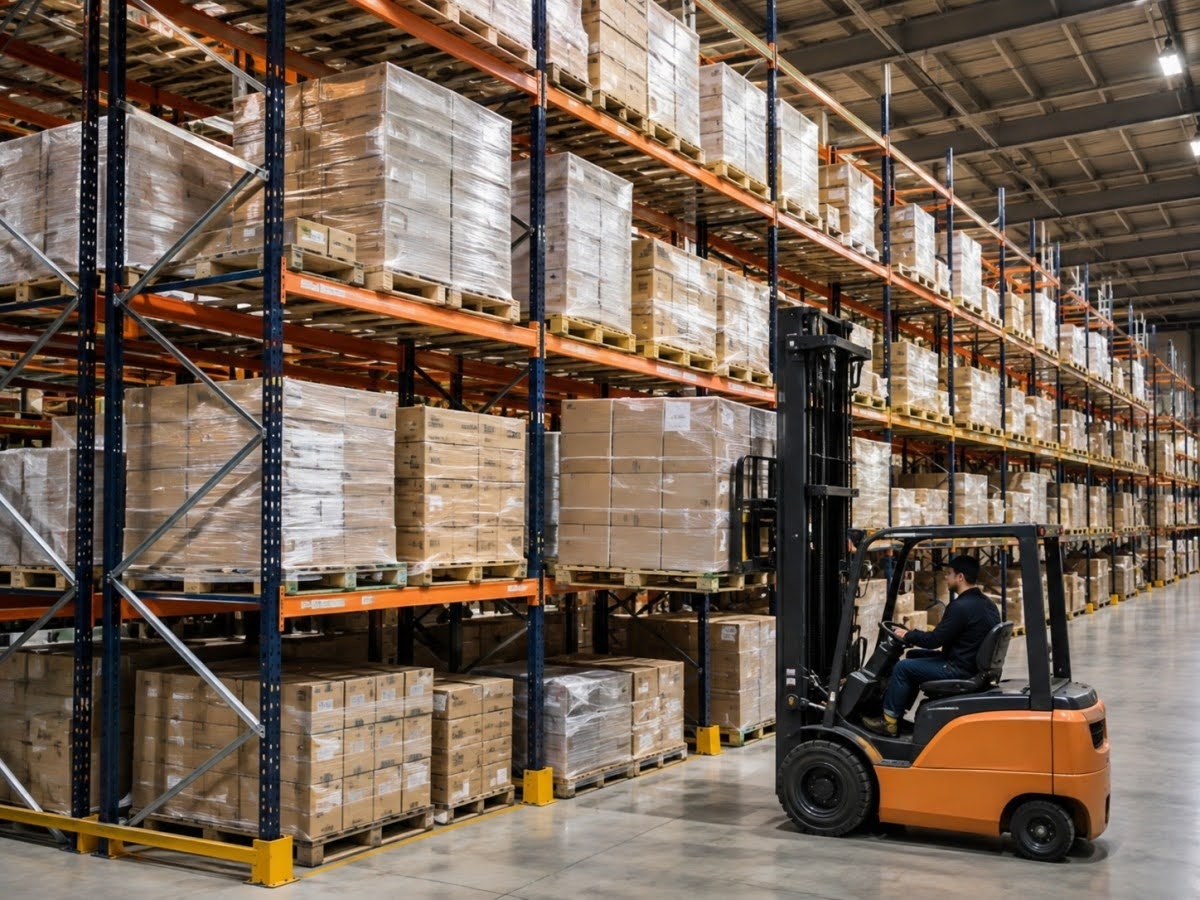
Selective pallet racking is a common heavy-duty storage configuration that provides relatively direct access to individual pallet positions. Each rack face is normally accessible from an aisle, allowing operators to retrieve a specific pallet without moving several others first.
This characteristic can make selective racking useful for warehouses handling multiple SKUs or inventory with frequent pallet movement.
Its accessibility comes with a space consideration. Because aisles are required between rack rows, a portion of the warehouse floor area must be dedicated to material-handling access.
The appropriate balance between aisle space and storage capacity depends on the operation. A warehouse that needs frequent access to many different products may value selectivity more than maximum pallet density.
Selective pallet racking is therefore not simply a default heavy-duty option. It is particularly suited to operations where direct pallet accessibility is important.
Drive-In Racking for Higher Storage Density
Drive-in racking is a heavy-duty storage configuration designed to increase pallet density by allowing handling equipment to enter storage lanes. Multiple pallets can be stored at depth, reducing the number of aisles required.
This arrangement can be suitable for larger quantities of similar palletised goods. By allocating more floor area to storage lanes and less to access aisles, warehouse capacity can potentially be increased.
The trade-off is reduced individual pallet accessibility. Inventory deeper within a lane may not be directly accessible until other pallets are moved.
Drive-in racking is therefore generally more appropriate where inventory characteristics and stock rotation are compatible with lane-based storage.
Warehouse operators considering this system should evaluate pallet consistency, inventory variety, movement frequency and forklift operations before prioritising storage density.
Longspan Shelving for Medium-Duty Industrial Storage
Longspan shelving is generally used for medium-duty goods that require wider shelves than conventional light-duty shelving but are still commonly handled manually. It can provide an intermediate solution between boltless shelving and heavy pallet racking.
The system is suitable for cartons, packaged products and components that require broad shelf surfaces.
Adjustable shelf levels can help accommodate products of different heights. Wider bays can also reduce the number of vertical divisions required for larger goods.
Longspan shelving may be particularly useful in warehouses that combine bulk pallet storage with manual order picking. Reserve stock can remain on heavy-duty racks while individual cartons or products are stored on shelving.
The final system should still be selected according to shelf loads, dimensions and the intended picking process.
Boltless Shelving for Lighter Industrial Storage
Boltless shelving is a modular system commonly used for lighter goods and manually handled inventory. Its construction allows shelf levels to be assembled and adjusted without conventional bolted shelf connections.
The system can be suitable for stock rooms, workshops, warehouses and other areas requiring organised storage of cartons, supplies or components.
Adjustability is one of its practical characteristics because shelf positions can be configured around different product heights. However, adjustment should remain consistent with the intended system configuration.
Boltless shelving is not a substitute for heavy-duty pallet racking when substantial pallet loads are involved.
Its role within an industrial storage strategy is typically to provide flexible storage for smaller items that do not require mechanical pallet handling.
Cantilever Racking for Long Materials
Cantilever racking is designed for long or irregular materials that are difficult to store in conventional framed rack bays. Horizontal arms project from supporting columns, providing relatively unobstructed access from the front.
Typical stored materials can include pipes, timber, profiles and other elongated products, depending on the system design.
The open-front configuration allows long goods to be placed horizontally without front upright frames interfering with loading.
Cantilever systems still require careful consideration of load distribution, arm spacing and product dimensions. Long materials can create different loading characteristics from conventional palletised goods.
For facilities handling both pallets and elongated products, cantilever racking can operate as a specialised storage zone alongside heavy-duty pallet systems.
Choosing Industrial Racking by Inventory Type
Inventory type should be one of the primary factors used to select an industrial storage system. Different goods require different support structures, access methods and handling processes.
A practical way to begin is to classify inventory by its physical and operational characteristics.
Palletised bulk goods generally point towards heavy-duty pallet storage. Large quantities of similar pallets may justify evaluating higher-density configurations such as drive-in racking.
Long materials can require cantilever racks. Cartons and medium-sized manually handled products may be better suited to longspan shelving, while smaller items can use boltless or other industrial shelving.
Mixed inventory frequently requires more than one system. This is normal rather than inefficient.
Using different rack types for different inventory zones can improve the relationship between storage capacity and accessibility.
Inventory Turnover and Storage Selection
Inventory turnover describes how frequently goods enter and leave storage, and it can influence which racking configuration is practical. High-turnover goods generally require efficient access, while slower-moving inventory may tolerate denser storage arrangements.
A warehouse handling many fast-moving SKUs may prioritise direct access to individual storage locations. Selective pallet racking can support this requirement because individual pallets are generally accessible from aisles.
A facility storing large volumes of similar goods for longer periods may place greater value on storage density. A drive-in configuration may therefore warrant consideration.
The same principle applies to industrial shelving. Frequently picked products should be positioned where workers can access them efficiently, subject to appropriate handling and storage considerations.
Inventory velocity should consequently be considered alongside load capacity rather than after the rack has already been selected.
Material Handling and Industrial Racking
Material-handling equipment must be compatible with the selected racking system because equipment dimensions and operating requirements affect aisle widths, rack heights and accessibility. Racking and handling equipment should therefore be planned as connected parts of the warehouse.
Forklifts used for pallet racking require adequate manoeuvring space and appropriate access to storage positions. Their lifting capabilities can also influence usable storage height.
Drive-in systems place different demands on forklift movement because equipment enters the storage lanes themselves.
Manual shelving requires another approach. Shelf dimensions and product placement should support practical handling by warehouse personnel.
The objective is to design a storage environment in which inventory can move from receiving to storage, picking and dispatch without unnecessary handling conflicts.
Warehouse Layout Planning for Heavy-Duty Racking
Warehouse layout planning determines where racks, aisles, work areas and material-handling routes are positioned within the available building space. A good layout balances storage capacity with accessibility and operational movement.
Warehouse dimensions should be measured accurately before the storage system is configured. Columns, doors, loading areas, building services and other physical features can influence rack placement.
Vertical space should also be assessed. Additional rack levels can increase storage capacity, but usable height depends on building conditions, handling equipment and system requirements.
The layout should account for the complete warehouse workflow, including:
- Receiving and unloading;
- Movement into storage;
- Picking and replenishment;
- Staging or packing; and
- Dispatch.
Storage density should not be maximised at the expense of these operational functions.
Making Better Use of Vertical Warehouse Space
Vertical storage allows warehouses to use building height rather than relying primarily on floor-level storage. Heavy-duty racking can provide multiple pallet levels, while industrial shelving can organise smaller inventory vertically.
Using vertical space can be particularly relevant where floor area is limited or needs to accommodate operational activities.
However, usable height is not simply the distance between the floor and ceiling. The building structure, services, handling equipment and storage-system configuration can all affect practical storage height.
Higher racks may also change equipment requirements. Goods must be capable of being placed and retrieved appropriately at the intended storage levels.
Vertical space utilisation should therefore be treated as part of overall warehouse planning rather than as a standalone method for increasing capacity.
Balancing Storage Density and Accessibility
Storage density and accessibility often involve a trade-off. Increasing the amount of inventory stored within a given area can reduce the amount of direct access available to individual products or pallets.
Selective pallet racking tends to favour accessibility because aisles provide access to rack faces. Drive-in racking can favour density because several pallets are stored within deeper lanes.
Industrial shelving presents similar considerations at a smaller scale. Narrower aisles or deeper shelves may increase storage capacity but can affect manual picking efficiency.
The appropriate balance depends on the warehouse's inventory profile and operating model.
A storage system should therefore be evaluated by how well it supports daily operations, not simply by the maximum number of units it can hold.
Planning for Warehouse Growth and Changing Inventory
Warehouse requirements can change as inventory volumes, product ranges and distribution processes develop. Storage planning should therefore consider reasonable future changes when selecting industrial racking.
A facility may initially store a limited number of product types but later introduce additional SKUs. Product dimensions or pallet configurations can also change.
Flexible systems can accommodate some changes through adjustable levels or modular extensions, subject to their design requirements.
Larger changes may require a review of the overall layout or storage strategy.
Businesses do not need to predict every future requirement, but understanding likely operational developments can reduce the risk of creating a storage layout that becomes unsuitable shortly after installation.
Heavy-Duty Racking Installation Considerations
Heavy-duty racking installation should follow the intended system configuration and take account of site conditions. Industrial racks can support substantial loads, so installation should not be treated as ordinary shelving assembly.
The installation process begins with an accurate layout and confirmation of site conditions. Rack positions, aisle dimensions and clearances should correspond with the planned warehouse arrangement.
Components should be installed according to the applicable system requirements. Unauthorised substitutions or changes can affect the intended configuration.
After installation, the completed rack should correspond with the design and intended storage use.
Relevant system and load information should also be retained so future warehouse changes can be evaluated appropriately.
Why Floor and Site Conditions Matter
Floor and site conditions affect how a racking installation interacts with the warehouse environment. Heavy-duty systems transfer stored loads through their supporting structure, making the installation surface an important consideration.
Warehouse floors should be assessed as part of project planning rather than assumed to be identical across all facilities.
The location of columns, wall structures, doors and services can also influence rack positioning.
For existing warehouses, previous layouts or equipment may create additional constraints. A new racking configuration should therefore be based on current site conditions rather than relying solely on older drawings.
A proper site assessment helps connect the proposed rack design with the physical environment in which it will operate.
Safety Considerations for Industrial Racking
Industrial racking safety depends on appropriate design, installation, use and ongoing condition monitoring. A system can be affected by overloading, impacts, missing components or unauthorised modifications during its working life.
Warehouse personnel should understand the intended use of the storage system and report visible damage when identified.
Forklift impacts are particularly relevant in pallet-storage environments because material-handling equipment operates close to rack structures.
Changes to rack levels or components should also be controlled. Altering the original configuration can affect how loads are supported.
Good warehouse management therefore treats rack safety as an ongoing operational responsibility rather than a one-time installation task.
Inspecting Heavy-Duty Racking

Rack inspection involves checking storage structures for visible damage, missing components, deformation and other conditions that may affect their intended use. Heavy-duty racks should be monitored because daily warehouse operations can expose them to impacts and changing loads.
Common areas requiring observation include uprights, beams, bracing, connectors and base areas.
Inspection may also identify changes in configuration or loading practices that differ from the intended system use.
The significance of any damage depends on its location, type and severity. Structural concerns should be evaluated by appropriately competent personnel rather than judged solely by appearance.
Regular observation by warehouse staff can complement more formal inspection processes by identifying obvious problems between scheduled assessments.
Common Mistakes in Industrial Storage Planning
Industrial storage problems often arise when system selection focuses on available space without sufficiently considering inventory and operations. A rack can physically fit within a warehouse while still being poorly suited to the goods or handling process.
Common planning mistakes include selecting systems before confirming load information, ignoring handling-equipment requirements and using one storage type for substantially different inventory.
Other issues can result from treating future changes as irrelevant or modifying rack configurations without appropriate review.
A stronger approach is to treat the warehouse as an integrated system. Inventory, racks, aisles, handling equipment and operational processes should be considered together.
This reduces the likelihood that improvements in one area create inefficiencies elsewhere.
Creating an Integrated Industrial Storage System
An integrated industrial storage system combines heavy-duty racking, shelving and specialised racks according to the characteristics of different inventory groups. This approach recognises that a warehouse rarely has only one type of storage requirement.
Bulk palletised goods can occupy heavy-duty racks. Medium-sized cartons can use longspan shelving, while smaller products can be organised on boltless systems.
Long materials may require cantilever storage. High volumes of similar pallets may justify dedicated high-density zones.
The resulting warehouse becomes a combination of storage environments designed around specific operational requirements.
This is often more practical than selecting a single rack type and attempting to make every product fit within the same configuration.
Frequently Asked Questions (FAQs)
What is a heavy duty racking system?
A heavy duty racking system is an industrial storage structure designed to support substantial loads, commonly including palletised inventory. The exact capacity and configuration depend on the rack design, components, load requirements and intended application.
What is the difference between heavy-duty racking and industrial shelving?
Heavy-duty racking is commonly associated with substantial or palletised loads handled using material-handling equipment. Industrial shelving generally supports cartons, components and other goods that can often be accessed manually, although individual system capabilities vary.
How do I choose industrial shelving in Singapore?
Requirements for industrial shelving in Singapore should be assessed according to product dimensions, individual and shelf loads, retrieval frequency, available space and handling methods. The appropriate system may range from light-duty shelving to longspan or heavier storage configurations.
Can heavy-duty racking be used for all warehouse products?
Not necessarily. Heavy-duty racking is useful for substantial and palletised inventory, but smaller manually picked products may be better suited to shelving. Long or irregular materials may require specialised systems such as cantilever racking.
What information is needed before selecting heavy-duty racking?
Businesses should establish inventory dimensions, maximum loads, pallet specifications, warehouse dimensions, material-handling equipment and accessibility requirements. Inventory movement and expected future storage needs are also useful planning considerations.
Is drive-in racking considered heavy-duty racking?
Drive-in racking is commonly a heavy-duty pallet storage system designed for higher-density storage. Its suitability depends on the inventory profile because deeper storage lanes reduce direct access to individual pallets.
What is longspan shelving used for?
Longspan shelving is commonly used for medium-duty cartons, packaged goods and other manually handled inventory requiring wider shelf spans. It can bridge the gap between lighter shelving and pallet-based heavy-duty storage.
Why is load capacity important for industrial racks?
Load capacity defines the weight a rack or shelf is intended to support under its specified configuration. Accurate load information is necessary because overloading or inappropriate configuration changes can affect the intended performance of the storage system.
Can different racking systems be used in one warehouse?
Yes. Warehouses commonly combine heavy-duty pallet racks, industrial shelving, longspan systems, boltless shelving or specialised racks according to inventory requirements. A mixed system can provide a better balance between capacity and accessibility.
Should industrial racking be inspected?
Industrial racking should be monitored for visible damage, missing components, deformation and inappropriate configuration changes. Inspection requirements should reflect the type of system, warehouse environment and operational conditions.
Building a Storage System Around Real Warehouse Requirements
Heavy-duty racking and industrial shelving perform different but complementary roles in warehouse storage. Heavy-duty systems provide structured storage for substantial and palletised loads, while industrial shelving can organise cartons, components and manually handled goods.
The most appropriate system depends on inventory characteristics, load requirements, material handling, warehouse dimensions, accessibility and storage density. Selective pallet racks, drive-in systems, longspan shelving, boltless racks and cantilever systems each address different operational requirements.
A well-planned warehouse therefore does not begin by asking which rack is strongest or which configuration stores the most goods. It begins by defining what must be stored, how it moves through the facility and how the available space can support those operations.
For businesses assessing a heavy duty racking system or requirements for industrial shelving in Singapore, this inventory-led approach provides a stronger foundation for developing an organised and practical industrial storage environment.
Discuss Your Industrial Racking Requirements
Industrial storage planning should account for load requirements, inventory characteristics, warehouse layout and material-handling operations before a racking configuration is selected. Eastern Win Enterprises Pte Ltd. provides racking and industrial storage solutions for different warehouse requirements in Singapore.
To discuss heavy-duty racking, industrial shelving or related warehouse storage requirements, you can contact Eastern Win Enterprises Pte Ltd.