


 Contact Us: (65) 6419 2850


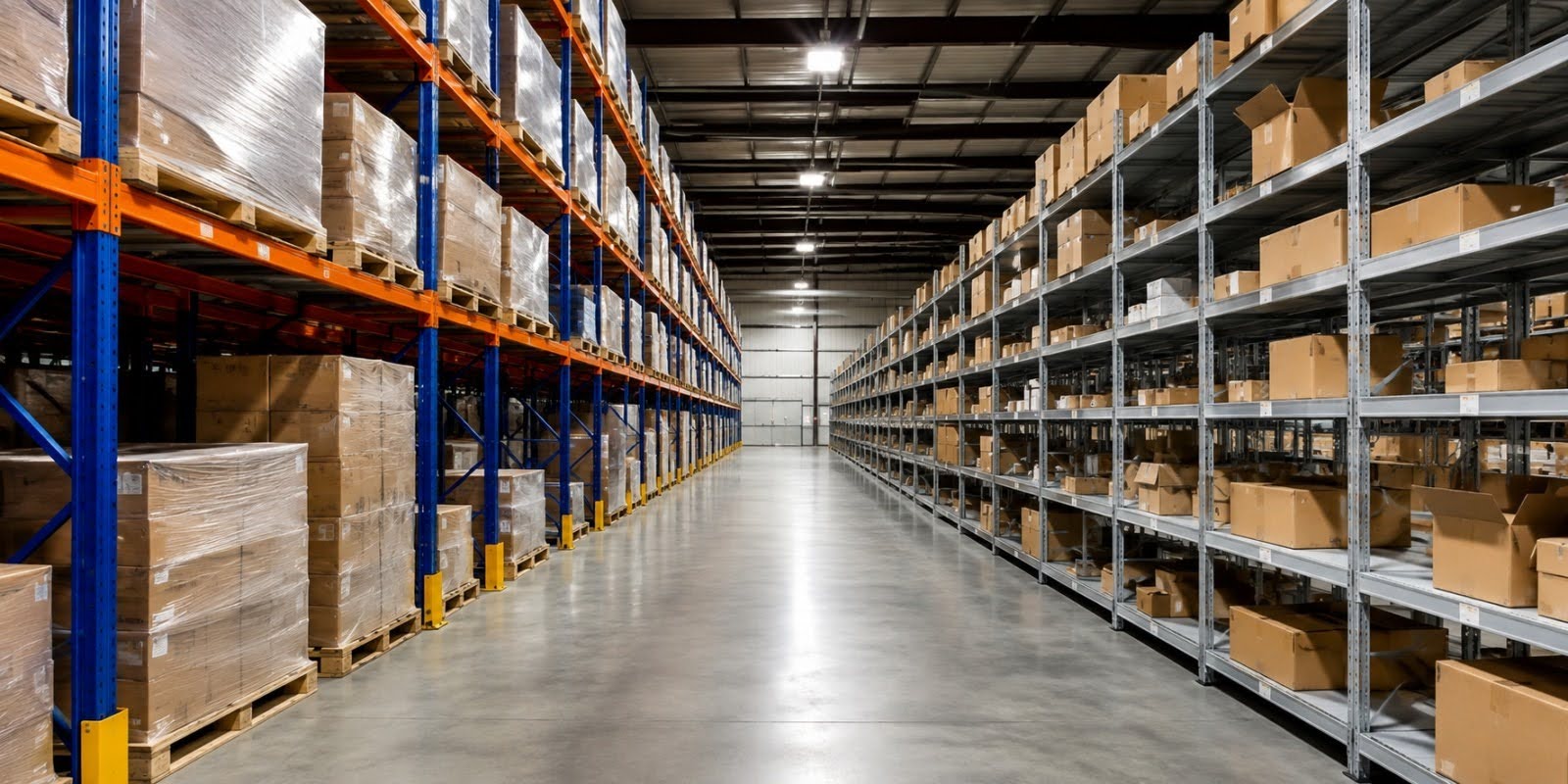
Racking systems are an essential component of warehouse storage solutions. A heavy duty racking system is generally designed for substantial or palletised loads, while light-duty racking is intended for smaller, manually handled goods such as cartons, tools, components and supplies. Choosing between them depends primarily on inventory weight, dimensions, handling method, storage volume and accessibility requirements.
The distinction is important because using a heavier system than necessary can result in inefficient use of warehouse space, while selecting light-duty shelving for loads beyond its intended capacity can create operational and safety concerns.
For businesses considering solutions for industrial shelving in Singapore, the answer may also involve more than one system. Warehouses frequently combine heavy-duty pallet racking with lighter shelving to accommodate different inventory categories.
This guide compares heavy- and light-duty racking based specifically on load requirements, applications, space, accessibility and scalability to help businesses determine which storage approach better matches their operations.
What Is Heavy-Duty Racking?
Heavy-duty racking is an industrial storage system designed to support substantial loads across multiple storage levels. It is commonly associated with palletised goods that are placed and retrieved using forklifts or other suitable material-handling equipment.
A typical system uses steel upright frames and horizontal beams to create designated pallet positions. The dimensions and load capacity depend on the specific configuration.
Heavy-duty systems are commonly found in warehouses, factories and distribution facilities where large quantities of inventory need to be stored vertically.
The term “heavy duty” does not represent one universal capacity. Individual systems have defined load requirements, so businesses should establish actual inventory weights before selecting a configuration.
What Is Light-Duty Racking?
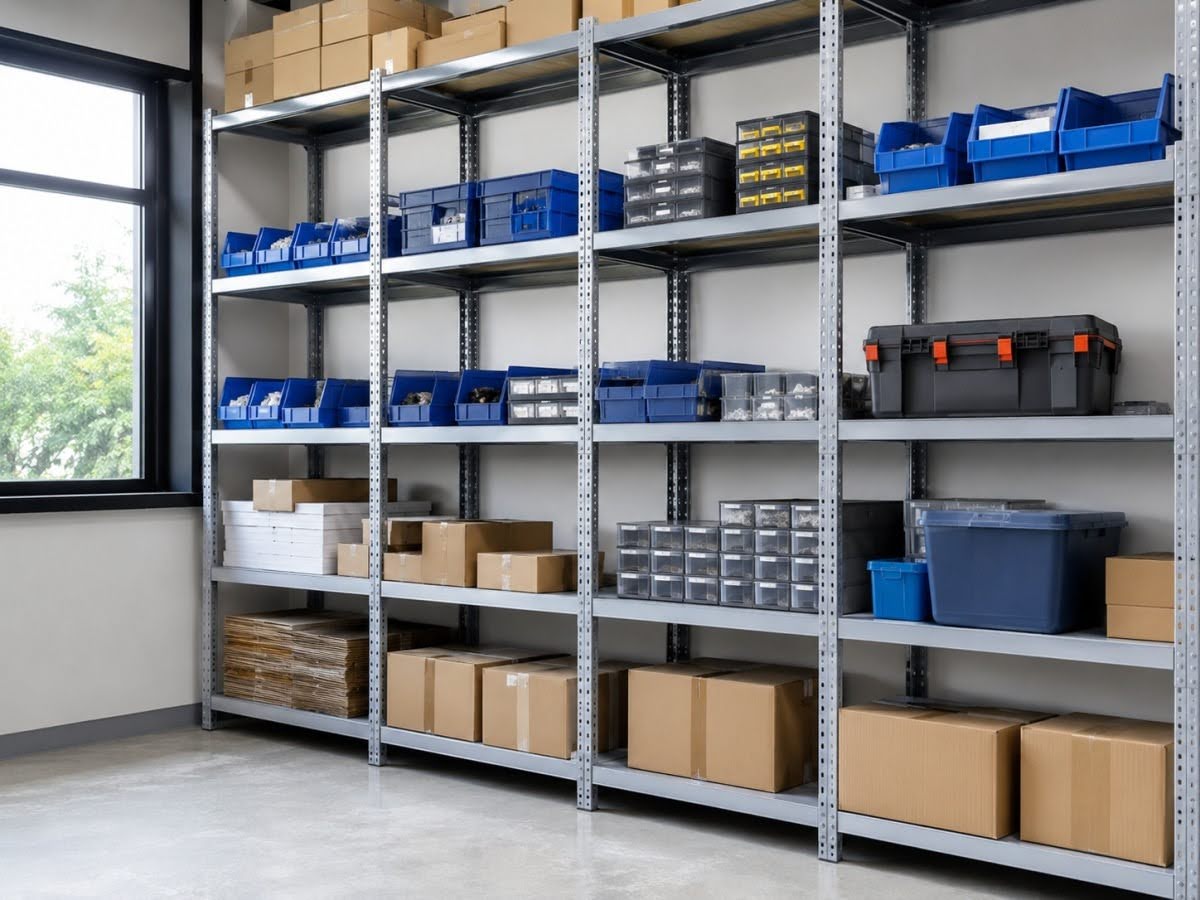
Light-duty racking is a shelving system intended primarily for smaller goods that can normally be placed and retrieved manually. Typical items include cartons, tools, documents, spare parts and packaged products.
A boltless rack Singapore business uses is one common example of light-duty storage. Boltless systems provide adjustable shelf levels and can be configured around different item dimensions within the system's intended limits.
Light-duty shelving is commonly used in storerooms, workshops, offices, stock rooms and selected warehouse areas.
Its main advantage is not simply that it handles lighter goods. It provides accessible shelf-level organisation for inventory that does not require pallet handling.
Heavy-Duty vs Light-Duty Racking at a Glance
The main difference between heavy- and light-duty racking is the type of load and handling process each system is designed to support. Comparing these characteristics helps determine which option matches the inventory.
| Factor | Heavy-Duty Racking | Light-Duty Racking |
|---|---|---|
| Typical inventory | Palletised and substantial loads | Cartons, tools and smaller goods |
| Handling | Commonly mechanical | Commonly manual |
| Storage structure | Uprights and heavy-duty beams | Shelves and modular frames |
| Typical environment | Warehouse, factory, distribution centre | Storeroom, workshop, warehouse |
| Access | Often forklift-based | Direct manual access |
| Main consideration | Pallet and system load capacity | Shelf capacity and accessibility |
Neither system is automatically better. They solve different storage requirements.
Load Capacity Is the First Major Difference
Load capacity is one of the clearest distinctions between heavy-duty and light-duty storage. The system should be selected according to actual inventory loads rather than broad labels.
Heavy-duty racking is intended for substantially greater loads and is commonly configured around pallets. The weight of each pallet, number of pallets per level and overall rack configuration affect system requirements.
Light-duty shelving supports smaller loads distributed across shelf levels.
Businesses should not estimate capacity based on rack appearance. Two metal shelving systems that look similar may have different specifications.
The maximum anticipated load should be identified before system selection, particularly where inventory weights vary.
Compare How Inventory Is Handled
The handling method can determine whether heavy- or light-duty storage is more practical. Palletised inventory normally requires mechanical handling, while smaller goods are often retrieved manually.
Heavy-duty pallet racks require appropriate aisle space for forklifts and other handling equipment.
Light-duty shelving can provide direct access for workers because individual products or cartons are stored on shelf levels.
This distinction affects warehouse workflow.
If workers frequently pick individual items, placing all inventory on pallet racks may create unnecessary handling. If substantial loads are stored on shelving intended for manual goods, the system may be unsuitable.
The storage method should therefore reflect how inventory actually moves.
Typical Heavy-Duty Storage Applications
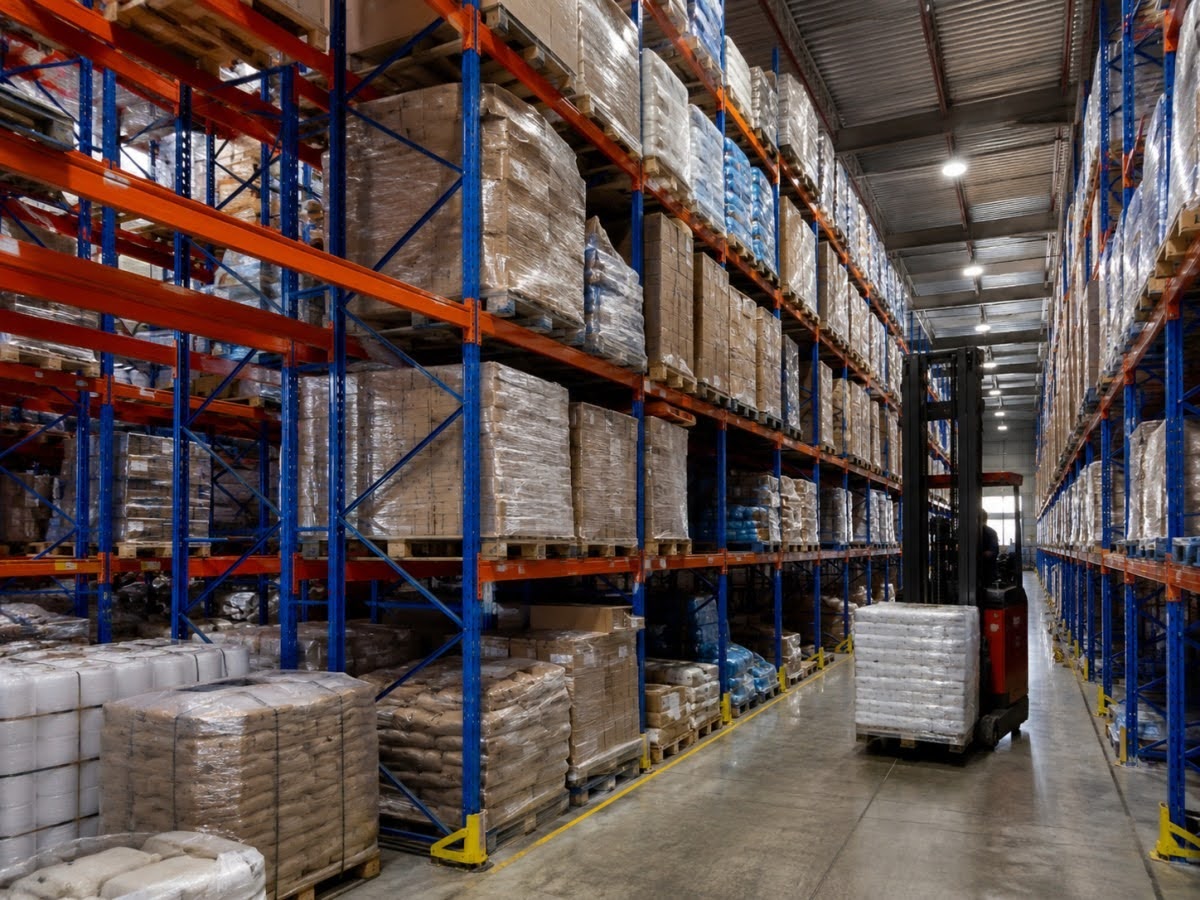
Heavy-duty racking is generally appropriate where businesses need to store substantial quantities of palletised or heavy inventory vertically.
Common applications include reserve pallet stock, raw materials, finished products and bulk inventory in industrial facilities.
The system can be particularly useful when:
- Inventory is stored primarily on pallets;
- Individual loads are substantial;
- Forklifts are used routinely;
- Vertical warehouse space needs to be utilised; and
- Organised pallet positions are required.
Different heavy-duty configurations can then address accessibility and storage-density requirements.
For example, selective pallet racking may be suitable where direct access is important, while other configurations can support denser storage for compatible inventory.
Typical Light-Duty Storage Applications
Light-duty racking is appropriate for smaller inventory that requires straightforward manual access. It is often used where goods need to be organised across adjustable shelf levels.
Applications can include spare parts, packaged products, tools, office supplies, documents and smaller cartons.
Requirements for industrial shelving in Singapore may also involve light-duty systems within a larger warehouse.
For example, bulk cartons may arrive on pallets and remain on heavy-duty racks as reserve stock. Individual products can then be transferred to light-duty shelving for picking.
This allows each system to support the type of inventory handling it performs best.
Space Requirements Differ Between the Systems
Heavy-duty and light-duty systems use warehouse space differently because their access requirements are different.
Heavy-duty pallet racks typically require aisles that accommodate material-handling equipment. Forklift dimensions and turning requirements can therefore influence how much floor space is allocated to access.
Light-duty shelving normally supports pedestrian or manual picking access and can have different aisle requirements.
Vertical utilisation also differs. Heavy-duty racks can extend across multiple pallet levels where building height and equipment permit, while light-duty shelving should remain practical for the intended method of retrieval.
Space planning should therefore consider both storage capacity and how each location will be accessed.
Accessibility Can Be More Important Than Maximum Capacity
Accessibility refers to how easily inventory can be retrieved from its storage position. The appropriate system should match the frequency and method of access required.
Heavy-duty pallet racking can provide efficient pallet access, particularly when individual pallet positions face an aisle.
Light-duty shelving provides direct access to individual cartons or products, which can make it more practical for manual picking.
A warehouse should not automatically select the system that stores the greatest total weight or number of goods.
If employees frequently need individual products, accessibility can have a greater effect on daily efficiency than maximum storage density.
Consider Inventory Size as Well as Weight

Inventory dimensions can be as important as weight when selecting storage. A lightweight product may still require substantial shelf space if it is physically large.
Similarly, a compact item can be very heavy.
Heavy-duty and light-duty classifications should therefore not be based only on product dimensions.
Businesses should record the weight, height, width and depth of stored items or pallets.
Long or unusually shaped products may require a specialised system rather than either conventional pallet racking or light-duty shelving.
Matching storage dimensions to inventory can also reduce wasted space within each rack or shelf level.
Scalability Depends on Future Inventory Requirements
Scalability refers to the ability of a storage system to accommodate changing inventory volumes or operational requirements.
Light-duty modular shelving can provide flexibility where shelf heights need to change as product ranges develop.
Heavy-duty systems can also be expanded or reconfigured in suitable circumstances, but modifications need to remain consistent with the system's design and load requirements.
Businesses should consider likely future inventory conditions before installation.
If pallet quantities are expected to increase substantially, a system designed only around current manual storage may become restrictive. Conversely, installing extensive heavy-duty pallet storage for predominantly small manually picked products may not use space efficiently.
Do You Need One System or Both?
Many warehouses benefit from combining heavy- and light-duty storage because inventory rarely has identical handling requirements throughout the facility.
A mixed system allows each inventory category to use an appropriate storage method.
For example, a facility may use a heavy duty racking system for reserve pallets and boltless or other solutions for industrial shelving in Singapore for smaller picking inventory.
The warehouse can then be divided into storage zones according to function.
This approach can provide better accessibility than forcing all goods into pallet storage while maintaining appropriate capacity for heavier inventory.
How to Choose Between Heavy- and Light-Duty Racking
The correct choice is determined by inventory characteristics and warehouse operations rather than by the terminology used to describe the rack.
A practical assessment should consider:
- Maximum Load: Determine the heaviest goods or pallets that will be stored.
- Inventory Format: Establish whether goods remain palletised or are handled individually.
- Handling Method: Confirm whether forklifts or manual picking will be used.
- Available Space: Consider floor area, vertical height and aisle requirements.
- Access Frequency: Identify how often each inventory category needs to be retrieved.
- Future Requirements: Consider reasonable changes in volume or product range.
If the answers vary substantially between inventory groups, using both heavy- and light-duty systems may be more appropriate than selecting only one.
Frequently Asked Questions (FAQs)
What is the main difference between heavy-duty and light-duty racking?
The main difference is the intended load and handling method. Heavy-duty racking commonly supports substantial palletised loads, while light-duty shelving generally accommodates smaller manually handled goods.
Is boltless racking considered light-duty storage?
Many boltless shelving systems are used for light-duty storage, although actual capacity depends on the individual product specification. A boltless rack should always be used within its defined load limits.
Do warehouses need heavy-duty racking?
Not every warehouse does. Heavy-duty racking is most relevant where substantial or palletised inventory needs to be stored. Facilities handling mainly small manually picked goods may rely more heavily on shelving.
Can heavy- and light-duty racks be used together?
Yes. Combining systems can be practical where a warehouse stores both palletised bulk inventory and smaller manually picked goods.
Is heavy-duty racking always more space-efficient?
No. Heavy-duty systems can use vertical space effectively, but they also require appropriate handling access. For smaller goods, industrial shelving may provide more practical use of space.
Matching the Storage System to the Inventory
Heavy- and light-duty racking are designed for different storage requirements. Heavy-duty systems generally support substantial palletised inventory, while light-duty shelving provides accessible organisation for smaller manually handled goods.
Load capacity, inventory dimensions, handling methods, available space and access frequency should determine which system is appropriate. For warehouses containing mixed inventory, combining the two can provide a more practical solution than relying exclusively on one rack type.
Choosing a heavy duty racking system should therefore begin with actual operational requirements. The strongest or largest system is not automatically the most suitable; the objective is to match storage capacity and accessibility to the goods being handled.
Find the Appropriate Racking System for Your Storage Needs
Storage system selection should account for inventory weight, dimensions, handling requirements and available warehouse space. Eastern Win Enterprises Pte Ltd. provides heavy-duty racking and industrial shelving solutions for different storage applications in Singapore.
To discuss which racking configuration may suit your facility, you can contact Eastern Win Enterprises Pte Ltd.