


 Contact Us: (65) 6419 2850


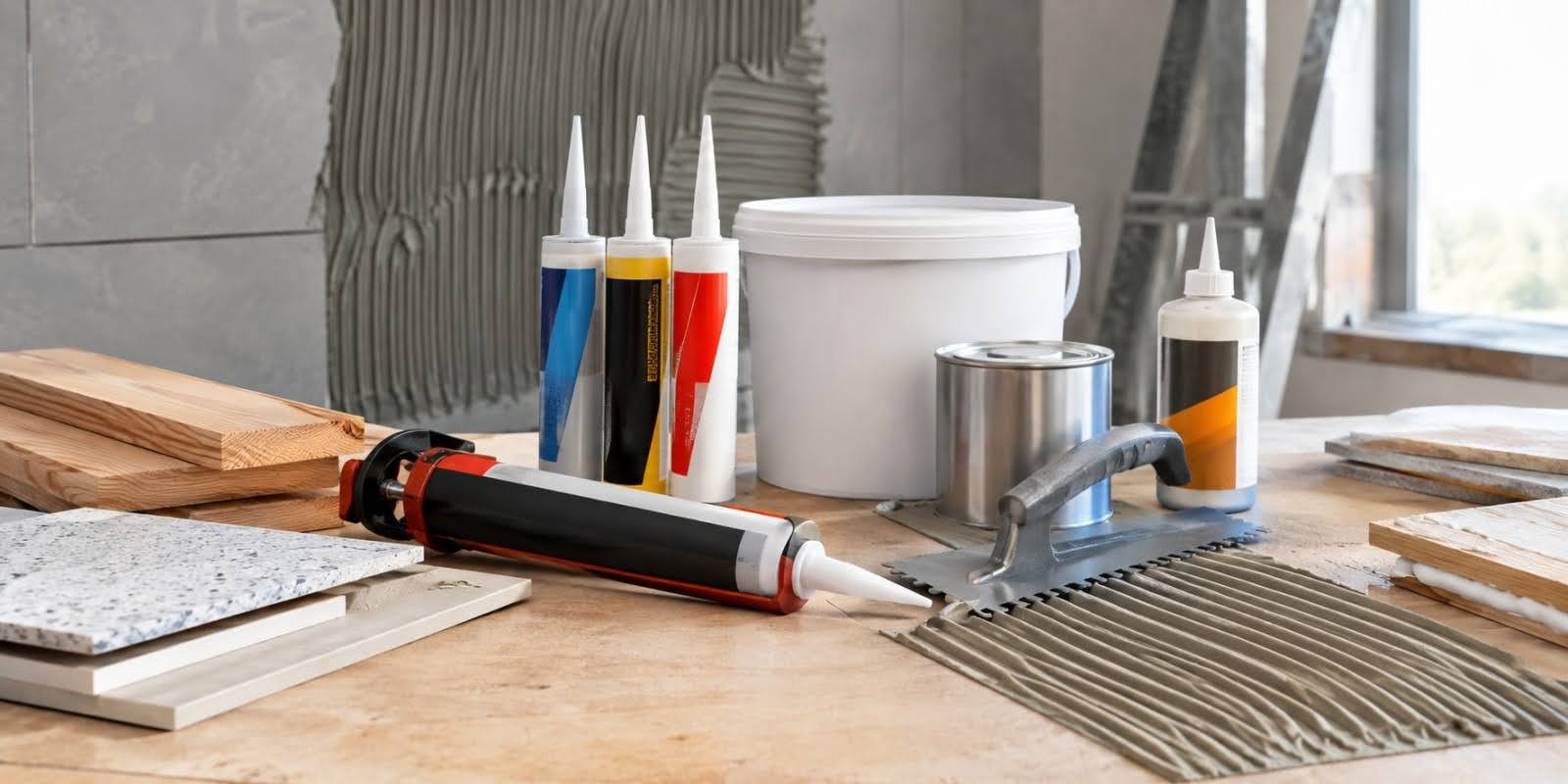
Maxbond Construction Adhesive should be selected according to the materials being bonded, the condition of their surfaces, the required bond strength and whether the application is indoors or exposed to exterior conditions. An adhesive that performs appropriately on timber may have different requirements when used with metal, masonry or other construction materials.
Construction adhesives are used to join materials without relying entirely on mechanical fasteners. However, successful bonding depends on more than applying Maxbond Glue between two surfaces. Substrate compatibility, surface cleanliness, porosity, moisture, movement and environmental exposure can all influence adhesive performance.
The first step in choosing a construction adhesive is therefore to identify both materials involved in the bond and the conditions the completed joint will experience.
This guide explains how substrate characteristics affect adhesive selection for timber, metal, masonry and other building materials, as well as the importance of surface preparation, bond requirements and application conditions.
Why the Building Material Matters When Choosing an Adhesive
The building material matters because different substrates have different surface properties, porosity, strength and movement characteristics. These factors affect how an adhesive establishes and maintains a bond.
Timber is porous and can change dimension with moisture. Metal is generally non-porous and may have coatings, oxidation or surface contamination. Concrete and masonry are porous and can contain dust or surface irregularities.
An adhesive therefore needs to be compatible with the actual surfaces being joined.
The strongest adhesive in general terms is not automatically the most appropriate choice. A suitable product should be capable of bonding the intended substrates under the conditions in which they will be used.
What Is Construction Adhesive?
Construction adhesive is a bonding material formulated to join building components and construction substrates. Depending on the product, it can be used with materials such as timber, metal, concrete, masonry and selected boards or panels.
Construction adhesives are available in different formulations because building applications place different demands on the bond.
Some applications require initial grab to help hold components in position. Others require flexibility to accommodate minor movement between different materials.
Environmental resistance may also be important for applications exposed to moisture, temperature changes or exterior conditions.
The product specification should therefore be matched to the intended construction application.
Understand the Two Surfaces Being Bonded
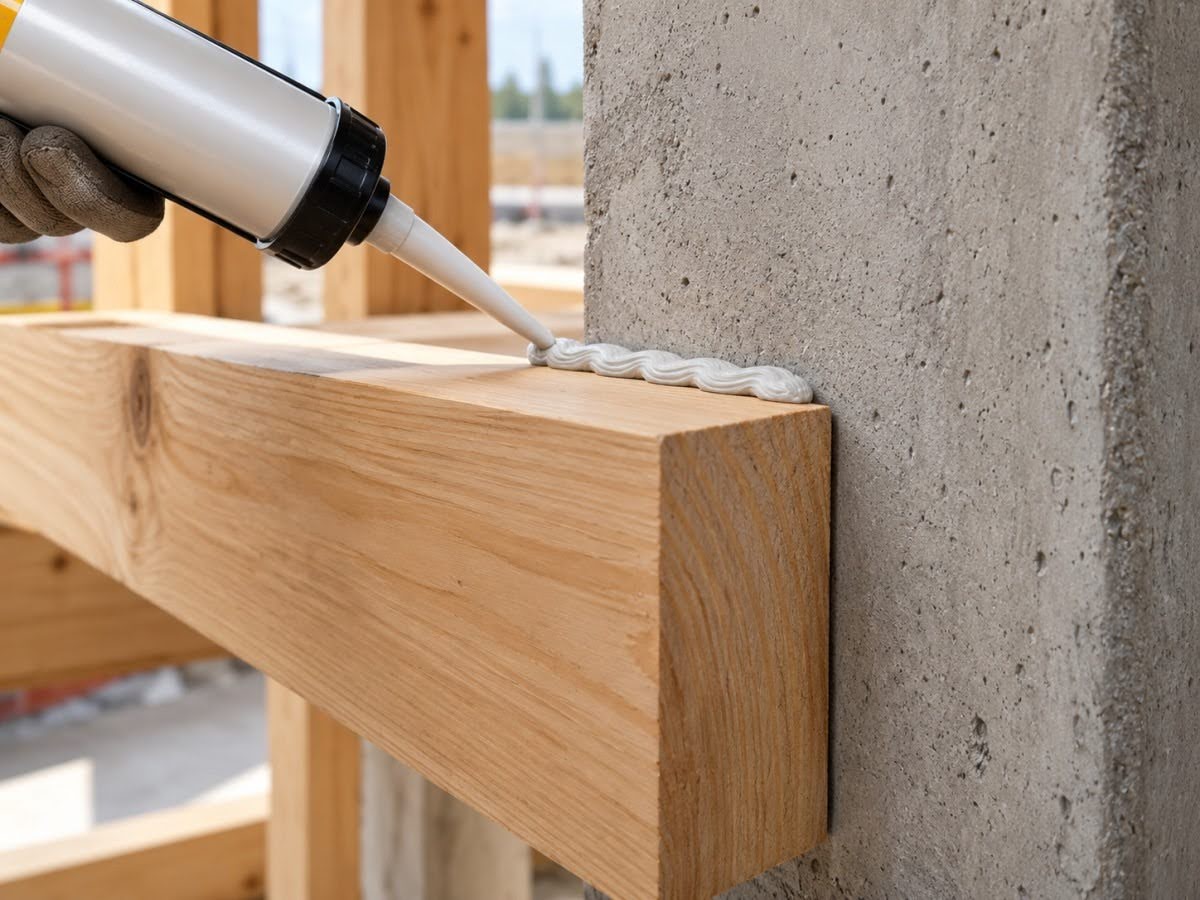
Adhesive selection should consider both substrates rather than focusing on only one side of the joint. A construction bond commonly joins two different materials with different characteristics.
For example, timber may be bonded to concrete, a panel may be attached to masonry or a metal component may need to be fixed to another building material.
The adhesive must interact appropriately with both surfaces.
A useful starting point is to identify:
- The material on each side of the bond;
- Whether each surface is porous or non-porous;
- Whether coatings or finishes are present;
- Expected movement between the materials; and
- Environmental conditions after installation.
Once these factors are known, product compatibility can be evaluated more accurately.
Choosing Construction Adhesive for Timber
Timber bonding requires consideration of the wood surface, moisture condition and movement expected from the material. Timber is a porous substrate that can expand or contract as environmental conditions change.
A construction adhesive used with timber should be suitable for the specific timber application and the second substrate involved.
Surface condition is important.
Dust, loose fibres, oils or existing finishes can affect the adhesive's ability to contact the timber directly.
Painted or coated timber should be assessed according to the surface coating rather than assuming the adhesive is bonding directly to wood.
For exterior timber applications, environmental exposure also needs to be considered.
Timber-to-Timber Bonding
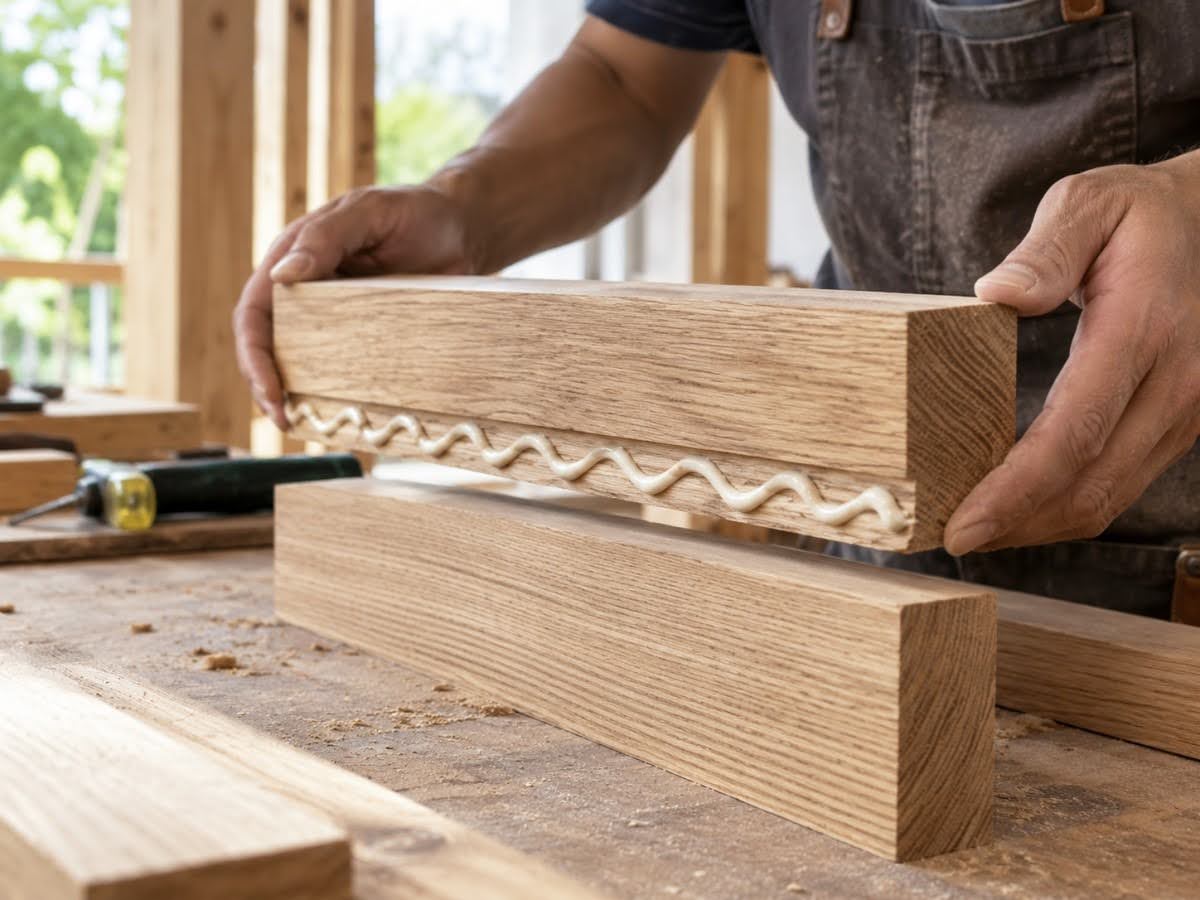
Timber-to-timber bonding joins two wood-based surfaces and can be used in selected construction, fitting and installation applications.
Both surfaces should provide an appropriate bonding surface.
The timber should be sufficiently sound for the intended application, because adhesive cannot compensate for weak or deteriorating material.
The fit between the components also matters.
Construction adhesives can fill certain gaps depending on their formulation, but they should not automatically be expected to compensate for large or poorly designed interfaces.
Where structural loading is involved, the complete connection method should be assessed rather than assuming adhesive alone is sufficient.
Bonding Timber to Other Building Materials
Timber is frequently installed against materials such as concrete, masonry, metal or construction boards. These mixed-material joints can place additional requirements on the adhesive.
Different substrates can respond differently to temperature and moisture.
Timber, for example, can undergo dimensional changes that are not identical to those of concrete or metal.
The adhesive may therefore need sufficient compatibility and flexibility for the intended application.
Selection should be based on the complete substrate combination.
A product described as suitable for timber should not automatically be assumed suitable for every material that timber might be bonded to.
Choosing Construction Adhesive for Metal
Metal bonding requires particular attention to surface condition because metal is generally non-porous. Adhesive performance can be affected by grease, oils, oxidation, protective coatings and paint.
The surface should be prepared according to the adhesive manufacturer's requirements.
Bare metal and coated metal should not necessarily be treated as identical substrates.
If an adhesive bonds to a coating rather than directly to the metal, the overall bond can only be as reliable as the coating's attachment to the underlying surface.
The type of metal can also matter.
Product information should be checked for compatibility with the specific metal and adjoining substrate.
Metal Surface Preparation Is Particularly Important
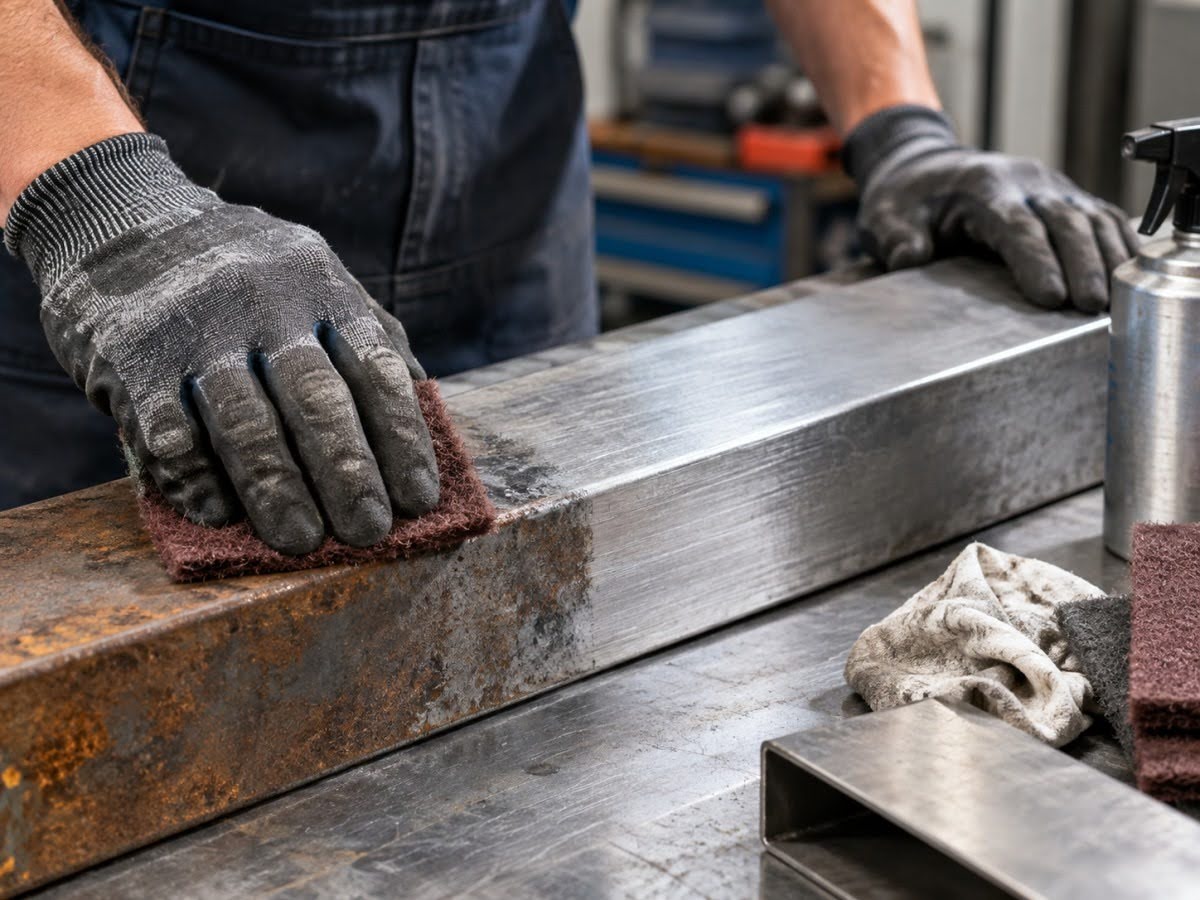
Metal surfaces can appear clean while still carrying residues that interfere with bonding. Surface preparation is therefore a critical part of metal adhesive applications.
Depending on the product and substrate, preparation may involve cleaning, removing contamination or addressing loose surface material.
The objective is to provide a stable surface that allows the adhesive to develop appropriate contact.
Aggressive preparation methods should not be used automatically because some metals have protective finishes that form part of the construction component.
The required method should reflect both the adhesive instructions and the material being bonded.
Choosing Construction Adhesive for Masonry
Masonry surfaces are generally porous and can contain dust, irregularities or loose particles. Construction adhesive used on masonry should be suitable for porous mineral substrates and the material being attached.
Examples can include selected applications involving concrete blocks, bricks or other masonry surfaces.
The substrate should be sufficiently sound to support the intended bond.
An adhesive attached to loose or deteriorating material may separate together with the weak surface layer.
Moisture conditions should also be considered.
The acceptable substrate condition depends on the adhesive formulation, so product requirements should be checked before application.
Choosing Adhesive for Concrete Applications
Concrete is a common construction substrate but can vary considerably in surface condition. New concrete, aged concrete, smooth formed surfaces and rough concrete can present different bonding conditions.
Dust is a common concern because it can create a weak layer between the adhesive and concrete.
Surface contamination or previous coatings can also influence bonding.
When using Maxbond Construction Adhesive with concrete, compatibility should be confirmed for both the concrete and the material being attached.
The adhesive should not be expected to correct unstable, contaminated or unsuitable substrate conditions.
Porous vs Non-Porous Substrates
Porosity describes the ability of a material to absorb liquids into its surface structure. It can influence adhesive behaviour during application and curing.
Timber, concrete and masonry are generally porous to varying degrees. Metal, glass and many plastics are generally non-porous.
Bonding two porous surfaces can create different curing conditions from bonding two non-porous surfaces.
Mixed bonds, such as timber to metal, introduce both surface types into the same joint.
The adhesive formulation and curing mechanism should therefore be suitable for the substrate combination rather than selected solely according to one material.
Interior vs Exterior Adhesive Applications
Interior and exterior construction applications can expose adhesives to different environmental conditions. Exterior bonds may experience moisture, sunlight and temperature changes that are less significant indoors.
An adhesive intended only for protected interior use should not automatically be applied to an exposed exterior joint.
Singapore's humid and frequently wet conditions make environmental exposure particularly relevant for outdoor construction work.
However, indoor applications can also involve moisture.
Areas close to entrances, wet environments or other moisture sources may require different considerations from dry internal rooms.
The actual exposure conditions should therefore guide selection.
Understand Bond Strength Requirements
Bond strength describes an adhesive's ability to resist forces acting on the joined materials. The required performance depends on the application and the loads the connection will experience.
Not every construction bond needs the same strength.
A decorative component may impose different demands from a substantial building element.
The direction of loading can also matter.
Adhesive joints can experience pulling, sliding, peeling or combinations of forces.
For applications involving structural or safety-critical loads, adhesive selection should be based on the relevant technical requirements rather than general-purpose product descriptions.
Mechanical fixing may also remain necessary depending on the application.
Initial Grab and Final Bond Strength Are Different
Initial grab refers to the adhesive's ability to help hold components in place shortly after application, while final bond strength describes performance after the adhesive has cured sufficiently.
These characteristics should not be confused.
An adhesive with strong initial grab can help reduce movement during installation, but the bond still requires appropriate curing.
Likewise, a product with suitable final performance may require temporary support while curing.
Installers should understand both characteristics when planning the work.
Components should not be loaded prematurely simply because they appear to remain in position immediately after installation.
Movement Between Different Building Materials
Different construction materials can expand and contract at different rates. This movement can place stress on an adhesive joint.
Timber can respond to changes in moisture, while metal can respond significantly to temperature.
Concrete and masonry can also experience dimensional changes.
When dissimilar materials are bonded, the adhesive may need to accommodate the resulting movement within its intended capabilities.
A very rigid connection is not automatically preferable.
The appropriate degree of flexibility depends on the substrates, joint design and environmental conditions.
Surface Preparation Before Applying Construction Adhesive
Surface preparation helps ensure that the adhesive contacts stable substrate material rather than dust, oil or loose surface layers.
The exact preparation method depends on the materials being joined.
A general preparation process can include:
- Identify Substrates: Identifying both substrates;
- Clean Surface: Removing dust and loose material;
- Remove Contaminants: Addressing grease, oil or contamination;
- Assess Finishes: Checking coatings and surface finishes;
- Verify Moisture: Confirming acceptable moisture conditions; and
- Follow Product Guidelines: Following any product-specific preparation requirements.
Preparation should occur before the adhesive is applied.
Adding additional adhesive generally does not compensate for an unsuitable bonding surface.
Applying the Correct Amount of Adhesive
The amount and pattern of adhesive should follow the requirements of the product and application. Excessive material does not automatically produce a stronger bond.
Some construction adhesives are applied in beads, while others may use different patterns depending on the surfaces being joined.
The joint should allow the materials to be positioned correctly while providing the adhesive contact required by the application.
Insufficient coverage can reduce effective bonding area.
Excessive adhesive can create unnecessary squeeze-out or interfere with correct positioning.
Application guidance for the selected product should therefore determine the appropriate quantity.
Allow Adequate Curing Time
Construction adhesive needs sufficient time and suitable conditions to develop its intended properties. Curing requirements differ between formulations.
Temperature, humidity, substrate porosity and adhesive thickness can influence the process.
A bond that feels secure at the surface may not necessarily have reached its final performance.
Loads should therefore not be applied prematurely.
Temporary support or fixing may be required depending on the materials and application.
The manufacturer's stated curing conditions should be followed rather than assuming that all construction adhesives behave identically.
Common Construction Adhesive Selection Mistakes
Adhesive problems often result from a mismatch between the product, substrate or application conditions rather than from the concept of adhesive bonding itself.
A common mistake is selecting an adhesive before identifying both substrates.
Another is bonding directly over dust, grease or unstable coatings.
Other problems can arise when an interior product is used in exposed conditions or when the bond is loaded before adequate curing.
Treating Maxbond Glue as a universal substitute for every fastening method should also be avoided.
Construction adhesives have defined applications and limitations that should be respected.
A Practical Construction Adhesive Selection Framework
Construction adhesive selection becomes more systematic when the requirements are defined before products are compared.
The following factors provide a useful starting point:
| Selection Factor | What to Determine |
|---|---|
| First substrate | Timber, metal, masonry or another material |
| Second substrate | Material being bonded to the first |
| Surface condition | Bare, painted, coated, porous or contaminated |
| Environment | Interior, protected or exterior |
| Load | Type and magnitude of expected forces |
| Movement | Whether the materials may move differently |
| Curing | Required working and curing conditions |
A product can then be assessed against the complete application rather than one isolated characteristic.
Frequently Asked Questions (FAQs)
What materials can construction adhesive bond?
The answer depends on the individual adhesive formulation. Construction adhesives may be suitable for timber, metal, concrete, masonry and other building materials, but compatibility should be checked for both substrates.
Can Maxbond Construction Adhesive be used on timber?
The suitability depends on the specific Maxbond product and the material being bonded to the timber. Timber condition, surface preparation and whether the application is interior or exterior should also be considered.
Can construction adhesive bond metal to concrete?
Some construction adhesives are designed for mixed-material applications such as metal and mineral substrates. Compatibility with the specific metal, concrete surface and environmental conditions should be confirmed before use.
Is surface preparation necessary before applying Maxbond Glue?
Yes. Dust, grease, loose material and unsuitable coatings can interfere with adhesive bonding. Preparation requirements depend on the substrate and specific adhesive.
Can construction adhesive replace screws or other mechanical fasteners?
Not automatically. Whether adhesive can be used alone depends on the materials, loads and application requirements. Structural or safety-critical connections may require a specifically designed fastening or bonding system.
How long does construction adhesive take to cure?
Curing time varies according to the adhesive formulation, application thickness, substrates and environmental conditions. The specific product instructions should be followed before loading the bonded components.
Matching the Adhesive to the Material and Application
Construction adhesive selection should begin with the substrates rather than the product name alone. Timber, metal, concrete and masonry each present different bonding conditions, while mixed-material joints introduce additional considerations around movement and compatibility.
Surface preparation is equally important. Even an appropriate adhesive may perform poorly if applied over dust, grease, loose material or an unstable coating.
For projects using Maxbond Construction Adhesive, the required bond strength, environmental exposure, movement and curing conditions should therefore be assessed alongside substrate compatibility. This creates a clearer basis for choosing an adhesive suited to the actual building application.
Choose a Construction Adhesive for Your Building Materials
Construction adhesives should be selected according to the substrates, surface conditions, required bond and application environment. Eastern Win Enterprises Pte Ltd. provides construction adhesive solutions for different building-material applications.
To identify a suitable construction adhesive for your application, you can contact Eastern Win Enterprises Pte Ltd.