


 Contact Us: (65) 6419 2850


How Subfloor and Substrate Type Affect Flooring Adhesive Selection
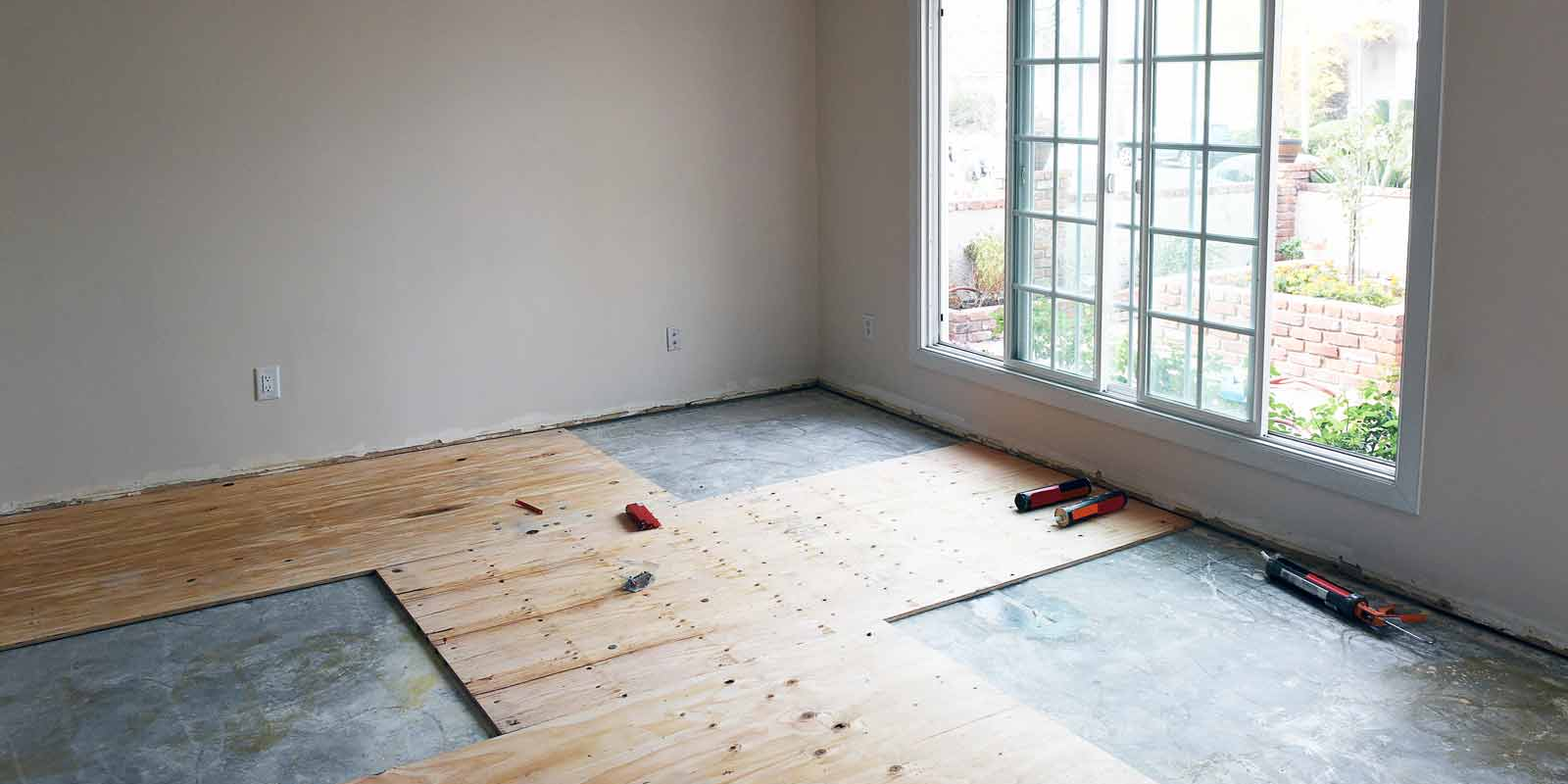
The subfloor is one of the main factors determining which flooring adhesive is appropriate for an installation. Concrete, cementitious screed, timber substrates and existing flooring surfaces have different physical characteristics that affect adhesive compatibility and bonding conditions.
Choosing an adhesive based only on the floor covering can therefore overlook half of the bonding system. The adhesive needs to interact appropriately with both the flooring material above and the substrate below.
A vinyl flooring adhesive suitable for a particular vinyl product may still require specific subfloor conditions. Similarly, a timber flooring adhesive needs to correspond not only with the wood flooring but also with the surface to which it will be bonded.
Moisture, surface strength, porosity, contamination and existing materials can all change how a substrate interacts with an adhesive.
This article focuses specifically on substrate type and compatibility. It explains how different subfloors influence flooring adhesive selection without turning substrate preparation into a separate installation procedure.
Why Substrate Type Matters
Substrate type matters because the adhesive forms its bond directly with the surface beneath the flooring. If that surface is incompatible, unstable or unsuitable for the adhesive, the overall flooring system can be affected.
Different substrates absorb moisture differently, have different surface characteristics and respond differently to environmental conditions.
Concrete is not the same as timber. A cementitious screed does not necessarily behave exactly like the structural slab below it. An existing floor coating creates another interface entirely.
Adhesive selection should therefore answer two compatibility questions:
Is the adhesive suitable for the flooring material?
Is the adhesive suitable for the actual substrate?
Both need to be established before the flooring system can be considered compatible.
Understanding the Difference Between a Subfloor and Substrate
The terms subfloor and substrate are sometimes used interchangeably, but they can describe slightly different parts of a flooring build-up.
The subfloor is generally the structural or supporting floor beneath the finished flooring system. The substrate is the actual surface receiving the adhesive.
For example, a building may have a concrete structural slab covered by a cementitious screed. If adhesive is applied directly to the screed, the screed becomes the immediate bonding substrate even though the concrete remains part of the overall floor construction.
This distinction is important when assessing adhesive compatibility. The condition of the structural slab matters, but the adhesive interacts directly with whichever material is exposed at the time of installation.
Concrete Subfloors
Concrete is a common substrate for bonded flooring systems, but its condition can vary substantially between projects.
A new concrete floor may contain residual construction moisture. Older concrete can contain repairs, cracks, contamination, coatings or residues from previous flooring.
Concrete can also vary in surface texture and porosity. These characteristics can affect how the proposed adhesive interacts with the substrate.
For vinyl flooring adhesive, the concrete surface needs to satisfy the requirements of both the adhesive and vinyl system.
For timber flooring adhesive, concrete moisture and surface condition also need consideration because the timber introduces additional sensitivity to the flooring environment.
The fact that a floor is concrete therefore provides only the starting point for adhesive selection.
New Concrete Versus Existing Concrete
New and existing concrete can present different bonding conditions even though both are technically the same substrate category.
New concrete needs to reach the condition required by the flooring and adhesive system before installation. Its surface may also contain construction-related materials or characteristics that require assessment.
Existing concrete has a different history. It may have been exposed to previous adhesives, coatings, cleaning products, moisture or repairs.
These factors can change the surface that the new adhesive actually encounters.
When selecting flooring adhesive, project teams should therefore consider the present condition of the concrete rather than assuming all concrete substrates provide an identical bonding surface.
Cementitious Screeds
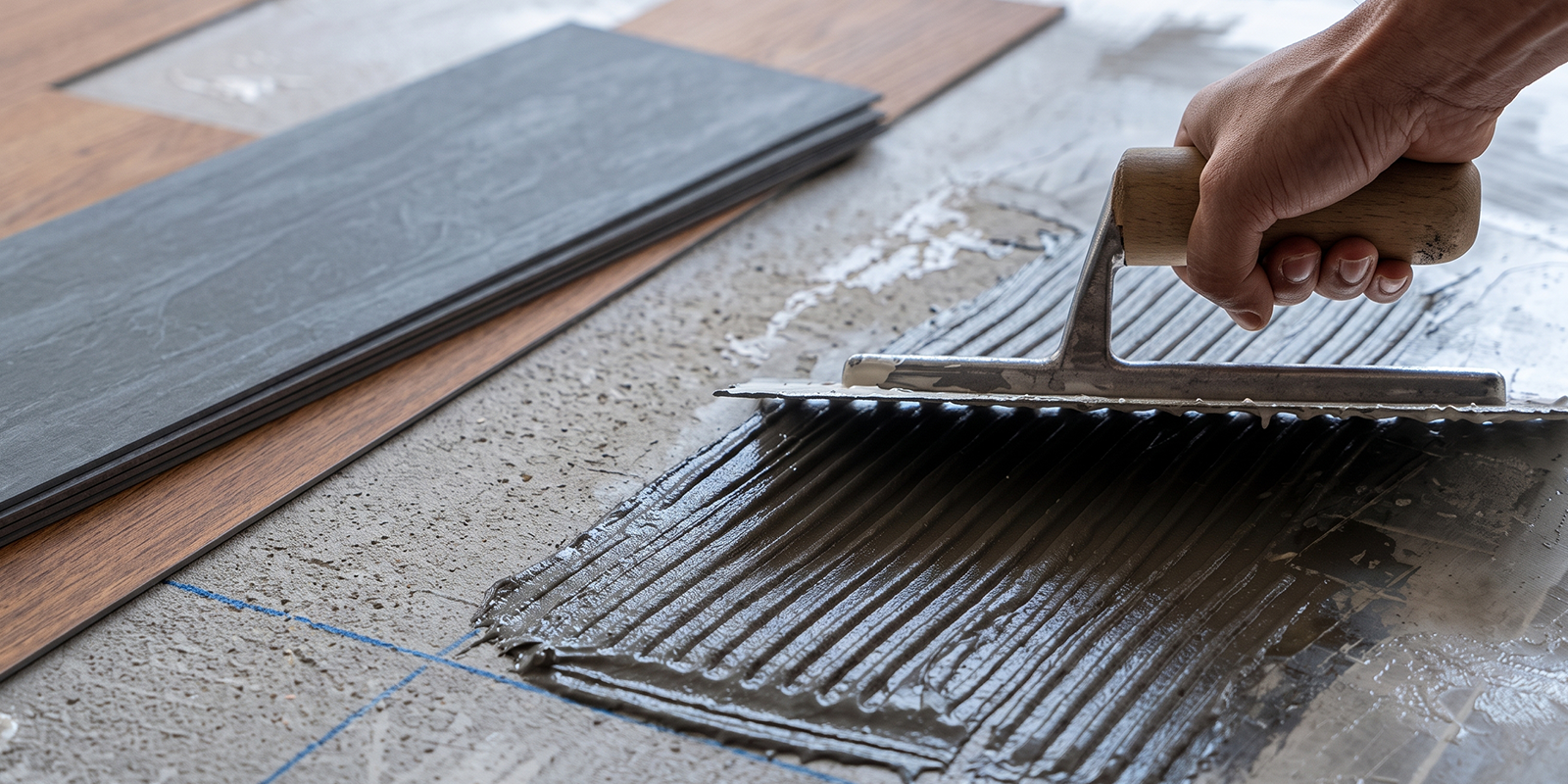
A cementitious screed is a layer installed over a supporting floor to create the required flooring base or level. Where the flooring adhesive is applied directly to the screed, its characteristics become important to adhesive selection.
The screed should provide a suitable surface for the proposed flooring system.
Its strength, moisture condition, surface integrity and compatibility with the adhesive need consideration.
A screed can look uniform while still having different characteristics from the structural concrete beneath it.
This is why adhesive selection should identify the immediate substrate rather than simply recording the building floor as concrete.
If a vinyl flooring adhesive or timber flooring adhesive is intended for cementitious substrates, the screed still needs to meet the product's applicable requirements.
Concrete and Screed Are Not Automatically Interchangeable
Concrete and cementitious screed are both mineral-based materials, but they should not automatically be treated as identical adhesive substrates.
Their composition, thickness, surface condition and purpose within the floor build-up can differ.
A screed can also contain repair compounds, levelling materials or other layers that change the final bonding surface.
Adhesive compatibility should therefore be checked against the actual exposed material.
This becomes particularly important where a floor contains several different substrate materials across one installation area.
A product suitable for one section should not automatically be assumed appropriate for every adjoining surface without confirming compatibility.
Timber Substrates
Timber substrates create different conditions because wood-based materials can respond to changes in moisture and humidity.
The substrate itself may experience dimensional movement. This needs to be considered separately from any movement in timber flooring installed above it.
A timber substrate should therefore be evaluated for its material type, stability and suitability for the proposed bonded flooring system.
An adhesive designed primarily for mineral substrates should not automatically be assumed compatible with wood-based surfaces.
Similarly, the term "timber substrate" covers multiple possible materials and constructions.
The exact substrate should be identified before the flooring adhesive is selected.
Timber Flooring Over Timber Substrates
When timber flooring is bonded over a compatible timber-based substrate, both sides of the adhesive layer can involve materials that respond to environmental conditions.
This makes system compatibility particularly important.
The timber flooring adhesive should correspond with the flooring product and the specific substrate.
The condition and stability of the supporting floor also remain relevant.
Adhesive should not be expected to correct structural movement or instability in the substrate.
If the underlying surface is unsuitable for the flooring system, changing to a stronger adhesive does not necessarily resolve the issue.
The substrate first needs to be appropriate for the intended bonded installation.
Vinyl Flooring Over Timber Substrates
Vinyl flooring may be installed over suitable timber-based substrates where the complete flooring system permits it.
The surface characteristics differ from concrete or screed.
Joints between panels, movement and surface condition can influence the final flooring installation.
Some vinyl products can also reflect underlying irregularities depending on their construction.
The vinyl flooring adhesive therefore needs to be compatible with both the vinyl backing and timber-based substrate.
The suitability of the substrate should be established independently from adhesive compatibility.
A compatible adhesive does not make an unsuitable or unstable timber subfloor appropriate for vinyl flooring.
Existing Flooring Surfaces
Renovation projects sometimes involve installing new flooring over an existing surface rather than exposing the original concrete or screed.
This creates an additional compatibility question.
The existing material becomes part of the flooring build-up and may become the immediate substrate for the new adhesive.
Examples can include existing tiles, old adhesive layers or other retained surfaces where the proposed system permits installation over them.
The exact existing material needs to be identified.
A surface that appears solid does not automatically provide a suitable bonding substrate.
Its adhesion to the underlying floor, surface condition and compatibility with the new adhesive should all be considered.
Existing Tiles as a Substrate
Existing tiles can create a relatively dense and low-absorbency surface compared with many cementitious substrates.
This changes the bonding condition for the flooring adhesive.
Where a flooring system allows installation over existing tiles, compatibility with the tile surface needs to be established.
The condition of the existing tiled floor is also important.
Loose or unstable tiles do not become a suitable substrate simply because a new adhesive will cover them.
Joints and surface irregularities can also affect the floor above depending on the proposed finish.
The decision should therefore consider the existing tile layer as part of the complete flooring system rather than treating it as equivalent to exposed concrete.
Existing Adhesive Residues
Old adhesive residues can change the nature of the substrate because the new flooring adhesive may contact the residue rather than the original floor.
Different existing adhesives can have different characteristics.
Their age, condition and compatibility with the new system may also be uncertain.
The presence of old adhesive should therefore be identified during substrate assessment.
A new flooring adhesive should not automatically be applied over unidentified residues based solely on the assumption that both materials are adhesives.
Where existing material needs to be removed or otherwise addressed, the appropriate approach should follow the requirements of the proposed flooring system.
The objective is to establish a known and compatible bonding surface.
Existing Coatings and Surface Treatments
Concrete and screed floors can contain coatings or surface treatments that are not immediately obvious.
Paint, sealers and other treatments can change the way adhesive interacts with the substrate.
This is particularly relevant in refurbishment projects where the history of the floor may not be fully documented.
The actual bonding surface should therefore be identified before adhesive selection is finalised.
If a coating remains in place, compatibility needs to be considered with that coating rather than only with the concrete underneath.
If it is removed, the resulting substrate condition becomes the relevant bonding surface.
Understanding this distinction prevents adhesive selection from being based on a substrate that the product never directly contacts.
Porous and Non-Porous Substrates
Substrate porosity describes how readily the surface can absorb liquid. It can influence the behaviour of certain flooring adhesives during application.
Concrete and cementitious screeds can provide different levels of absorbency depending on their composition and surface condition.
Tiles and some existing coatings can be considerably less absorbent.
This distinction can influence how an adhesive develops its intended working characteristics.
A flooring adhesive designed for a particular substrate condition should therefore not automatically be transferred to a substantially different surface.
Porosity should be considered alongside the flooring type and adhesive requirements rather than used as the only selection criterion.
Surface Strength and Integrity
An adhesive can only bond as reliably as the surface to which it is attached.
If the upper layer of a substrate is weak or poorly bonded, the adhesive may attach to that weak layer rather than to a sound base.
Surface integrity is therefore an important substrate characteristic.
Powdery, loose or deteriorated material can indicate that the immediate surface needs further assessment.
This principle applies to concrete, screed and timber-based substrates.
Selecting an adhesive with greater stated bond strength does not strengthen an unsound substrate automatically.
The receiving surface needs to provide an appropriate base for the complete flooring system.
Flatness and Surface Profile
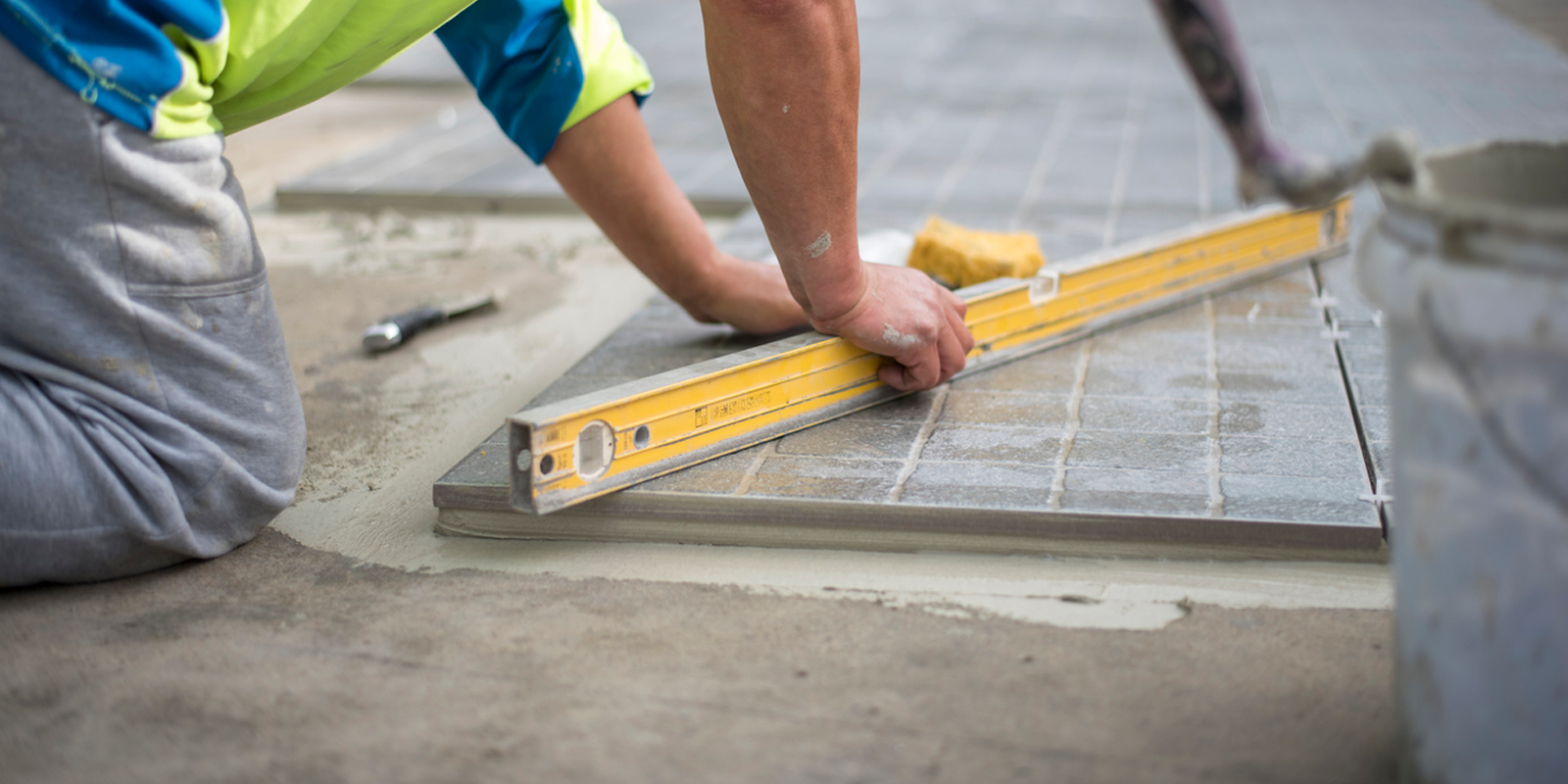
Floor flatness can influence both the finished appearance and the way certain flooring materials sit on the substrate.
This is particularly relevant to floor coverings that closely follow the surface beneath them.
However, flooring adhesive should not normally be treated as a general floor-levelling material unless the specific product is designed for that function.
Substantial depressions, ridges or other irregularities can require separate treatment within the flooring system.
The required degree of flatness depends on the floor covering and project requirements.
Adhesive selection should therefore consider whether the substrate already meets the conditions required by the flooring rather than expecting the adhesive layer to compensate for unsuitable floor geometry.
Moisture in Concrete and Screed
Moisture is an important consideration when flooring is bonded over concrete or cementitious screed.
A surface can appear dry while moisture remains within the floor construction.
The acceptable condition depends on the flooring and adhesive system.
Vinyl and timber can also respond differently to moisture-related conditions, which means the same substrate may require different considerations depending on the finish being installed.
Where moisture assessment is required, the results should be evaluated against the requirements of the specified products.
A standard flooring adhesive should not automatically be assumed to function as a moisture-control system unless that capability is specifically established.
Moisture in Timber Substrates
Timber-based substrates interact with moisture differently from concrete because the material itself can change dimension as its moisture condition changes.
This can influence the stability of the surface beneath the flooring.
The substrate should therefore be considered within the expected indoor environment.
A timber flooring adhesive selected for a wood floor does not automatically compensate for an unstable timber substrate.
Likewise, a vinyl flooring adhesive cannot prevent movement originating within an unsuitable supporting surface.
The substrate should be appropriate for the intended floor covering before adhesive compatibility is considered complete.
Mixed Substrates Within One Floor
Some flooring areas contain more than one substrate type.
A refurbishment project might include original concrete, repaired sections, screed and areas where previous materials have been removed.
This creates a more complex adhesive selection condition because one flooring material may cross several surfaces.
Project teams should identify these transitions before installation.
A flooring adhesive needs to be suitable for the relevant substrates or the floor build-up may need another compatible approach to create appropriate conditions.
The important point is not to assume that a visually continuous floor is materially uniform.
Changes beneath the surface can affect the bonding system even when they are difficult to see after preparation.
Primers and Other Interface Materials
Some flooring systems use primers or other interface materials between the substrate and adhesive.
Their role depends on the specific system.
A primer should not be selected independently simply because the substrate appears porous or difficult to bond.
Compatibility is required between the substrate, primer, adhesive and flooring.
Adding an unnecessary intermediate layer can introduce another interface into the floor rather than automatically improving adhesion.
Where a primer or related material is specified, it should be treated as part of the complete bonding system.
Its use should follow the requirements of the flooring and adhesive products rather than a generic rule applied to every subfloor.
Matching Flooring Adhesive to the Substrate
Adhesive selection should connect the flooring material and substrate through one compatible system.
A practical assessment can follow five questions.
1. What Is the Exact Flooring Material?
Identify whether the finish is vinyl, timber or another flooring product, including its specific construction where relevant.
2. What Is the Immediate Bonding Substrate?
Determine whether the adhesive will contact concrete, screed, timber, existing tiles or another surface.
3. What Is the Condition of That Surface?
Consider integrity, moisture, porosity and any existing coatings or residues.
4. Is the Adhesive Compatible With Both Materials?
Confirm that the proposed product is suitable for the flooring and the substrate rather than only one side of the bond.
5. Are Additional System Components Required?
Determine whether the specified flooring system includes primers, levelling materials or other compatible layers.
This approach keeps adhesive selection based on the complete floor build-up.
Substrate Considerations for Vinyl Flooring Adhesive
When selecting vinyl flooring adhesive, the substrate should be evaluated alongside the exact vinyl product and backing.
Concrete and screed may present different porosity and moisture conditions, while timber-based substrates can introduce movement and panel-related considerations.
Existing surfaces create additional compatibility requirements.
The adhesive should therefore be selected only after the immediate substrate is known.
This is especially important in refurbishment projects where the surface visible at the start of the project may change after existing flooring is removed.
The final exposed substrate is the surface that ultimately determines the bonding condition.
Substrate Considerations for Timber Flooring Adhesive
Timber flooring adhesive selection requires attention to both the supporting substrate and the behaviour of the wood flooring above it.
Concrete and screed introduce mineral substrate and moisture considerations.
Timber-based subfloors introduce their own dimensional and stability characteristics.
Existing surfaces need separate compatibility assessment.
The adhesive should be appropriate for the complete combination rather than selected because it is generally marketed for wood flooring.
The same timber floor can require different system considerations when installed over different substrates.
Substrate identification should therefore occur before the bonding method is finalised.
Common Substrate-Related Selection Mistakes
Adhesive problems can begin when the actual bonding surface is misunderstood.
Common mistakes include:
- Selecting adhesive only for the floor covering
- Treating concrete and screed as identical in every condition
- Overlooking coatings on existing concrete
- Bonding over unidentified adhesive residues
- Assuming existing tiles automatically provide a suitable substrate
- Ignoring movement in timber-based subfloors
- Treating adhesive as a floor-levelling material
- Overlooking moisture conditions
- Assuming a stronger adhesive can compensate for an unsound surface
- Failing to identify mixed substrates within the same installation
These issues can be reduced by establishing the actual floor build-up before choosing the bonding system.
Frequently Asked Questions (FAQs)
Does flooring adhesive need to match the subfloor?
Yes. The adhesive needs to be compatible with both the flooring material and the immediate substrate receiving the adhesive.
Is the same adhesive suitable for concrete and timber subfloors?
Only where the specific product is documented as suitable for both substrates and the relevant flooring material. Compatibility should not be assumed.
Can vinyl flooring be bonded directly to concrete?
Compatible vinyl flooring can be bonded to suitable concrete using an appropriate vinyl flooring adhesive when the substrate meets the flooring system's requirements.
Can timber flooring be bonded to cementitious screed?
It may be possible where the timber flooring adhesive, flooring and screed conditions are compatible. Moisture and substrate condition should be considered as part of the system.
Can flooring adhesive be applied over old tiles?
Only where the proposed flooring system permits installation over the existing tiled surface and the condition and compatibility of that surface have been established.
Does flooring adhesive solve an uneven subfloor?
Adhesive should not generally be treated as a substitute for floor levelling unless the particular product is designed for that purpose. The substrate should meet the requirements of the flooring system before bonding.
Building the Bond From the Correct Substrate
Flooring adhesive selection begins beneath the floor covering. Concrete, cementitious screed, timber substrates and existing surfaces create different bonding conditions even when the same flooring material is being installed.
The immediate substrate needs to be identified accurately because moisture, porosity, stability and existing materials can all influence compatibility. The adhesive must then connect that substrate with the selected flooring system.
Evaluating both sides of the bond provides a more reliable basis for choosing flooring adhesive than selecting a product according to the floor finish alone.
Identify the Substrate Before Finalising the Adhesive
The appropriate flooring adhesive depends on what is being installed and the actual surface receiving the bond. Eastern Win Enterprises provides bonding aids for different flooring and building applications in Singapore. Project teams assessing vinyl flooring adhesive, timber flooring adhesive or other floor-bonding requirements can contact Eastern Win Enterprises to review materials relevant to their substrate and flooring system.