


 Contact Us: (65) 6419 2850


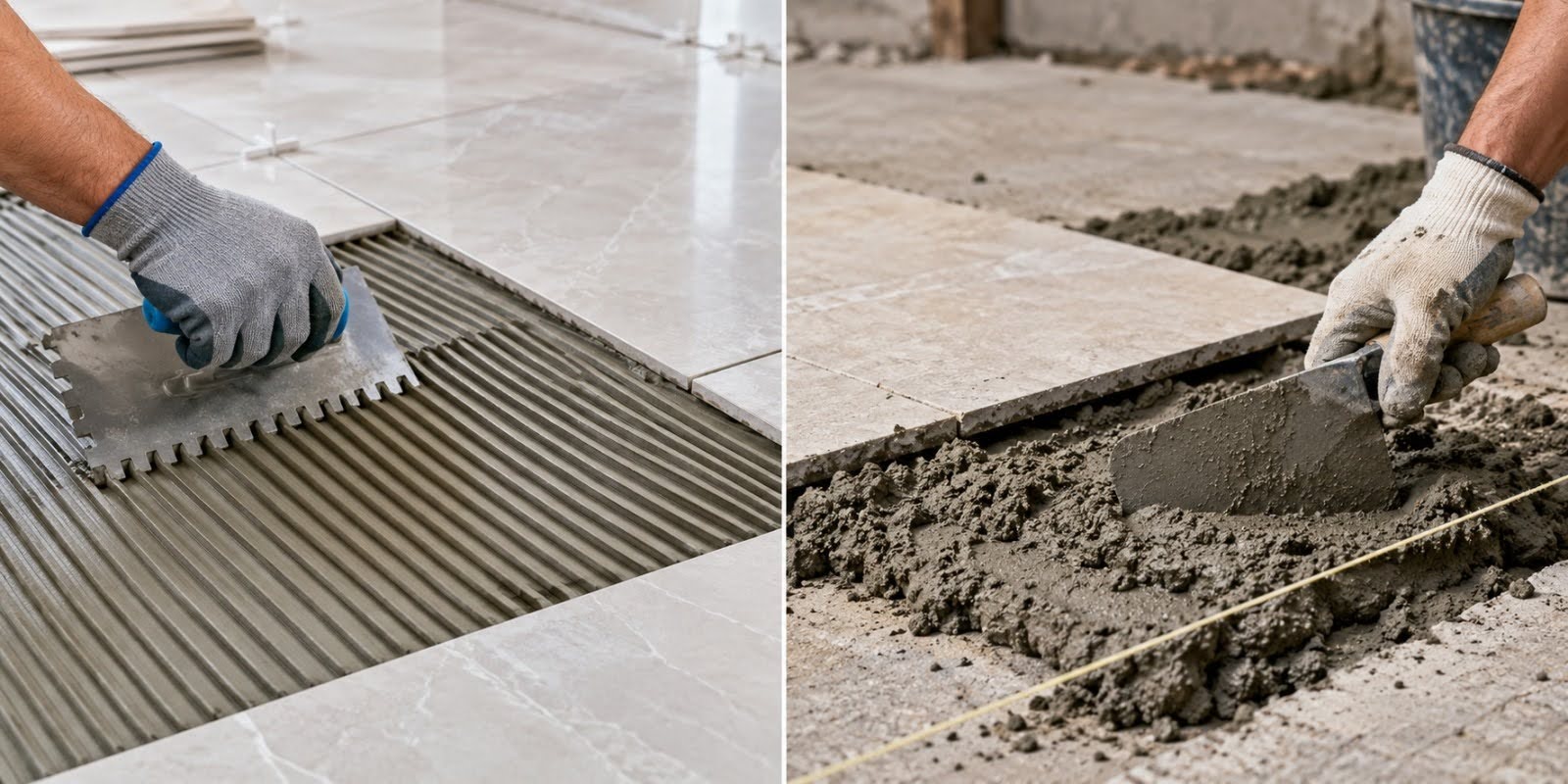
Tile adhesive and traditional mortar are both used in tile installation, but they differ in formulation, preparation, application method and suitability for different substrates and installation conditions. Tile adhesive is a formulated bonding material designed specifically to secure tiles to prepared surfaces, while traditional mortar is generally a site-prepared cement-and-sand mixture used for bedding, levelling or selected tile installation methods.
The appropriate choice depends on the tile, substrate, installation area and required application method. Tile size, surface condition, layer thickness and exposure to moisture can also influence material selection.
For construction projects in Singapore, it is important to distinguish between these materials rather than treating them as interchangeable. A product designed specifically for tile bonding may provide different application and performance characteristics from conventional mortar.
This guide compares tile adhesive and traditional mortar, focusing on how they work, their application methods, substrate requirements and the situations where each approach may be appropriate.
What Is Tile Adhesive?
Tile adhesive is a formulated bonding material specifically designed to secure tiles to suitable prepared substrates. Cementitious tile adhesives commonly contain cement, graded aggregates and additives that modify their application and bonding characteristics.
Unlike conventional site-mixed mortar, pre-packed tile adhesive is manufactured to provide a controlled formulation.
The installer generally adds the specified amount of water and mixes the material according to the manufacturer's instructions.
Different tile adhesives can be formulated for different tiles, substrates and environmental conditions.
The term Tile Adhesive therefore describes a product category rather than one universal material suitable for every tile installation.
What Is Traditional Mortar?
Traditional mortar is generally a mixture of cement, sand and water prepared to create a workable material for construction applications. In tile installation, conventional cement-sand mortar can be used as a bedding layer or as part of traditional installation methods.
Mortar can provide greater thickness than many adhesive applications, making it useful where a substantial bedding layer is required.
However, its performance depends heavily on the proportions of the ingredients, mixing and installation method.
A site-mixed mortar does not automatically provide the same bonding characteristics as a formulated tile adhesive.
The distinction becomes particularly important when installing modern tiles or working on substrates where specific adhesive performance is required.
Tile Adhesive vs Traditional Mortar at a Glance
The main difference between tile adhesive and traditional mortar is that tile adhesive is specifically formulated for bonding tiles, while mortar is a broader cementitious construction material that can perform bedding, levelling and bonding functions depending on the application.
The following comparison highlights their general differences:
| Factor | Tile Adhesive | Traditional Mortar |
|---|---|---|
| Main purpose | Tile bonding | Bedding and general cementitious applications |
| Formulation | Pre-formulated product | Commonly cement and sand |
| Mixing | Controlled water addition | Site proportioning may be required |
| Application thickness | Typically controlled, relatively thin layer | Can accommodate thicker bedding |
| Bonding properties | Formulated specifically for tile adhesion | Depends on mix and installation method |
| Consistency | More controlled formulation | Can vary with site mixing |
| Selection | Based on tile, substrate and environment | Based on construction and bedding requirements |
Actual performance depends on the specific products and installation conditions.
How Tile Adhesive Bonds Tiles
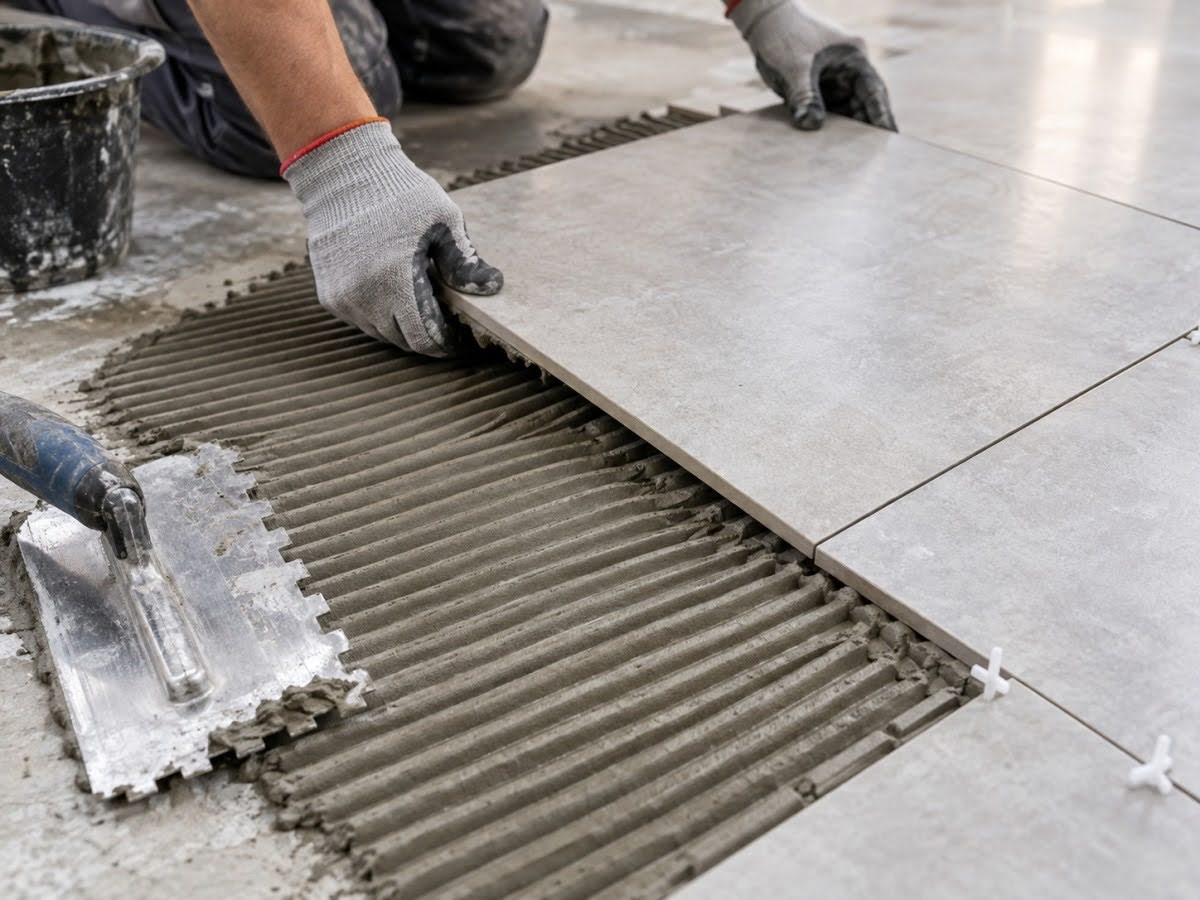
Tile adhesive creates a bond between the tile and the prepared substrate through its formulated cementitious and modifying components. Correct application allows the adhesive to contact both surfaces and develop the intended bond after curing.
The adhesive is normally applied to a prepared substrate using an appropriate notched trowel.
The tile is then positioned while the adhesive remains workable.
Correct coverage is important because inadequate adhesive contact can leave unsupported areas beneath the tile.
The installation method should therefore consider tile dimensions, substrate condition and product requirements rather than simply applying a fixed amount of adhesive to every installation.
How Traditional Mortar Is Used for Tile Installation
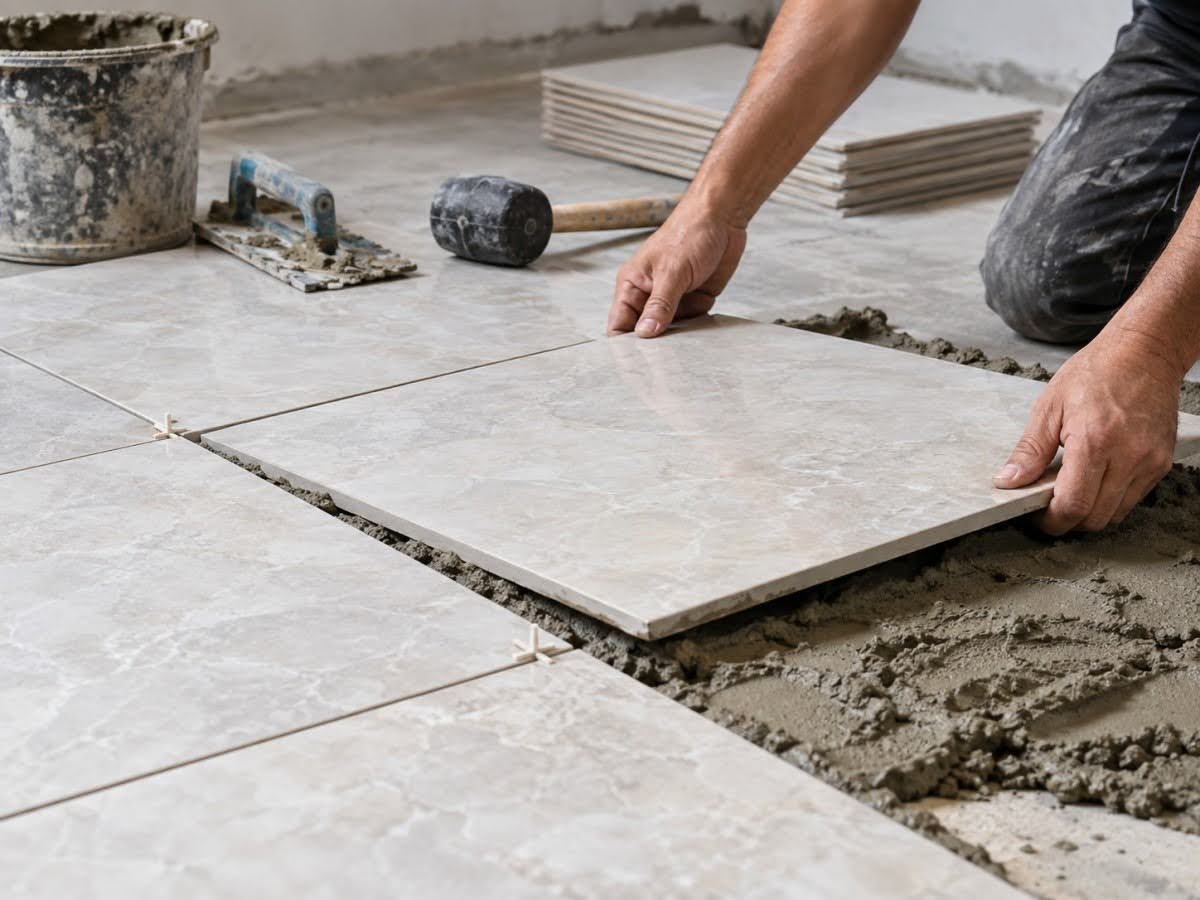
Traditional mortar can create a thicker bedding layer beneath tiles and has historically been used for various floor and wall installations.
The mortar bed can help establish the required level or surface profile before the tile is positioned.
Because mortar can be applied more thickly, it may accommodate certain substrate variations that should not be corrected by excessively increasing the thickness of a thin-bed adhesive.
However, site mixing introduces variables.
Cement-to-sand ratios, water content and workmanship can affect the consistency of the final mixture.
For this reason, the decision between mortar and adhesive should consider whether the installation primarily requires bedding and levelling or a formulated bonding material.
Application Thickness Is a Major Difference
Application thickness is one of the practical differences between tile adhesive and traditional mortar. Tile adhesives are generally applied within a specified thickness range, while traditional mortar can be used to create a substantially thicker bed.
A tile adhesive should not automatically be used to compensate for a significantly uneven substrate.
Applying it outside its intended thickness can affect installation and curing.
Where the surface requires substantial correction, appropriate substrate preparation or a suitable levelling method may be required first.
Traditional mortar can be appropriate for selected thicker-bed applications, but its use should still correspond with the tile and installation method.
The objective is to create an appropriate substrate and bond rather than using additional material to compensate for poor preparation.
Substrate Preparation Is Essential for Tile Adhesive
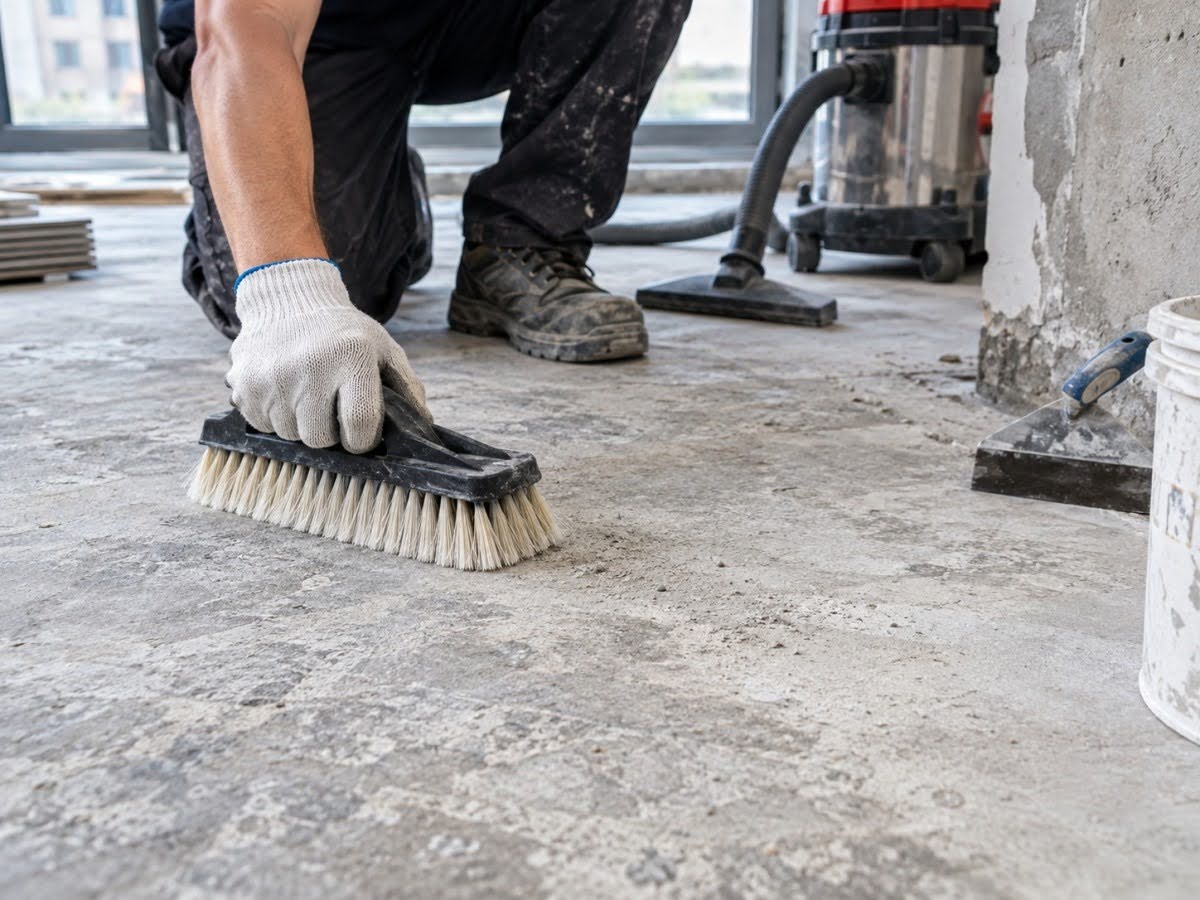
Tile adhesive performs best when applied to a suitable, stable and properly prepared substrate. The condition of the surface can directly influence bonding.
The substrate should generally be sound and free from contaminants that interfere with adhesion.
Preparation can include:
- Removing dust and loose particles;
- Checking for weak or unstable surface material;
- Removing grease, oil or other contaminants;
- Addressing excessive surface irregularities; and
- Confirming compatibility with the selected adhesive.
The exact requirements depend on the substrate and adhesive.
Adding more tile adhesive should not be considered a substitute for proper surface preparation.
Concrete and Cementitious Substrates
Concrete and cementitious surfaces are common substrates for tile installation, but their condition can vary considerably.
New concrete, screeds and existing cementitious surfaces can differ in moisture condition, surface strength and flatness.
Loose particles or laitance can create a weak interface between the substrate and adhesive.
The surface should therefore be assessed before installation.
Where a tile adhesive is being used, its compatibility with the particular cementitious substrate should be confirmed.
The substrate should also provide the level and stability required for the intended tile installation.
Existing Tiled and Other Special Surfaces
Installing tiles over existing surfaces can introduce additional adhesion requirements because the new adhesive may be bonding to a relatively smooth or non-porous material.
Existing tiles should not automatically be considered suitable substrates simply because they are firmly installed.
Surface condition, contamination and product compatibility need to be assessed.
Some tile adhesives are formulated for more demanding substrates, while others are intended primarily for conventional cementitious surfaces.
Where installation over an existing finish is being considered, the selected adhesive and preparation method should specifically support that application.
Tile Type Can Influence Adhesive Selection
Different tiles can have different absorption, dimensions and material characteristics. These factors can influence the appropriate bonding method.
Traditional ceramic tiles may behave differently from low-absorption porcelain tiles.
Natural stone can introduce additional considerations depending on the material.
Larger tiles can also place greater demands on substrate flatness and adhesive coverage.
Tile adhesive should therefore be selected with the actual tile in mind rather than treating all tiles as equivalent.
Product guidance can help determine compatibility with specific tile categories and installation environments.
Large-Format Tiles Require Careful Installation
Large-format tiles can require greater attention to substrate flatness and adhesive coverage because their dimensions make them less able to accommodate surface irregularities.
A poorly prepared substrate can result in uneven installation or inadequate adhesive contact.
The appropriate trowel and application technique should provide suitable coverage according to the tile and adhesive requirements.
Simply increasing the adhesive thickness is not always the correct solution.
Where the substrate is significantly uneven, it should generally be addressed using an appropriate preparation method before tile installation.
This separates the functions of surface correction and tile bonding.
Interior and Exterior Tile Installations
Interior and exterior tile installations can expose bonding materials to different conditions. Exterior installations may experience rain, sunlight and temperature changes, while interior environments can range from dry spaces to moisture-prone areas.
The adhesive should be suitable for the intended exposure.
A product designed for a protected internal wall should not automatically be assumed suitable for an exterior application.
Movement can also differ between environments.
External surfaces may experience greater temperature-related dimensional changes, increasing the importance of choosing a compatible installation system.
The complete installation should therefore be considered rather than evaluating the adhesive independently.
Tile Installation in Wet Areas
Wet areas require attention to moisture management as well as tile bonding. Toilets, bathrooms and other water-exposed spaces should not rely on tile adhesive alone as the complete moisture-control system.
Where waterproofing is required, it should be addressed using an appropriate system before tile installation.
The tile adhesive then needs to be compatible with the prepared or waterproofed substrate.
This distinction is important because tile adhesive and waterproofing perform different functions.
Tile adhesive secures the tile, while waterproofing is intended to manage water penetration through the relevant construction area.
The two materials should therefore be selected as compatible parts of the installation system.
Mixing Tile Adhesive Correctly
Pre-packed tile adhesive is designed to be mixed according to defined proportions. Altering the water content can change workability and performance.
Too much water may produce a mixture that appears easier to spread but does not correspond with the intended formulation.
Too little water can make application difficult and affect material consistency.
A typical preparation process involves adding the specified quantity of clean water, incorporating the powder and mixing until the required consistency is achieved.
Some products may specify additional mixing or resting procedures.
The manufacturer's instructions should determine the process for the selected product.
Traditional Mortar Requires Consistent Site Mixing
Traditional mortar commonly requires cement, sand and water to be proportioned and mixed on site. Consistency therefore depends partly on workmanship and material control.
Changes in sand grading, water quantity or cement proportion can influence the resulting mortar.
This variability is one reason pre-packed materials can be useful where consistent formulation is important.
However, traditional mortar continues to have applications where a thicker bedding layer or conventional construction method is required.
The key issue is not whether one material is universally superior. It is whether the material performs the function required by the installation.
Working Time and Application Method
Working time refers to the period during which a mixed product can be applied and tiles positioned appropriately. Tile adhesives have product-specific working characteristics that should be considered during installation.
Installers should avoid spreading substantially more adhesive than can be tiled within the appropriate period.
Environmental conditions can also influence working behaviour.
The adhesive should maintain appropriate contact with the tile rather than developing a surface condition that interferes with bonding before the tile is positioned.
Traditional mortar also requires proper timing and handling.
In both cases, installation practices should correspond with the material rather than forcing the material to fit the pace of the work.
Adhesive Coverage Is Important
Adhesive coverage describes how much of the back of a tile is effectively supported and bonded by the adhesive.
Insufficient coverage can create unsupported areas.
The appropriate coverage depends on the tile, substrate, installation environment and applicable product requirements.
Trowel selection and application technique influence the final contact.
Large or demanding tiles may require particular attention to achieving adequate support.
Installers should therefore evaluate the finished bedding rather than assuming that visible adhesive on the substrate guarantees sufficient tile contact.
Movement Joints Should Not Be Filled With Tile Adhesive
Movement joints allow parts of a tiled surface or underlying construction to accommodate dimensional change. They perform a different function from ordinary tile joints.
Tile adhesive is not intended to eliminate required movement accommodation.
Filling a movement joint rigidly can transfer stress into the tiled surface.
The appropriate joint design depends on the construction and installation.
This demonstrates why tile installation should be considered as a system involving the substrate, adhesive, tile, joints and environmental conditions rather than focusing on bonding material alone.
When Tile Adhesive May Be Appropriate
Tile adhesive may be appropriate where a formulated bonding product is required for installation onto a suitable prepared substrate.
Common factors supporting its use include consistent product formulation, controlled application thickness and compatibility with specified tile and substrate combinations.
It can be particularly useful where:
- The substrate is appropriately prepared and sufficiently level;
- A defined tile-bonding material is required;
- The tile type is compatible with the selected adhesive;
- Application thickness falls within product requirements; and
- Environmental conditions match the product's intended use.
The specific adhesive should still be selected according to the actual project requirements.
When Traditional Mortar May Be Appropriate
Traditional mortar may be appropriate for selected installations requiring a thicker bedding layer or where conventional mortar-bed construction is part of the intended method.
It can provide flexibility in establishing levels and accommodating certain substrate conditions.
However, mortar should not automatically be chosen simply because a surface is uneven.
The substrate and tile requirements should still be assessed.
Modern tile types and demanding applications may require specific bonding characteristics that are better addressed by a formulated adhesive or another installation system.
Material selection should therefore follow the installation design rather than habit alone.
Frequently Asked Questions (FAQs)
Is tile adhesive better than traditional mortar?
Neither material is universally better. Tile adhesive is specifically formulated for tile bonding, while traditional mortar can be useful for thicker bedding and selected conventional installations. The appropriate material depends on the tile, substrate and application.
Can tile adhesive be used on concrete?
Many cementitious tile adhesives are intended for suitable concrete or cement-based substrates. The concrete should be sound, properly prepared and compatible with the selected product.
Can tile adhesive level an uneven floor?
Tile adhesive should generally be used within its specified application thickness. Significant unevenness may require appropriate substrate preparation or levelling before tile installation.
Is mortar suitable for porcelain tiles?
The appropriate bonding system depends on the tile characteristics and installation conditions. Low-absorption tiles such as porcelain can require specific adhesive performance, so the selected material should be confirmed as suitable.
Do wet areas require waterproofing before tiling?
Where the construction requires waterproofing, an appropriate waterproofing system should be installed as part of the substrate preparation. Tile adhesive and waterproofing perform different functions.
Can tile adhesive be mixed with additional cement?
A pre-formulated tile adhesive should normally be prepared according to the manufacturer's instructions. Adding unapproved materials can change the formulation and intended performance.
Choosing the Right Bonding Method for Tile Installation
Tile adhesive and traditional mortar perform related but distinct functions in construction. Tile adhesive provides a controlled formulation specifically developed for tile bonding, while traditional mortar can provide thicker bedding and support selected conventional installation methods.
The choice should consider the tile type, substrate, required thickness, environmental exposure and installation method.
Substrate preparation remains important regardless of the material selected. A poorly prepared or unstable surface cannot be reliably corrected simply by applying additional adhesive or mortar.
For modern tile installation, defining the function required from the bonding layer provides a clearer basis for determining whether a formulated Tile Adhesive, traditional mortar or another installation approach is appropriate.
Select the Right Material for Your Tile Application
Tile installation materials should be selected according to the tile, substrate, application thickness and environmental conditions. Eastern Win Enterprises Pte Ltd. provides pre-packed mortar and construction material solutions for different building applications.
To discuss the appropriate material for your tile installation requirements, you can contact Eastern Win Enterprises Pte Ltd.