


 Contact Us: (65) 6419 2850


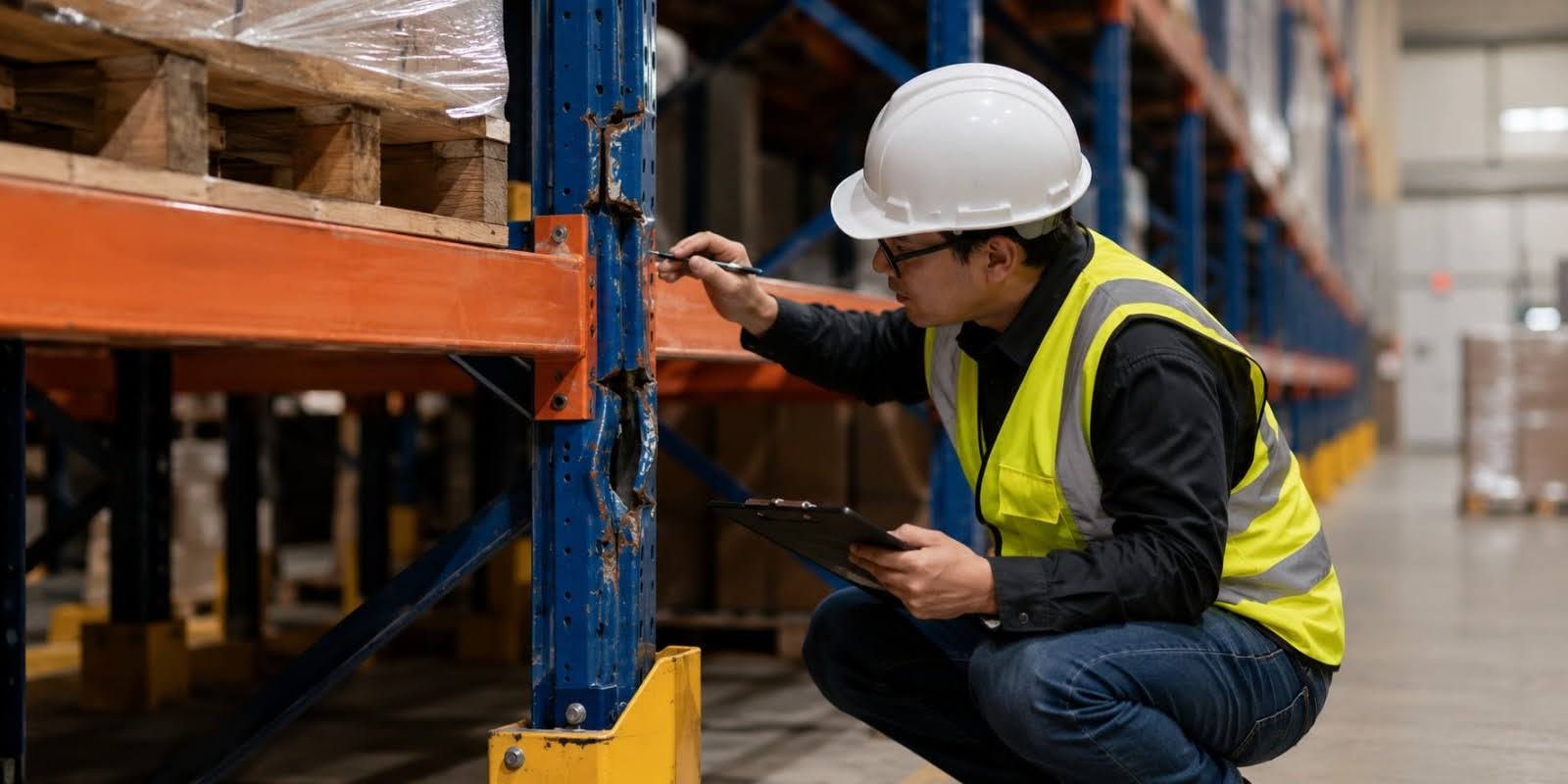
Warehouse inspections are a critical component for any company or business. A rack inspection in a Singapore warehouse that is being carried out should assess the physical condition of the racking system, identify visible damage and determine whether components or loading practices require attention. Regular inspection is important because warehouse racks can be affected by forklift impacts, overloading, displaced components and general operational wear.
Racking may appear structurally straightforward, but its components work together as a complete storage system. Damage to an upright, beam, connection or bracing component can affect how the rack performs under load.
Inspection should therefore cover more than obvious damage. It should also consider rack alignment, connections, load conditions, missing components and changes made to the original configuration.
This guide focuses specifically on rack condition and inspection, including common types of damage, what to examine, warning signs and how inspection findings can be documented and addressed.
Why Warehouse Rack Condition Matters
Warehouse rack condition matters because racking supports inventory while operating in an environment where forklifts, pallets and workers move around the structure every day. Damage can develop gradually or result from a single impact.
An upright may be struck by material-handling equipment. A beam connection can be disturbed during pallet placement. Components may also be removed or altered as storage requirements change.
Not every problem is immediately obvious from a distance.
A structured inspection process helps identify visible changes before they become accepted as part of the normal warehouse environment.
Inspection also provides an opportunity to review whether the racking continues to be used according to its intended configuration.
What Is a Warehouse Rack Inspection?
A warehouse rack inspection is a systematic assessment of a racking system's visible condition and use. It examines structural components, connections, loading conditions and other factors that may affect the rack.
The inspection should cover the areas most likely to experience operational damage.
These commonly include uprights, beams, bracing and connections.
The surrounding warehouse environment can also provide useful information. Repeated pallet impacts, damaged floor areas or frequently displaced goods may indicate operational conditions affecting the racks.
The purpose is to identify issues requiring further assessment, repair, replacement or changes in warehouse practices.
Common Causes of Rack Damage
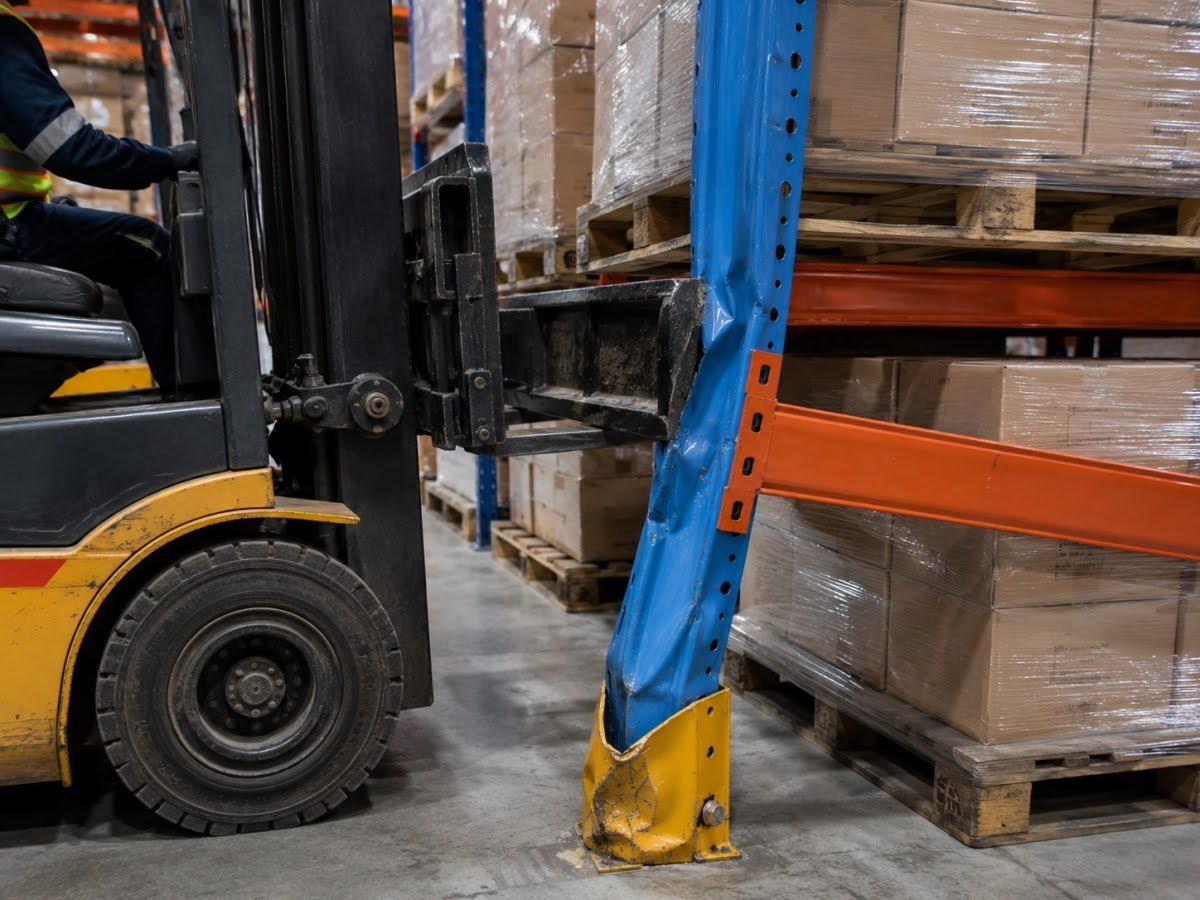
Rack damage is commonly associated with impact, incorrect loading, component changes or normal warehouse activity. Understanding the cause can help prevent the same problem from recurring after corrective action.
Forklift impact is one of the most recognisable causes. Uprights positioned beside active aisles can be particularly exposed when vehicles turn or position pallets.
Other potential causes include:
- Pallets striking beams or rack components;
- Loads exceeding intended limits;
- Improperly positioned inventory;
- Unauthorised rack modifications;
- Missing or displaced components; and
- Repeated minor operational impacts.
Inspection should therefore consider both the visible damage and the likely reason it occurred.
Check Uprights for Damage and Deformation
Uprights are vertical structural components that transfer rack loads towards the supporting floor. Their condition should be a key part of any rack inspection.
Inspectors should look for visible bends, dents, twists or other deformation.
Damage is particularly important around lower sections because these areas can be exposed to forklift or pallet impacts.
The base of the upright should also be examined for signs of movement or damage around the floor connection.
Visual inspection can identify obvious concerns, but the significance of deformation should not be determined solely by appearance. Where structural condition is uncertain, the affected component should receive appropriate assessment.
Inspect Beams and Storage Levels
Beams are horizontal components that support pallets or shelving across a rack bay. Their condition can be affected by loading, pallet placement and impact.
A beam inspection should look for visible bending, deformation, twisting or damage around connection points.
The position of the beam should also be checked.
A displaced beam or unusual alignment may indicate that a connection has been disturbed.
Stored loads can provide additional clues. If pallets appear uneven, unstable or poorly supported, the issue may involve loading practices as well as the rack itself.
Beams should remain consistent with the intended rack configuration rather than being moved without considering system requirements.
Examine Beam-to-Upright Connections
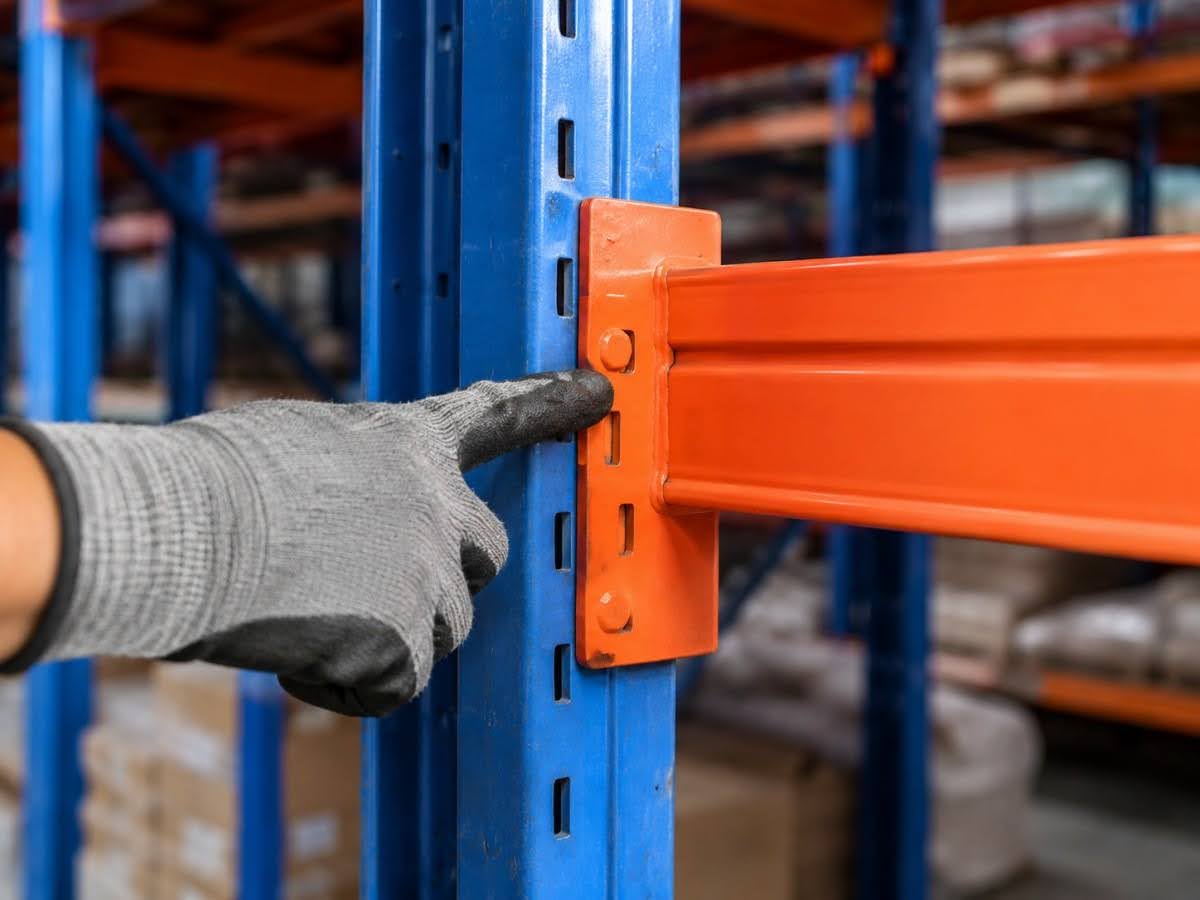
Beam-to-upright connections join horizontal storage levels to the vertical frames. These connection points should remain properly engaged and free from visible damage.
Warehouse operations can sometimes disturb connections during pallet placement or retrieval.
Inspection should look for components that appear displaced, damaged or incomplete.
Where locking or retaining devices form part of the rack system, their condition and presence should also be checked.
A connection that appears different from equivalent connections elsewhere in the system deserves attention.
Components should not be improvised or replaced with unrelated alternatives without appropriate confirmation of compatibility.
Review Bracing and Structural Components
Bracing helps the rack frame maintain its intended structural configuration. Damaged, bent, missing or altered bracing should therefore be identified during inspection.
Diagonal and horizontal frame members can sometimes be overlooked because warehouse attention tends to focus on uprights and beams.
However, visible deformation of these components can indicate previous impact or other structural changes.
Inspection should also look for unauthorised alterations.
Drilling, cutting, welding or removing structural rack components can change the system from its intended configuration.
Any unexplained modification should be documented and assessed rather than assumed to be acceptable.
Check Baseplates and Floor Connections
Baseplates connect the lower portion of rack uprights to the supporting floor and help distribute loads into the floor structure.
Their condition should be included in rack inspection.
Inspectors should look for visible displacement, deformation or damage around the base area.
Where anchoring forms part of the installation, the visible condition of the relevant connections should also be reviewed.
Damage around the base of an upright may be associated with forklift impacts, making this area particularly important in active warehouse aisles.
Floor deterioration around rack positions should also be documented if it appears relevant to the condition of the installation.
Look for Signs of Forklift Impact
Forklift impact can create obvious or subtle rack damage. The lower sections of uprights and aisle-facing components are common areas to examine.
Visible dents, scrapes or deformation can indicate contact with material-handling equipment.
Repeated impact marks around the same rack positions may suggest that the warehouse layout or operating practices are contributing to the problem.
Inspection should not stop at identifying the damaged component.
Understanding where and why impacts occur can help determine whether protective measures, traffic changes or operational improvements should also be considered.
Corrective action is more effective when the underlying cause is addressed.
Identify Load-Related Issues
Load-related issues occur when the way inventory is stored does not correspond with the intended rack configuration or capacity.
Inspection should consider whether pallets and other goods appear to be positioned correctly and whether storage practices have changed.
Potential warning signs can include:
- Visibly overloaded or heavily deflected components;
- Unstable or poorly positioned pallets;
- Loads extending into inappropriate areas;
- Inconsistent pallet sizes for the rack configuration; and
- Changes to beam levels without corresponding assessment.
Rack inspection is not only about damaged steel. Loading practices are part of the condition in which the system operates.
Confirm That Load Information Is Clear
Load information helps warehouse users understand how the racking is intended to be used. Where applicable, it should remain visible and consistent with the current rack configuration.
Problems can develop when the warehouse layout changes but the information provided to workers does not change with it.
For example, beam levels may be repositioned or inventory weights may increase over time.
Workers should not have to estimate how much a rack can support based on appearance.
If there is uncertainty about the intended capacity of a rack configuration, the issue should be clarified before additional loads are placed on the system.
Check for Missing or Unauthorised Components
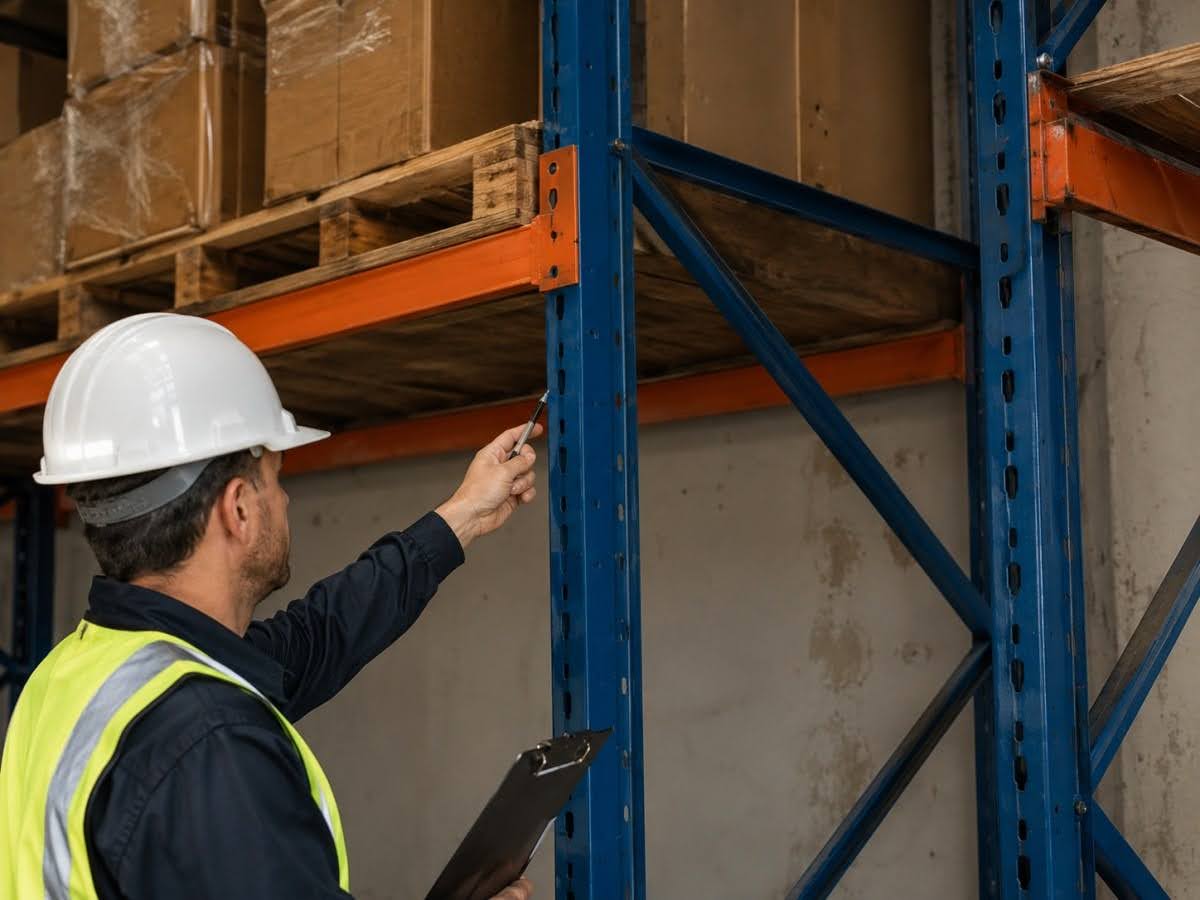
Missing components can indicate that the racking has been altered or damaged since installation. Inspection should identify differences between the current system and its intended configuration.
This can include missing locking devices, bracing members or other rack-specific components.
Unauthorised replacements should also be noted.
Warehouse teams may sometimes make temporary modifications to solve immediate storage problems. However, a component that physically fits is not automatically an appropriate structural substitute.
The rack should remain consistent with its intended system configuration.
Inspect Rack Alignment and Position
Changes in rack alignment can provide a visible indication that the structure has been moved, impacted or altered.
Inspectors should look for rack rows or uprights that appear unusually displaced relative to surrounding components.
Alignment concerns should be considered together with other evidence.
For example, an upright showing both deformation and unusual positioning may warrant closer assessment.
Warehouse floors and installation conditions can also affect appearance, so conclusions should not be based on one visual observation alone.
The objective is to identify conditions that differ materially from the expected rack arrangement.
Pay Attention to High-Risk Warehouse Areas
Some rack locations are more exposed to operational impact than others. Inspection frequency and attention can therefore be informed by the warehouse environment.
Areas near aisle intersections, loading zones and turning points can experience more vehicle movement.
End-of-row uprights may also be more exposed than components located deeper within rack runs.
Frequently accessed pallet positions can experience repeated contact during storage and retrieval.
Recognising these patterns allows businesses to focus additional attention on locations where damage is more likely while still maintaining inspection coverage across the entire racking system.
Know the Signs That Require Prompt Attention
Certain visible conditions should not simply be left until the next routine review. Significant deformation, unstable components or obvious impact damage can require prompt assessment.
Warehouse workers can play an important role because they may notice changes between formal inspections.
A reporting process should make it clear how concerns are escalated.
Examples of conditions requiring attention include:
- Upright Deformation: Visibly bent or significantly damaged uprights;
- Beam Displacement: Displaced or damaged beams;
- Missing Components: Missing structural components or locks;
- Unstable Loads: Unstable or incorrectly positioned loads;
- Impact Damage: Signs of significant collision impact; and
- Unapproved Alterations: Unexplained modifications to the rack structure.
The appropriate response depends on the nature and severity of the condition.
Document Inspection Findings Clearly
Rack inspection findings should be recorded clearly enough for the affected location and issue to be identified later.
A useful record can include the rack location, component affected, type of observed damage and any action required.
Photographs may also help document visible conditions where appropriate.
Consistent records make it easier to determine whether certain locations experience repeated problems.
For example, recurring damage to one end-of-row upright could indicate a traffic or handling issue rather than an isolated incident.
Inspection records can therefore support both corrective action and longer-term warehouse improvements.
Corrective Actions Should Address the Cause
Corrective action should address both the damaged rack component and the operational condition that contributed to the issue where possible.
Replacing a damaged upright may restore the rack, but repeated forklift impacts can damage the replacement if the underlying problem remains unchanged.
Depending on the issue, corrective actions may involve component assessment, repair or replacement, load adjustments or changes in warehouse procedures.
Rack protection may also be considered for areas exposed to repeated vehicle contact.
The objective is not merely to make the visible damage disappear. It is to restore appropriate use and reduce the likelihood of recurrence.
Rack Inspection Should Continue Throughout the System's Life
Rack inspection is an ongoing warehouse management activity because the condition of a racking system can change after installation.
Day-to-day observations can identify obvious problems quickly, while more structured inspections can review the system systematically.
The appropriate approach depends on warehouse activity, equipment movement and operating conditions.
A high-traffic warehouse with frequent forklift interaction may face different exposure from a relatively static storage facility.
Inspection practices should therefore reflect the actual environment rather than treating every warehouse identically.
Frequently Asked Questions (FAQs)
What should be checked during a warehouse rack inspection?
A rack inspection should examine uprights, beams, bracing, connections, base areas, visible alignment, load conditions and missing or damaged components. The surrounding operating environment can also help identify causes of recurring damage.
What causes warehouse rack damage?
Common causes include forklift impacts, pallet contact, inappropriate loading, component changes and accidental damage during warehouse operations. Repeated minor impacts can also affect rack condition over time.
Why are rack uprights important to inspect?
Uprights are major structural components that transfer rack loads towards the floor. Lower sections are also particularly exposed to forklift and pallet impacts.
Should damaged racking continue to be used?
The appropriate response depends on the type and severity of the damage. Where structural condition is uncertain or damage appears significant, the affected rack should receive appropriate assessment rather than continuing normal use based on assumption.
How can businesses reduce recurring rack damage?
Businesses can review the causes of previous damage, including forklift routes, aisle conditions, loading practices and exposed rack locations. Corrective action should address recurring operational causes as well as damaged components.
Is rack inspection the same as rack maintenance?
No. Inspection identifies rack condition and potential issues, while maintenance or corrective work addresses problems that have been identified. Both contribute to the ongoing management of warehouse racking.
Maintaining Visibility Over Warehouse Rack Condition
Warehouse racking can experience changes throughout its operating life, particularly in facilities with frequent forklift and pallet movement. Regular inspection provides a structured way to identify damage, loading issues, missing components and changes to the original rack configuration.
Uprights, beams, connections, bracing and base areas should all form part of the assessment rather than focusing only on the most visible damage.
For businesses considering requirements for a rack inspection in Singapore, the clear objective should be to understand the current condition of the storage system and respond appropriately when issues are identified. Clear reporting and corrective action can also help prevent recurring problems from becoming normalised within warehouse operations.
Review the Condition of Your Warehouse Racking
Rack condition should be assessed in relation to visible damage, structural components, loading practices and the way the storage system is used. Eastern Win Enterprises Pte Ltd. supports warehouse racking requirements for commercial and industrial facilities in Singapore.
To discuss rack inspection requirements or concerns about an existing racking system, you can contact Eastern Win Enterprises Pte Ltd.