


 Contact Us: (65) 6419 2850


A Complete Guide to Waterproofing Systems for Buildings in Singapore
Waterproofing is the use of suitable materials and construction methods to limit unwanted water penetration through building surfaces and assemblies. Depending on the application, a waterproofing system may use cementitious materials, liquid-applied coatings, membranes or a combination of compatible components.
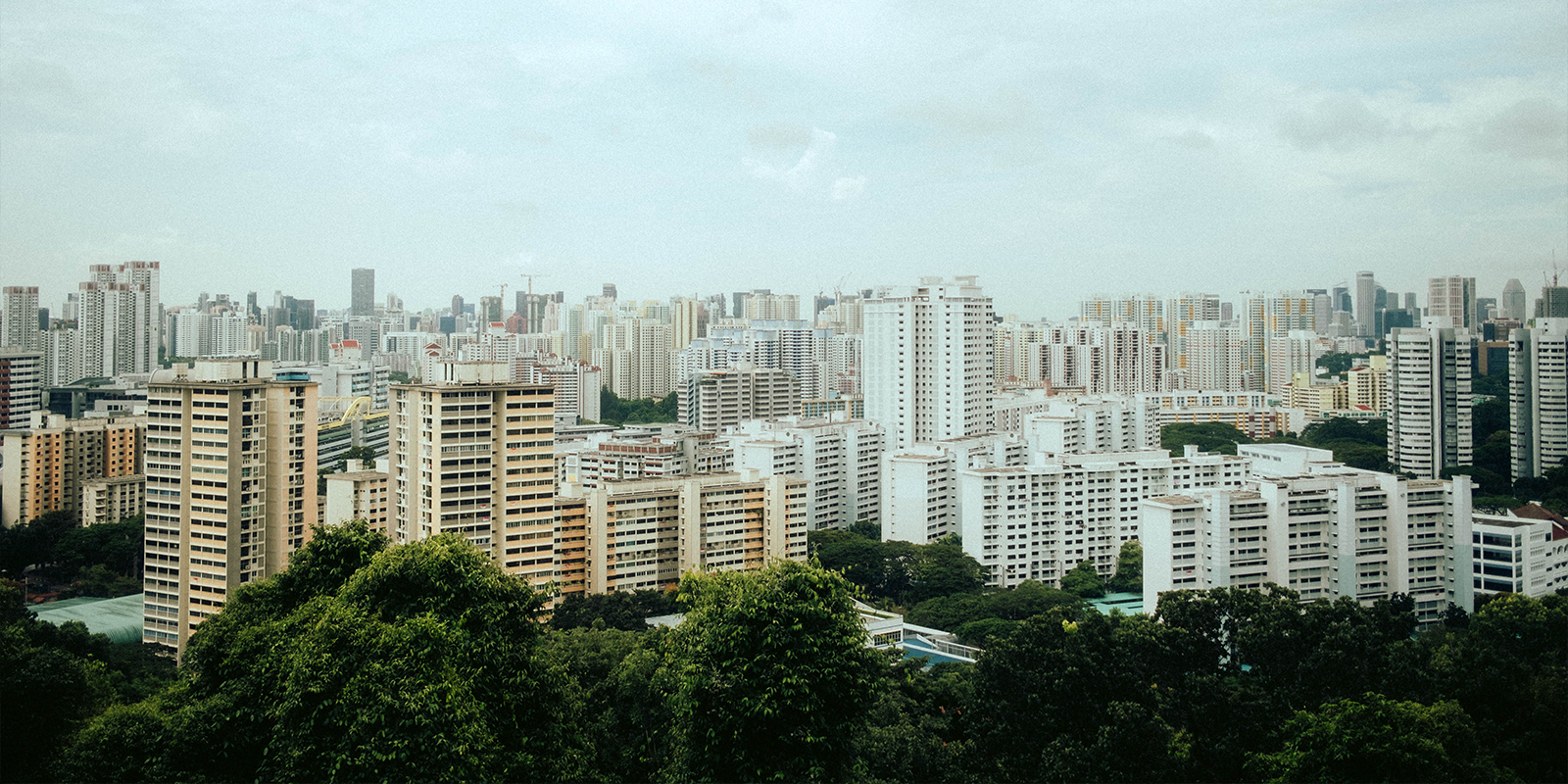
Water management is particularly relevant to buildings in Singapore because external surfaces can experience frequent rainfall, while internal wet areas such as toilets and bathrooms are repeatedly exposed to water during normal use. Roofs, balconies, concrete surfaces and other areas can also have different moisture-protection requirements.
There is no single waterproofing product that is appropriate for every part of a building. A roof exposed to sunlight and standing water presents different conditions from a bathroom floor beneath tiles. Similarly, a concrete wall, floor slab and existing finished surface may require different preparation and material characteristics.
Effective waterproofing therefore begins by identifying where water can come from, what substrate needs protection and how the area will be used after installation. This guide explains the principal waterproofing systems, common building applications, substrate considerations and the factors that should be assessed when selecting and applying a suitable solution.
What Is Waterproofing?
Waterproofing is a construction process intended to create a barrier or protective system that resists water passing through a building element under the conditions for which the system is designed. It is used where water penetration could affect finishes, occupied spaces or the performance of building materials.
A waterproofing system is more than the visible coating or membrane. It can include the substrate, preparation materials, waterproof layer, treatment of corners and penetrations, protective layers and subsequent finishes.
The exact build-up depends on the application.
Some waterproofing products form a continuous layer directly on concrete or another compatible substrate. Others use prefabricated sheets installed across the surface. Certain cementitious systems become part of a mineral-based construction build-up.
The objective remains similar: establish a continuous and appropriate barrier in the locations where water resistance is required.
Waterproofing Versus General Moisture Protection
Waterproofing and moisture protection are related concepts, but they should not automatically be treated as identical. Waterproofing is generally associated with areas where the construction system needs to resist direct or repeated water exposure.
Moisture protection can encompass a wider range of measures used to manage humidity, dampness or water vapour within a building.
The distinction matters because a material intended for limited moisture exposure may not be appropriate where water can accumulate or repeatedly contact a surface.
A toilet floor, exposed roof and below-grade concrete element can all encounter moisture, but the source and intensity of exposure are different.
Material selection should therefore correspond with the actual exposure conditions rather than relying only on a broad description such as "water-resistant."
Why Buildings Require Waterproofing
Buildings require waterproofing where water could pass through construction surfaces or joints and reach areas that should remain protected. The system helps manage this exposure at the appropriate layer of the building assembly.
Water can reach buildings through several routes. Rainfall can affect roofs and external surfaces, while bathrooms and other wet areas generate water internally. Some concrete structures may also encounter ground moisture or other site-specific exposure.
Uncontrolled water penetration can affect finishes and adjacent building materials. It may also create recurring maintenance requirements if the source is not properly addressed.
Waterproofing should therefore be planned according to the source and path of the water.
Applying a waterproof coating to a visible symptom without understanding where the water originates may not resolve the underlying issue. Effective planning focuses on the building assembly rather than only the location where dampness eventually becomes visible.
Singapore's Climate and Waterproofing Requirements
Singapore's tropical climate creates regular exposure to rainfall, high humidity and warm temperatures. Exterior waterproofing systems should therefore be selected with these environmental conditions in mind.
Roof surfaces can receive direct rain and solar exposure. External walls and balconies may experience wind-driven rain. Internal wet areas remain subject to water generated through daily building use.
Climate alone does not determine which waterproofing material should be used. The building element and system design remain central to selection.
However, environmental exposure can influence properties such as weather resistance, movement accommodation and suitability for exposed applications.
For exterior areas, project teams should assess not only whether a material resists water but whether the complete system is intended for the conditions at the specific location.
Main Types of Waterproofing Systems
Waterproofing systems can be grouped according to how the water-resistant layer is formed and applied. Common categories include cementitious waterproofing, liquid-applied systems and waterproofing membranes.
Each type has characteristics that can make it appropriate for particular substrates and applications.
A simplified comparison is useful for understanding their general roles:
| Waterproofing Type | General Form | Typical Consideration | Potential Applications |
|---|---|---|---|
| Cementitious waterproofing | Cement-based coating or system | Compatibility with mineral substrates | Concrete and masonry applications |
| Liquid-applied waterproofing | Applied as liquid and cures into a continuous layer | Surface preparation and continuous application | Roofs, wet areas and detailed surfaces depending on product |
| Sheet membrane | Prefabricated membrane | Seams, overlaps and detailing | Roofs and other specified waterproofing applications |
| Waterproof coating | Protective applied layer | Exposure and substrate compatibility | Selected walls, floors or other suitable surfaces |
These categories describe broad system types rather than interchangeable products.
The technical specification of the individual material should determine where it can be used.
Cementitious Waterproofing
Cementitious waterproofing uses cement-based materials formulated to create a water-resistant layer on compatible construction substrates. It is commonly associated with concrete and masonry applications.
Its mineral-based composition can make it suitable for surfaces that form part of a cementitious building system.
Depending on the product, cementitious waterproofing may be supplied as a dry material mixed with water or as a multi-component system. The resulting mixture is applied to the prepared substrate according to the specified method.
One advantage of cementitious systems is their compatibility with many mineral construction surfaces. However, this does not make them appropriate for every location.
Movement is an important consideration. Building elements that experience significant dimensional changes may require a system with characteristics suited to that movement.
Cementitious waterproofing should therefore be selected according to substrate, exposure and system requirements rather than simply because the underlying structure is concrete.
Liquid-Applied Waterproofing
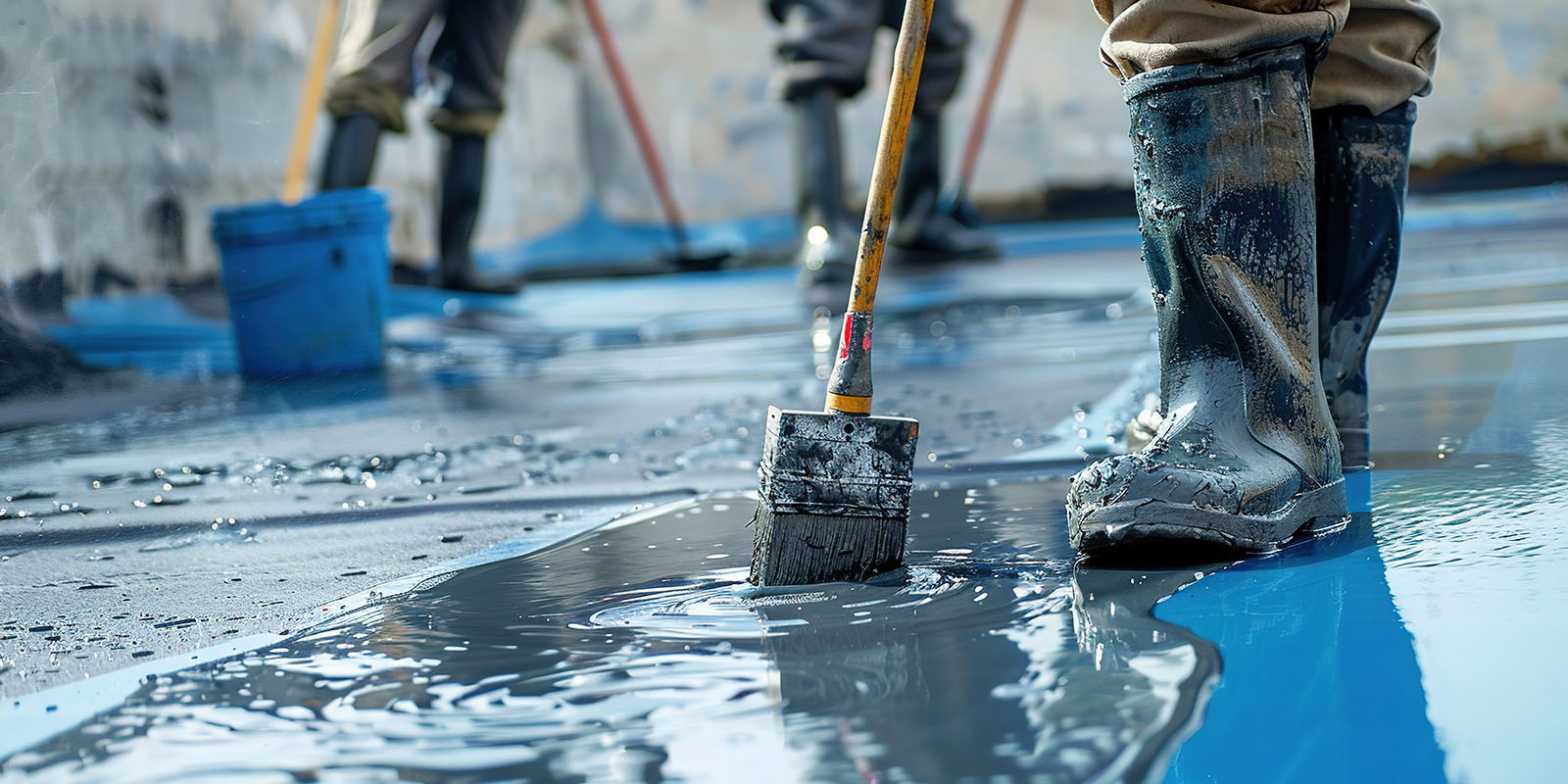
Liquid-applied waterproofing is installed as a liquid or semi-liquid material that forms a continuous waterproof layer after application and curing. Its ability to conform to surface details can make it useful in areas with corners, penetrations or irregular geometry.
The finished performance depends on creating a continuous layer at the required application conditions.
Coverage and thickness are therefore important. An apparently coated surface does not necessarily mean the waterproof layer has been applied according to its specification.
Liquid systems can be formulated for different environments. Some may be suitable for exposed exterior surfaces, while others are designed for protected applications beneath finishes.
The product should be selected according to its intended exposure.
Application sequencing also matters. Corners, drainage points, penetrations and changes in plane often require deliberate treatment rather than relying on the field coating alone.
Waterproofing Membranes
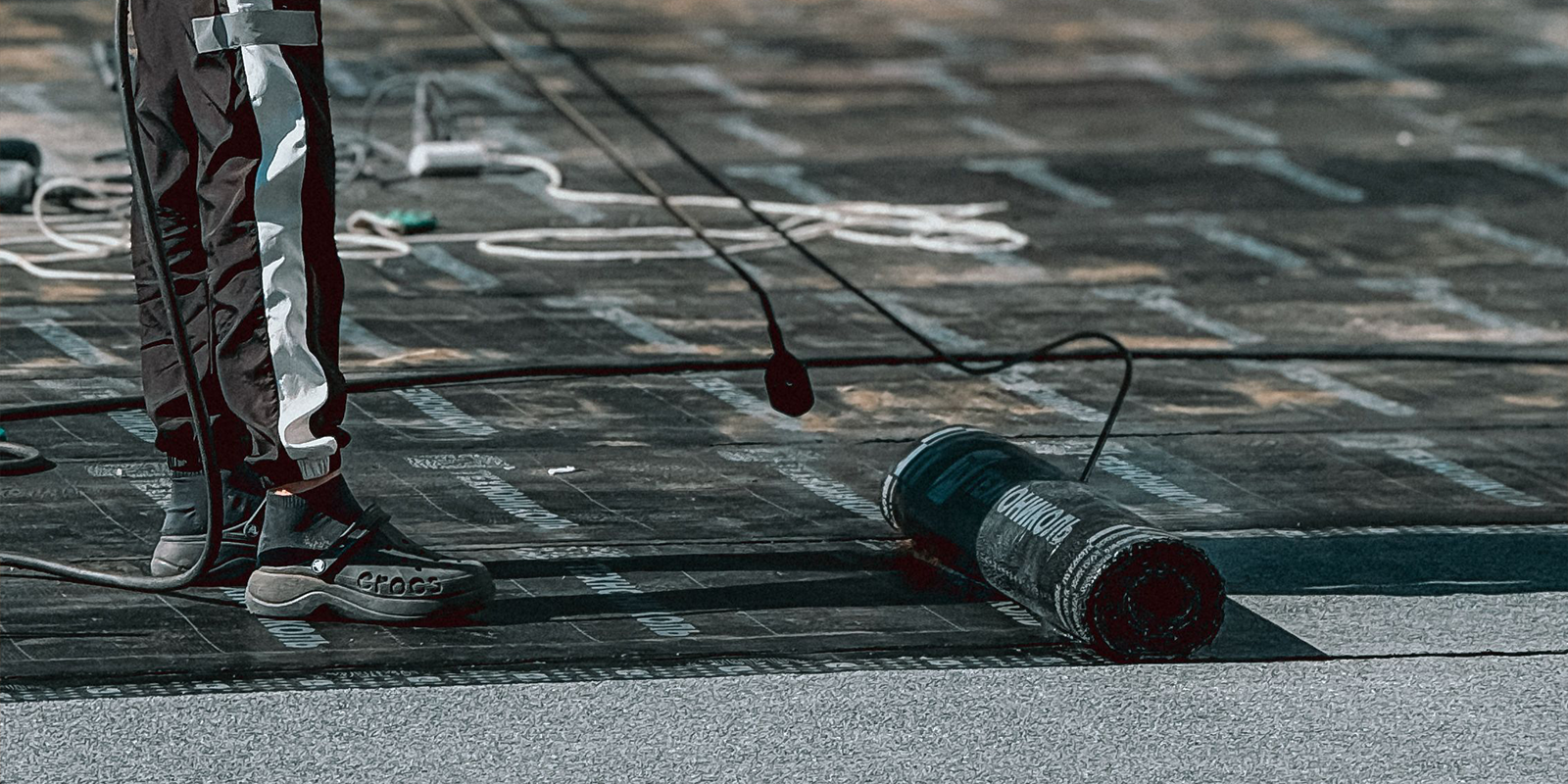
A waterproof membrane is a defined layer installed to restrict water penetration across a building surface. Membranes may be liquid-applied or supplied as prefabricated sheets, depending on the waterproofing system.
Sheet membranes create the waterproof layer through manufactured material installed across the substrate.
Because individual sheets cover finite areas, seams, overlaps and terminations become important parts of the installation. The membrane needs to form a continuous system across these transitions.
Liquid membranes create continuity differently by curing after application. They can reduce the number of sheet joints but introduce other requirements related to application thickness and curing.
Neither approach is universally preferable.
The appropriate membrane depends on the substrate, geometry, exposure, subsequent finishes and installation requirements of the project.
Roof Waterproofing
Roof waterproofing protects appropriate roof assemblies from water entering through exposed surfaces and vulnerable details. Roofs are among the building elements most directly exposed to rainfall.
A roof waterproofing system should be considered together with drainage.
Water needs a planned route away from the surface. Even a suitable waterproof membrane should not be treated as a substitute for appropriate falls, outlets and drainage design.
Different roof types can require different waterproofing approaches. Exposed roofs, roofs beneath finishes and other roof assemblies have different environmental and construction conditions.
Important roof considerations include:
- Existing substrate condition
- Falls and drainage paths
- Outlets and penetrations
- Movement at joints and interfaces
- Exposure to sunlight and weather
- Compatibility with subsequent finishes or protective layers
These factors should be assessed before the waterproofing material is selected.
Understanding Roof Drainage
Roof drainage is the system that directs rainwater away from the roof surface. It works with waterproofing but performs a different function.
Waterproofing resists penetration, while drainage limits how long and where water remains on the surface.
Poor drainage can result in water accumulating in low areas. The cause may relate to falls, blocked outlets or other aspects of the roof design rather than the waterproofing material itself.
Before applying a new waterproof coating to an existing roof, the drainage condition should therefore be reviewed.
A waterproofing system is more effective when the surrounding roof construction manages water as intended.
Waterproofing Roof Details and Penetrations
Roof penetrations are locations where pipes, supports, services or other components pass through or interrupt the waterproofed surface. These areas require specific detailing because the continuous field surface changes around them.
Upstands, edges and drainage outlets create similar transitions.
Waterproofing should remain continuous across these details according to the system design. Simply applying additional material without an appropriate detail does not necessarily provide a suitable solution.
The selected product or membrane system should include an installation approach for the types of details present on the roof.
Complex roofs with numerous penetrations can require more detailed preparation than large uninterrupted surfaces.
This is one reason waterproofing should be planned from the actual roof geometry rather than calculated only from total square metres.
Toilet and Bathroom Waterproofing
Toilet waterproofing is used to protect appropriate substrates beneath or around surfaces that experience regular water exposure. Bathrooms and toilets are internal spaces, but they should still be treated as wet environments where the construction design requires waterproof protection.
Water can reach floors through bathing, washing and cleaning activities. Shower areas can also expose adjacent wall surfaces to repeated wetting.
The waterproofing layer is commonly installed before final finishes such as tiles in systems designed for that build-up.
Important areas can include the floor, changes between horizontal and vertical surfaces, drainage points and service penetrations.
The waterproofing should form a continuous system around these locations.
Bathroom waterproofing should not rely on tile and grout alone. Finished surfaces are part of the overall assembly, but the designated waterproofing layer performs a separate moisture-control function.
Wet-Area Waterproofing
Wet-area waterproofing applies to internal spaces where water exposure is expected as part of normal use. Toilets and bathrooms are common examples, but other building areas can also fall into this category depending on their function.
The degree and location of waterproofing should correspond with the way water is used within the space.
A frequently wetted floor has different exposure from an occasional splash zone. Areas around drains and changes in plane can also require particular attention.
Wet-area design should consider how water reaches the surface and where it should travel.
Drainage and waterproofing therefore work together. The waterproof layer limits penetration into the construction, while appropriate falls direct surface water towards outlets.
A complete system considers both functions.
Waterproofing Around Floor Drains
Floor drains interrupt the continuity of a wet-area floor and create an important interface for waterproofing. The system should connect appropriately with the drainage detail according to the project design.
Water should be directed towards the outlet rather than allowed to remain unnecessarily across the floor.
The surrounding substrate needs to be prepared so the waterproofing can be installed continuously at the drain interface.
The exact detailing depends on the waterproofing and drainage system.
This area should not be treated as a simple hole cut through a completed membrane. It is part of the original waterproofing design.
Careful drain detailing is particularly relevant because wet areas can repeatedly expose the same location to water throughout normal building use.
Concrete Waterproofing
Concrete waterproofing refers to systems used to limit water penetration through or across concrete construction. The appropriate method depends on where the concrete is located and how it is exposed.
Concrete may appear solid, but its surface condition, joints, cracks and penetrations can influence water behaviour.
A waterproof coating or membrane applied to concrete therefore needs a suitable substrate.
Surface laitance, contamination, loose material or defects can interfere with application. Existing cracks or joints may also require separate assessment rather than simply being covered.
The waterproofing system should be selected according to whether the concrete is on a roof, wall, floor, wet area or another building element.
"Concrete waterproofing" is therefore not a single application category with one universal solution.
Why Substrate Preparation Matters
Substrate preparation establishes the surface onto which the waterproofing system will be installed. A suitable product can still perform poorly if the underlying surface is unstable, contaminated or inconsistent with the application requirements.
Preparation should address conditions that interfere with adhesion or continuity.
Depending on the substrate and system, relevant conditions can include:
- Dust and loose material
- Oil or surface contamination
- Unsuitable existing coatings
- Surface irregularities
- Cracks, voids or damaged areas requiring separate treatment
- Moisture conditions relevant to the selected product
The required preparation method should follow the waterproofing system's technical requirements.
Applying additional waterproof material is not a substitute for correcting an unsuitable substrate.
Cracks, Joints and Changes in Plane
Cracks, construction joints and changes in plane are areas where the substrate is not completely uniform. Waterproofing design should account for these conditions rather than treating every surface as an uninterrupted field.
A crack can result from several causes and may behave differently depending on whether it is stable or subject to movement.
Joints are deliberate divisions within construction and can have their own movement requirements.
Changes in planes occur where surfaces meet, such as at wall-to-floor interfaces. These locations can experience stresses different from those across the centre of a flat surface.
The waterproofing approach should correspond with the specific condition.
A membrane or coating intended for the main surface should not automatically be assumed to address every crack or joint without appropriate detailing.
Movement and Waterproofing Performance
Building materials can move because of temperature changes, moisture, structural behaviour and other conditions. Waterproofing systems need characteristics appropriate to the movement expected in their application.
Movement requirements vary substantially.
An internal protected concrete area may present different conditions from an exposed roof surface that experiences repeated heating, cooling and weather exposure.
Some waterproofing materials are relatively rigid, while others are formulated to accommodate a degree of movement.
This is one reason product selection should not be based only on water resistance.
The system needs to remain appropriate while the underlying building element experiences its normal service conditions.
Where movement joints form part of the construction, they should be addressed according to the relevant joint and waterproofing design.
Choosing Between Cementitious and Liquid-Applied Systems
Cementitious and liquid-applied waterproofing systems can both provide water resistance, but their suitability depends on the substrate and application.
Cementitious products can integrate naturally with compatible concrete and masonry surfaces. Liquid-applied systems can provide a continuous layer across complex geometry when used according to their specification.
The decision should consider more than application convenience.
Relevant factors include:
- Substrate type
- Expected movement
- Interior or exterior location
- Exposure to sunlight and weather
- Geometry and number of details
- Subsequent finishes
- Installation requirements
The selected system should address the complete set of conditions.
A material that is easy to apply but unsuitable for the expected exposure is not an appropriate waterproofing solution.
Exposed Versus Protected Waterproofing
Exposed waterproofing remains directly subject to environmental conditions after installation, while protected waterproofing is covered by another construction layer or finish.
This distinction affects material selection.
An exposed roof coating may encounter sunlight, rainfall and temperature variation directly. A membrane beneath tiles in a bathroom operates in a different environment.
Products should be selected for the exposure they will experience after the construction is complete.
A system designed to remain protected beneath finishes should not automatically be used as a final exposed surface.
Likewise, the fact that a waterproof material is suitable for exterior exposure does not mean it is the preferred solution beneath every floor or wall finish.
The final building build-up should be defined before waterproofing materials are chosen.
Compatibility With Tiles and Other Finishes
Waterproofing systems are often covered by tiles, screeds, protective layers or other finishes. Compatibility between these layers is important because they form a combined construction system.
The waterproofing material needs to be appropriate for whatever is installed above it.
In tiled wet areas, for example, the waterproof layer, tile adhesive and finish should be considered as connected components.
Adding incompatible materials can affect adhesion between layers even if each product performs well independently.
Project teams should therefore review the complete sequence:
substrate → preparation → waterproofing → intermediate layer where required → adhesive or finish.
This helps prevent waterproofing from being selected in isolation from the rest of the construction.
Application Thickness and Coverage
Application thickness and coverage influence the continuity and performance of many waterproofing systems. The required values depend on the specific product.
A surface that appears completely coated may still not meet the intended application requirements if the material is too thin or inconsistent.
Liquid-applied products can require controlled coverage across multiple applications or coats. Cementitious systems can similarly have defined application procedures.
More material is not automatically better.
Excessive thickness can create its own application problems depending on the product, while insufficient material can leave the waterproof layer outside its intended specification.
Application should therefore follow documented requirements rather than visual judgement alone.
Curing and Protection After Application
Waterproofing materials often require a defined curing or drying period before they are exposed to water, covered with subsequent finishes or subjected to other construction activities.
The exact timing depends on the product and site conditions.
Premature exposure can interfere with a system before it has developed its intended characteristics.
Fresh waterproofing can also be vulnerable to damage from other trades working in the same area.
Protection after installation is therefore part of the construction sequence.
Project teams should coordinate subsequent activities so that the waterproof layer is not punctured, contaminated or otherwise disturbed before the next stage of work.
Application Considerations in Singapore
Waterproofing applications in Singapore should account for local environmental conditions while following the technical requirements of the selected material.
Exterior work can be affected by rainfall during installation. Applying a product immediately before unsuitable weather can interfere with curing or application depending on the system.
High temperatures on exposed surfaces can also affect some application processes.
Internal work has different considerations, including ventilation and the condition of the substrate.
Site planning should therefore consider:
- Current substrate condition
- Expected weather during exterior application
- Product-specific application limits
- Curing requirements
- Sequencing with other trades
- Protection of completed work
These considerations support correct application but do not replace product-specific technical guidance.
How to Choose a Waterproofing System
Choosing a waterproofing system requires identifying the water exposure, substrate and final construction build-up before comparing products.
A structured selection process can be used.
1. Identify the Source of Water
Determine whether the area is exposed to rainfall, internal wet use, ground moisture or another source.
2. Define the Building Element
Establish whether the application involves a roof, toilet, bathroom, wall, floor, balcony, concrete structure or another area.
3. Assess the Substrate
Identify the material, condition, existing coatings and any cracks or defects requiring attention.
4. Review Movement and Exposure
Consider temperature changes, weather, structural joints and other conditions that can influence the waterproof layer.
5. Define the Final Build-Up
Determine whether the waterproofing will remain exposed or be covered by tiles, screeds or another finish.
6. Compare Appropriate Systems
Review cementitious waterproofing, liquid membrane or other suitable options against the project requirements and technical information.
This process helps prevent material selection from being based on product category alone.
Common Waterproofing Selection Mistakes
Waterproofing problems can arise when the selected material or application approach does not match the building condition. Many mistakes result from focusing on the visible water rather than the complete path through which it travels.
One mistake is assuming every waterproof product can be used interchangeably on roofs, bathrooms and concrete surfaces.
Another is applying waterproofing over a poorly prepared substrate.
Ignoring drainage is also a concern. Waterproofing can resist water penetration, but it should not be expected to correct inadequate falls or blocked drainage paths.
Other mistakes include:
- Overlooking cracks and joints
- Failing to detail penetrations
- Applying inconsistent coverage
- Ignoring compatibility with subsequent finishes
- Exposing the system before appropriate curing
- Assuming a new coating will automatically solve an unidentified leak
The more accurately the source and construction condition are defined, the more effectively a waterproofing system can be selected.
Frequently Asked Questions (FAQs)
What is waterproofing used for?
Waterproofing is used to limit unwanted water penetration through building surfaces and assemblies. Applications can include roofs, toilets, bathrooms, wet areas, concrete surfaces and other locations requiring moisture protection.
Which waterproofing system is best for a building?
There is no single system that is best for every building area. The appropriate solution depends on the substrate, source of water, exposure, movement, final finishes and project requirements.
What is cementitious waterproofing?
Cementitious waterproofing uses cement-based materials formulated to create a water-resistant layer on compatible substrates such as concrete or masonry. Individual products have different application and performance characteristics.
What is a liquid waterproof membrane?
A liquid waterproof membrane is applied in liquid form and cured to create a continuous layer over the prepared substrate. Suitability depends on the specific formulation and intended application.
Is roof waterproofing enough to prevent all roof leaks?
Waterproofing is one part of roof water management. Drainage, penetrations, joints, detailing and the condition of surrounding construction can also affect water penetration.
Does a bathroom need waterproofing if it will be tiled?
Tiles and grout form part of the finished surface but should not automatically be treated as a replacement for the designated waterproofing layer where the construction system requires one.
Why is substrate preparation important?
Waterproofing needs an appropriate surface on which to bond or form its intended layer. Dust, loose material, contamination, defects or incompatible existing coatings can interfere with installation.
Can waterproofing be applied directly over cracks?
Cracks should first be assessed according to their condition and the requirements of the waterproofing system. Simply covering every crack with the field coating may not provide an appropriate detail.
Can the same waterproofing be used indoors and outdoors?
Not necessarily. Exterior applications can involve sunlight, rainfall and temperature variation that differ from protected internal conditions. Product suitability should be confirmed for the intended exposure.
What is the difference between waterproofing and sealant?
Waterproofing generally creates a protective barrier across a surface or building assembly, while sealants are commonly used within specific joints and gaps. They can form complementary parts of construction but serve different primary functions.
Designing Waterproofing Around the Building, Not Just the Product
Effective waterproofing begins with understanding where water comes from, how it interacts with the building and which layer is intended to stop it. Roofs, toilets, bathrooms, concrete surfaces and other wet areas each create different combinations of exposure, substrate and detailing requirements.
Cementitious waterproofing, liquid membranes and other waterproofing systems can all have appropriate applications when selected according to those conditions. Their effectiveness also depends on preparation, continuity, drainage, movement detailing and compatibility with surrounding construction materials.
For Singapore buildings, frequent rainfall and humid conditions reinforce the need for a system-based approach. The objective is not simply to apply a waterproof coating, but to establish a suitable moisture-protection strategy for the particular part of the building.
Match the Waterproofing System to the Building Application
Roof waterproofing, toilet waterproofing and other wet-area applications require different assessments of exposure, substrate condition and construction build-up. Eastern Win Enterprises provides waterproofing materials for different building and construction applications in Singapore. Project teams reviewing waterproof membranes, cementitious systems or other waterproofing solutions can contact Eastern Win Enterprises to identify materials appropriate to their project requirements.