


 Contact Us: (65) 6419 2850


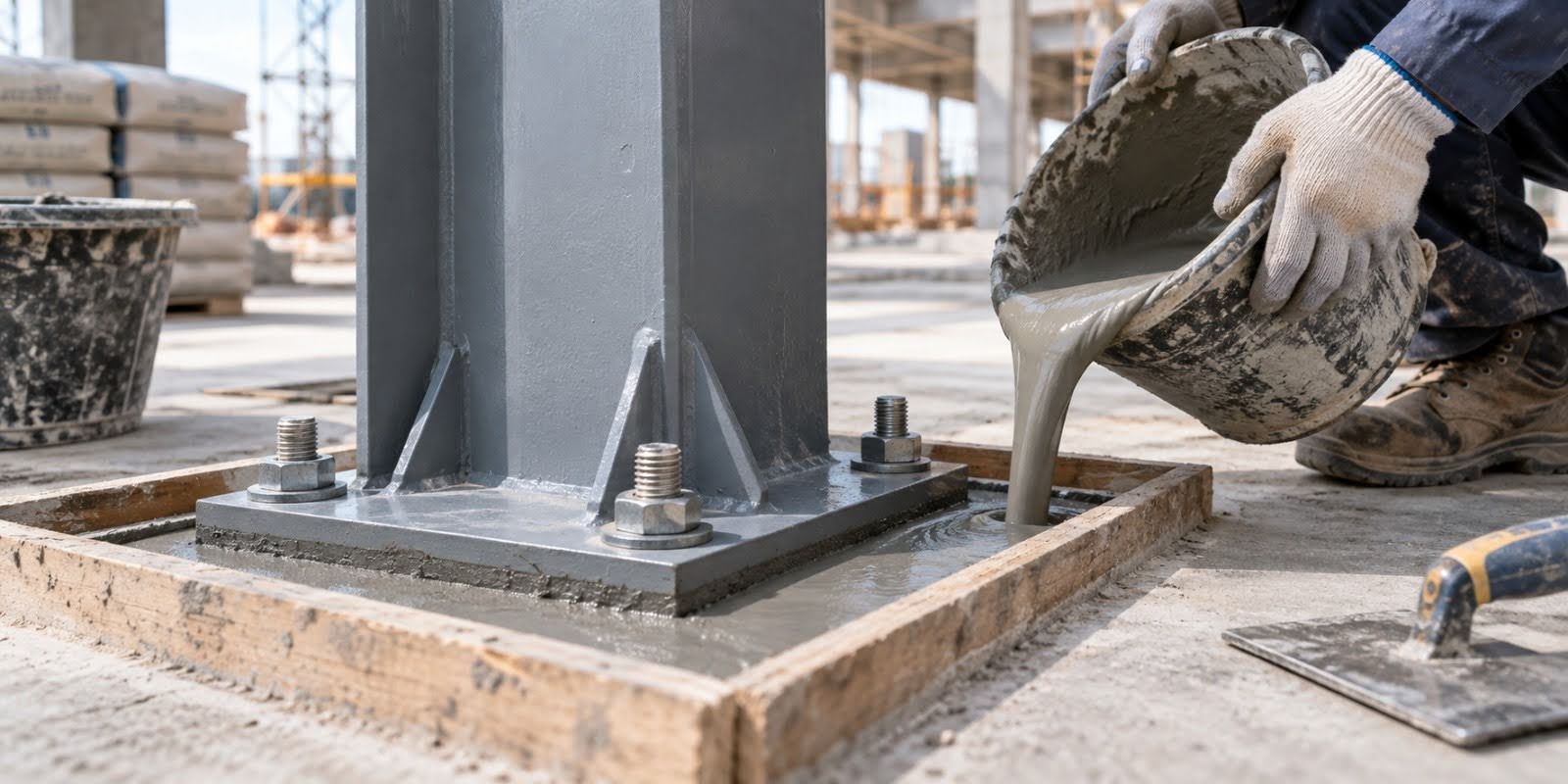
Non-shrink grout is a specialised cementitious grouting material formulated to minimise shrinkage and maintain effective contact within filled spaces after placement. It is commonly used beneath equipment base plates, around structural components, for void filling and in other construction applications where reliable load transfer and dimensional stability are important.
Unlike tile adhesive, which is formulated primarily to bond tiles to prepared substrates, non-shrink grout is designed to fill spaces and provide support between construction elements. It is also different from conventional tile grout, which is generally used to fill joints between installed tiles.
The appropriate non-shrink grout depends on the application, required strength, gap dimensions, substrate condition and placement method. High-strength products may be suitable for demanding equipment and structural applications, while other formulations can address more general grouting requirements.
This guide explains how non-shrink grout works, common applications, the difference between non-shrink and conventional grout, surface preparation and the main considerations when selecting a product.
What Is Non-Shrink Grout?
Non-shrink grout is a cement-based construction material formulated to compensate for or minimise dimensional shrinkage during its specified curing stages. Its purpose is to maintain contact between surfaces and fill a defined space after the grout has been placed.
Cementitious materials can undergo dimensional changes as they set and cure. In applications where complete contact is important, excessive shrinkage could create gaps between the grout and adjoining construction elements.
Non-shrink formulations are designed to address this requirement.
Products are commonly supplied as pre-packed dry materials that are mixed with a controlled quantity of water before placement. This helps provide a more consistent formulation than preparing a grout from separate cementitious ingredients on site.
How Does Non-Shrink Grout Work?
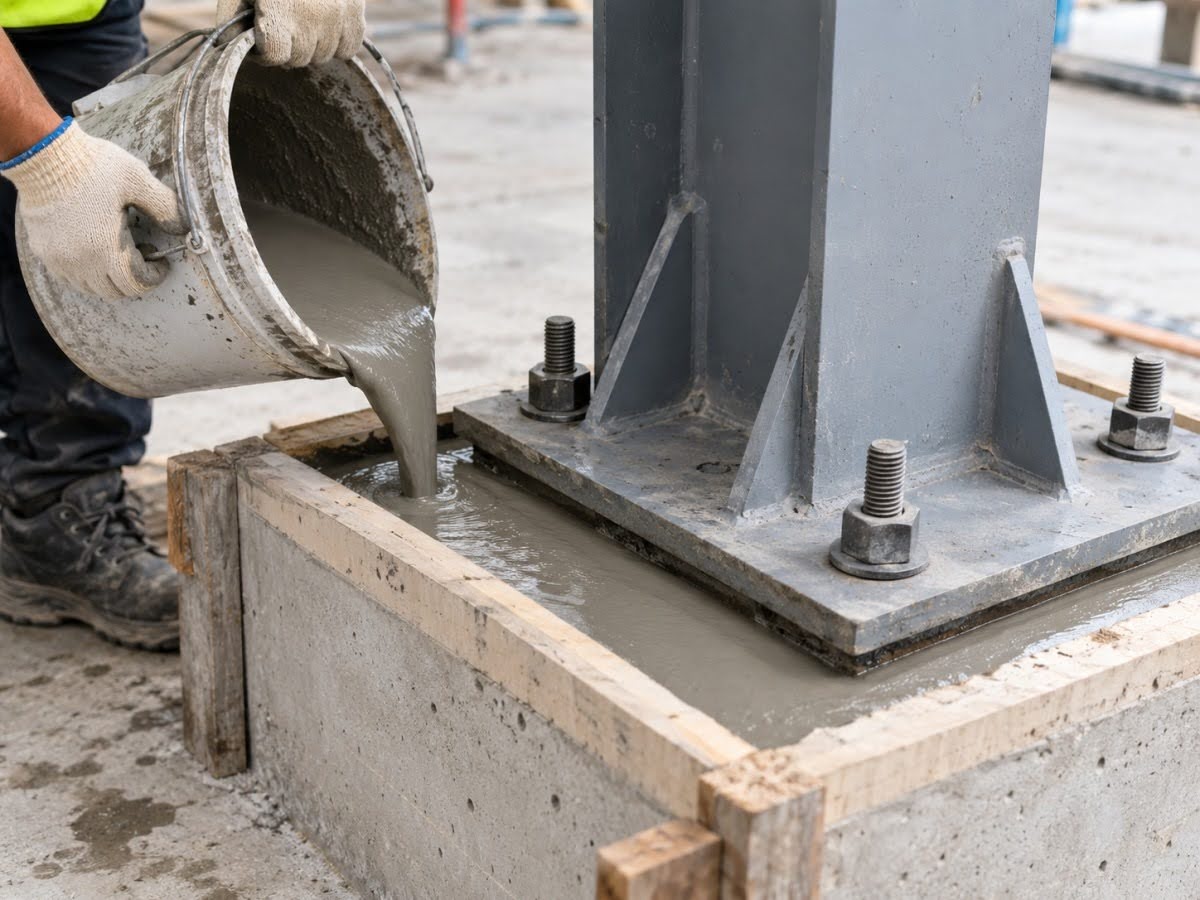
Non-shrink grout works by flowing or being placed into a prepared gap and hardening to form a supporting cementitious mass. Its formulation is intended to limit shrinkage so that effective contact can be maintained between the grout and the adjoining surfaces.
The material can therefore be used where loads need to be transferred through a filled space.
One example is beneath an equipment base plate. The grout fills the gap between the base plate and the supporting concrete foundation, creating more continuous contact than relying on isolated contact points.
Performance depends on correct mixing, preparation, placement and curing.
The term "non-shrink" should therefore not be interpreted as meaning that installation practices no longer matter.
Non-Shrink Grout vs Conventional Grout
Non-shrink grout and conventional grout can perform different construction functions. The distinction becomes clearer when the intended application is considered.
| Factor | Non-Shrink Grout | Conventional Grout |
|---|---|---|
| Main purpose | Support, void filling and load transfer | General joint or gap filling |
| Dimensional behaviour | Formulated to minimise or compensate for shrinkage | Depends on formulation |
| Typical applications | Base plates, equipment and structural components | General construction or finishing |
| Strength requirements | Can be formulated for high-strength applications | Varies considerably |
| Placement | Often into defined structural gaps | Application-specific |
| Selection priority | Strength, flow, gap and load requirements | Depends on intended use |
The terms used for grout products can vary, so the technical specification remains more important than the product name alone.
Non-Shrink Grout Is Not Tile Grout
Non-shrink grout should not be confused with the grout commonly installed between tiles. Although both materials contain the word "grout", their functions can be very different.
Tile grout is generally used to fill the joints between tiles after the tiles have been bonded to a substrate.
Non-shrink construction grout is used for applications such as supporting equipment bases, filling structural gaps and transferring loads.
Tile adhesive performs another separate function by bonding tiles to their prepared substrate.
A construction project may therefore use tile adhesive, tile-joint grout and non-shrink grout for completely different purposes.
Understanding the intended function prevents materials from being selected simply because they share similar terminology.
Common Applications of Non-Shrink Grout
Non-shrink grout is commonly used where a space between construction components needs to be filled while maintaining reliable contact and support.
Applications vary according to the product formulation.
Common uses can include:
- Equipment and machinery base plates;
- Structural base plates and bearing areas;
- Anchor-related grouting applications;
- Voids around selected construction components;
- Precast construction connections; and
- Other load-transfer applications.
Each application should be assessed according to its gap dimensions, required strength, placement conditions and surrounding materials.
A product suitable for one type of grouting should not automatically be assumed appropriate for every structural application.
Grouting Beneath Equipment Base Plates
Equipment base grouting is one of the common applications for non-shrink grout. The grout fills the space between the equipment base plate and its supporting foundation.
This helps establish contact across the intended bearing area.
The foundation and base plate arrangement should be prepared before grout placement so that the material can reach the required spaces.
Flow characteristics can be particularly important where the grout needs to move beneath a relatively large base plate.
Air should not become unnecessarily trapped within space.
The grout should therefore be selected and placed according to the geometry of the base and the specific installation requirements.
Supporting Machinery and Equipment
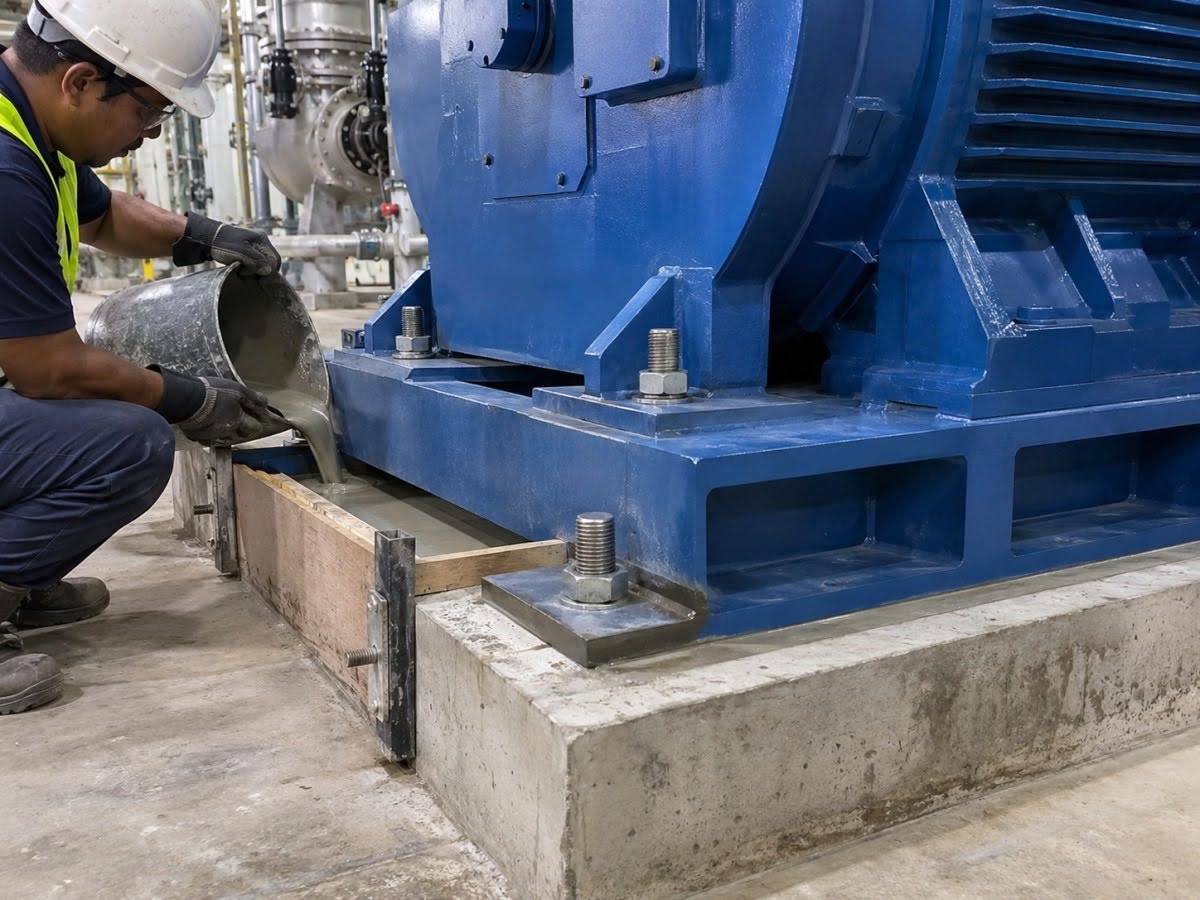
Machinery can transfer static and operational loads through its base into the supporting structure. Grout can form part of this load-transfer path by filling the interface beneath the equipment.
The requirements can vary considerably depending on the machinery.
Some equipment primarily creates static loads, while other machinery can introduce vibration or dynamic forces during operation.
The grout should therefore not be selected solely because it is described as high strength.
The complete application, including loading conditions, required performance and manufacturer's requirements, should be considered.
For demanding equipment installations, the specified engineering requirements should guide product selection.
Structural Base Plate Applications
Structural steel columns and other components can use base plates to transfer loads into supporting concrete elements. Grout may be placed beneath the plate to fill the gap and establish suitable bearing contact.
The required grout properties depend on the structural design and installation conditions.
Compressive strength can be important, but it is not the only consideration.
The grout also needs to be placed successfully within the available gap and maintain the required contact after curing.
The dimensions of the base plate and grout space should therefore be considered when choosing the material and placement consistency.
Using Non-Shrink Grout for Void Filling
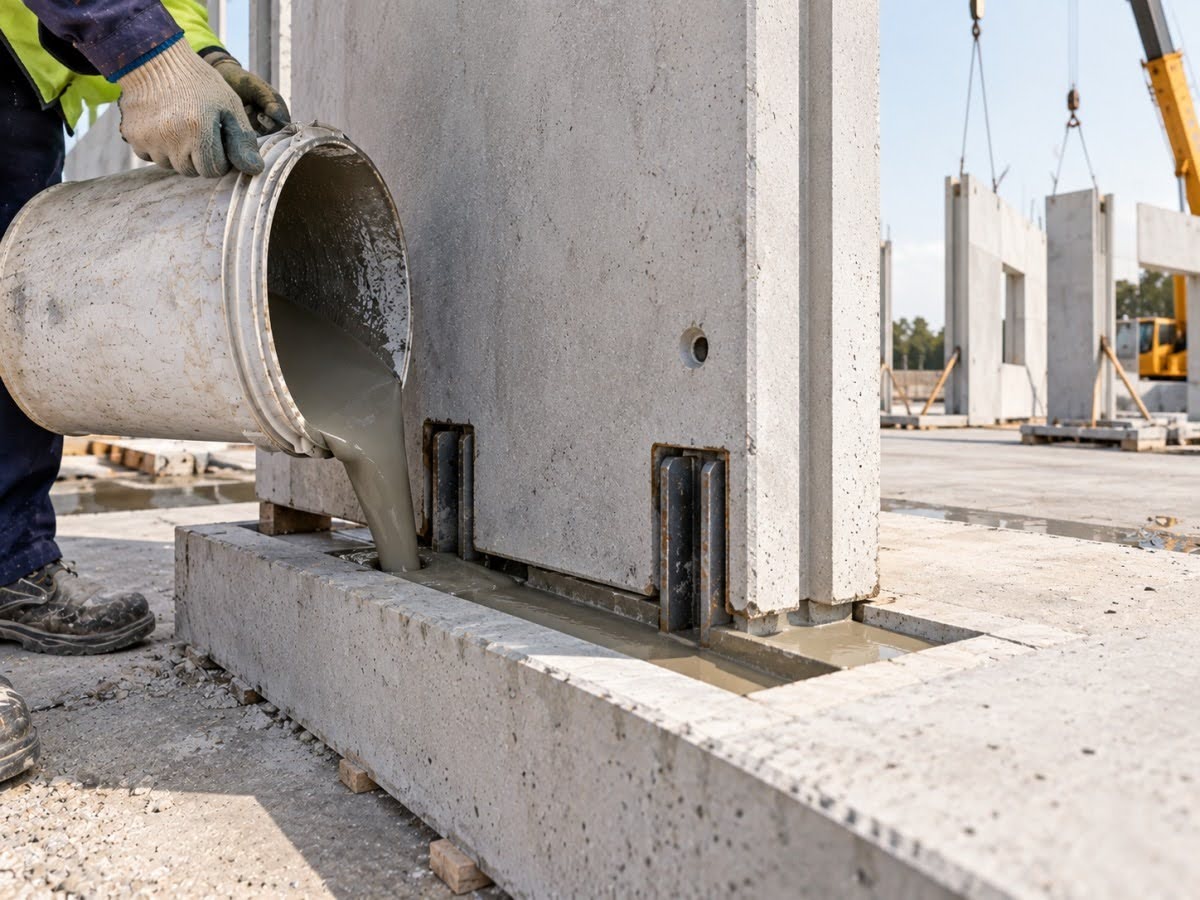
Void filling involves placing grout into unwanted or deliberately formed spaces within a construction assembly. Non-shrink grout may be suitable where the filled area needs dimensional stability and cementitious support.
Not every void should automatically be filled using the same grout.
The depth, width and volume of the space can influence material selection and placement.
Large-volume applications may have different requirements from relatively narrow gaps.
Access is also important. The grout needs to reach the required area without leaving significant unfilled spaces.
The product's recommended application thickness and placement conditions should therefore be reviewed before use.
Grouting Around Anchors and Fixings
Certain construction applications require grout around anchors, fixings or other embedded components. The grout fills the surrounding space and can contribute to load transfer depending on the designed system.
The specific application should determine the material.
Anchor-related grouting can involve different loads, dimensions and installation methods, so a general-purpose assumption should be avoided.
The substrate and embedded component should also be prepared appropriately.
Where the fixing is structurally significant, grout selection should correspond with the engineering or system requirements rather than relying only on general product descriptions.
Precast Construction Applications
Precast construction can involve joints, connections and gaps that require suitable grouting materials. Non-shrink cementitious grout may be used for selected applications where reliable filling and load transfer are required.
The dimensions and geometry of precast connections can influence the necessary flow properties.
Some spaces are relatively accessible, while others require grout to move through confined areas.
Strength development and curing can also affect when subsequent construction activities can proceed.
The selected grout should therefore correspond with the specific precast connection rather than treating every precast joint as identical.
Why Compressive Strength Matters
Compressive strength describes a hardened material's ability to resist forces that tend to compress it. It is an important property for non-shrink grout used beneath equipment and structural components.
However, choosing the product with the highest available compressive strength is not automatically the correct approach.
The required strength should correspond with the application and design requirements.
Other properties remain important, including flow, application thickness, dimensional behaviour and curing conditions.
A grout that meets the required strength but cannot be placed effectively within the intended gap may still be unsuitable.
Product selection should therefore consider performance as a complete set of characteristics.
High-Strength Non-Shrink Grout
High-strength non-shrink grout is formulated for applications where greater compressive performance is required. These products can be relevant for equipment, machinery and selected structural installations.
One example within this product category is Bostik NON-SHRINK GROUT SP HIGH STRENGTH.
A high-strength designation should still be assessed against the specific project requirements. The technical data for the actual product should be reviewed for information such as recommended application, strength development, water requirements and suitable placement conditions.
The product name alone should not determine suitability.
A project requiring high-strength grout may also have requirements for flow, gap thickness and curing that need to be considered simultaneously.
Flowability Affects Grout Placement
Flowability describes how readily mixed grout moves into and through the space being filled. It is particularly important beneath base plates or around complex configurations where direct access is limited.
A grout that is too stiff for the application may not completely fill the intended space.
However, additional water should not be added simply to make the mixture easier to pour unless the product instructions permit it.
Excess water can change the intended formulation and affect hardened properties.
The appropriate consistency should be achieved within the manufacturer's specified water range.
Placement planning should also provide a suitable path for grout movement and displaced air.
Gap Dimensions Influence Product Selection
The dimensions of the space being grouted can affect which product and placement method are appropriate.
A narrow gap beneath a base plate creates different placement conditions from a large structural void.
Products typically have recommended application thicknesses or ranges.
These recommendations help ensure the material can be placed and cured under appropriate conditions.
Where the required depth is outside the product's normal range, another material or application method may be needed.
Gap dimensions should therefore be measured before grout selection rather than after the product arrives on site.
Surface Preparation Before Grouting
Surface preparation helps the grout interact properly with the surrounding substrate. Weak material, dust, oil and other contaminants can interfere with the intended installation.
Concrete surfaces should be sufficiently sound for the application.
A general preparation sequence can include:
- Removing loose or weak material;
- Cleaning dust and construction debris;
- Removing oil, grease and contamination;
- Preparing the substrate according to product requirements;
- Checking the base plate or component condition; and
- Preparing formwork before mixing the grout.
Specific preparation requirements depend on the grout and application.
Grouting should not be used as a way to conceal an unsuitable substrate.
Formwork Helps Control Grout Placement
Formwork can be used to contain fluid grout around base plates and other defined spaces while the material is being placed and cured.
It should be sufficiently secure to prevent unwanted leakage.
The arrangement can also influence how easily the grout flows beneath the component.
Where practical, placement can be planned so that the grout moves continuously through the required space rather than being introduced randomly from multiple directions.
This can help reduce trapped air.
The formwork should account for the fluidity of the selected grout and the geometry of the installation.
Mixing Non-Shrink Grout Correctly
Pre-packed non-shrink grout should be mixed using the water quantity and procedure specified for the product. Water content influences workability as well as the properties of the hardened grout.
Adding excessive water to improve flow is a common mistake.
The mixture may appear easier to place, but it no longer corresponds with the intended formulation.
Consistent measuring and mixing are particularly important when multiple batches are required.
Equipment should also be appropriate for the volume being prepared.
Only an amount that can be placed within the product's usable working period should normally be mixed at one time.
Placement Should Aim for Continuous Filling
Grout placement should aim to fill the intended space without unnecessary interruptions, voids or trapped air.
For base plate applications, grout is often introduced from a suitable side so it can move progressively through the gap.
The precise method depends on the configuration.
The material should not be excessively disturbed once placement is complete unless the specified method requires further work.
Planning is important because grout has a limited working period after mixing.
Formwork, tools, materials and access should therefore be prepared before mixing begins.
Curing Supports Grout Performance
Curing helps cementitious grout develop its intended hardened properties. Newly placed material should be protected according to the product requirements.
Environmental conditions can influence moisture loss and curing behaviour.
Singapore's warm conditions can increase the importance of managing exposed cementitious surfaces appropriately.
The grout should not be loaded prematurely simply because its surface appears hard.
Strength develops over time.
The required period before equipment operation, loading or subsequent work should be determined according to the product and project requirements.
Common Non-Shrink Grouting Mistakes
Many grouting problems can be traced to preparation, mixing or placement rather than the concept of non-shrink grout itself.
Common issues include using excessive mixing water, inadequate substrate preparation and selecting a product without checking the required application thickness.
Other mistakes include poor formwork, interrupted placement and loading before adequate strength has developed.
Confusing non-shrink grout with tile adhesive or tile-joint grout can also lead to inappropriate material selection.
Each product is formulated for a specific construction function.
How to Select Non-Shrink Grout
Non-shrink grout should be selected by matching its technical characteristics with the actual construction application.
The following factors provide a practical starting point:
| Selection Factor | What to Assess |
|---|---|
| Application | Equipment, base plate, void or structural component |
| Required strength | Project and load requirements |
| Gap dimensions | Minimum and maximum placement depth |
| Flow requirement | Accessibility of the space being filled |
| Substrate | Concrete and adjoining materials |
| Placement conditions | Access, formwork and working time |
| Curing | Environmental and loading requirements |
Where the grout performs a structural or safety-critical function, selection should correspond with the relevant engineering requirements.
Frequently Asked Questions (FAQs)
What is non-shrink grout used for?
Non-shrink grout is commonly used beneath equipment and structural base plates, for selected void-filling applications and where reliable contact and load transfer are required between construction components.
Is non-shrink grout the same as tile grout?
No. Tile grout is generally used between installed tiles. Non-shrink construction grout is designed for applications such as equipment bases, structural components and void filling.
Is non-shrink grout the same as tile adhesive?
No. Tile adhesive bonds tiles to prepared substrates, while non-shrink grout primarily fills spaces and provides support or load transfer in suitable construction applications.
Why is non-shrink grout used beneath machinery?
Grout can fill the space between machinery base plates and the supporting foundation, helping establish more continuous bearing contact. Product selection should account for the machinery and loading requirements.
Can extra water be added to make non-shrink grout flow better?
Water should remain within the amount specified for the product. Adding excessive water can alter the intended formulation and affect the properties of the hardened grout.
What is a high-strength non-shrink grout?
High-strength non-shrink grout is a formulation designed to achieve higher compressive performance for demanding applications. Suitability should still be assessed according to the required strength, gap, flow and installation conditions.
Building Reliable Support Through Correct Grouting
Non-shrink grout performs a specific role in construction by filling defined spaces while providing dimensional stability and support. Common applications include equipment bases, structural base plates, selected anchors and voids where effective contact or load transfer is required.
Successful grouting depends on more than strength alone. Gap dimensions, flowability, substrate preparation, mixing, placement and curing all influence whether the material can perform its intended function.
Non-shrink grout should therefore be selected according to the complete application. High-strength formulations such as Bostik NON-SHRINK GROUT SP HIGH STRENGTH may be considered where their technical characteristics match the project requirements, while other applications may require different grout properties.
Select Grout for the Required Construction Application
Non-shrink grout should be selected according to the required strength, application dimensions, substrate, placement method and operating conditions. Eastern Win Enterprises Pte Ltd. provides pre-packed construction materials for different building and structural applications.
To discuss a suitable non-shrink grout for your construction requirements, you can contact Eastern Win Enterprises Pte Ltd.